
Sipeed Tang Nano 20K
4.5Editor score
Affordable entry level
Open source support
Compact form factor
Compare the top ten FPGA retro consoles to find the best board or handheld for classic gaming using verified specs and community feedback from October 2026.
FPGA retro consoles offer unmatched accuracy and flexibility for classic gaming enthusiasts seeking authentic hardware emulation without the cost of original systems.
We evaluated ten leading models based on performance, expandability, and community support to help you choose the right device for your specific gaming needs.
Each review highlights key strengths and potential trade-offs while noting that availability and pricing may shift based on demand and regional supply chain factors.
4.5Editor score

4.8Editor score

4.5Editor score
This side by side comparison highlights the key specifications and capabilities of each model to assist in making an informed purchasing decision.

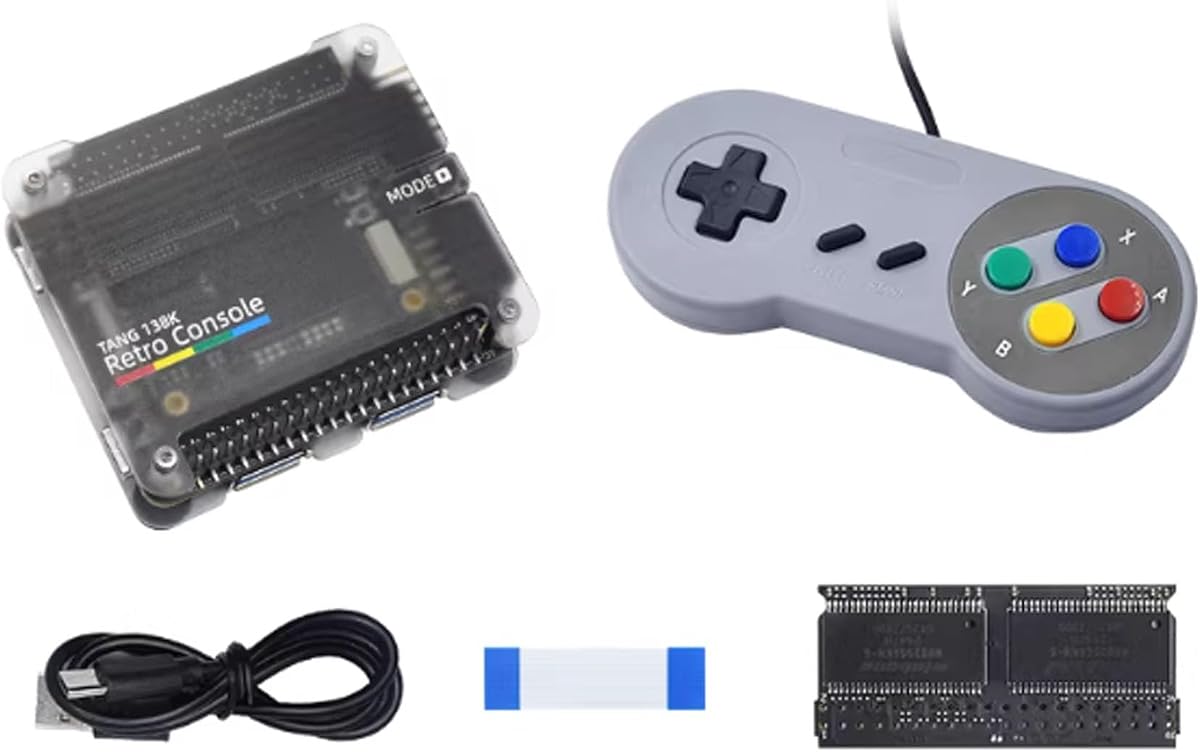


The Sipeed Tang Console 138K stands out as a powerful FPGA board designed for serious retro gaming enthusiasts and developers seeking precise emulation.
We may earn a commission when you buy through this link, at no additional cost to you.
Its massive 138K LUT4 capacity allows for complex cores like NES SNES GBA and even Amiga to run with near perfect cycle accuracy on HDMI displays.
While the board offers significant power and dual PMOD ports for customization users must be comfortable with FPGA toolchains and Linux setup processes.
This console is ideal for those who want maximum performance and expandability rather than a simple plug and play handheld device.
Dual PMOD ports and PCIe support enable custom hardware additions like controllers or sensors for tailored gaming setups.
The compact form factor and efficient FPGA chip ensure the device runs quietly without any moving parts or heat generation.
We may earn a commission when you buy through this link, at no additional cost to you.
The 60K version of the Sipeed Tang Console offers a balance of power and flexibility with its support for multiple System on Module configurations.
We may earn a commission when you buy through this link, at no additional cost to you.
It features robust USB 3.0 ports and HDMI output making it suitable for both development work and playing retro games on modern TVs.
Developers appreciate the onboard BL616 MCU which simplifies debugging and allows for custom firmware development without external hardware.
While powerful it is best suited for users who enjoy tinkering with Linux systems and FPGA programming rather than casual gamers.
Choose between 60K and 138K SOMs to match your specific performance needs without buying a completely new mainboard.
High-speed USB 3.0 ports ensure minimal latency for controllers and storage devices during intensive gaming sessions.
We may earn a commission when you buy through this link, at no additional cost to you.
This 138K variant integrates an 800MHz RISC-V AE350 hardcore allowing for complex system on chip applications alongside high fidelity retro emulation.
We may earn a commission when you buy through this link, at no additional cost to you.
Its tiny footprint and 5W power draw make it an excellent candidate for portable projects where heat and size are critical constraints.
Users gain access to dual 40 pin GPIO headers and PCIe Gen3 x1 for connecting external displays or high speed data storage.
It is a premium choice for engineers who need both open core processing and advanced FPGA logic in a single compact board.
The built-in hardcore offloads general processing tasks leaving the FPGA free for graphics and game logic processing.
Operating at just 5W with no fan means this device can run on small batteries for extended portable play.
We may earn a commission when you buy through this link, at no additional cost to you.
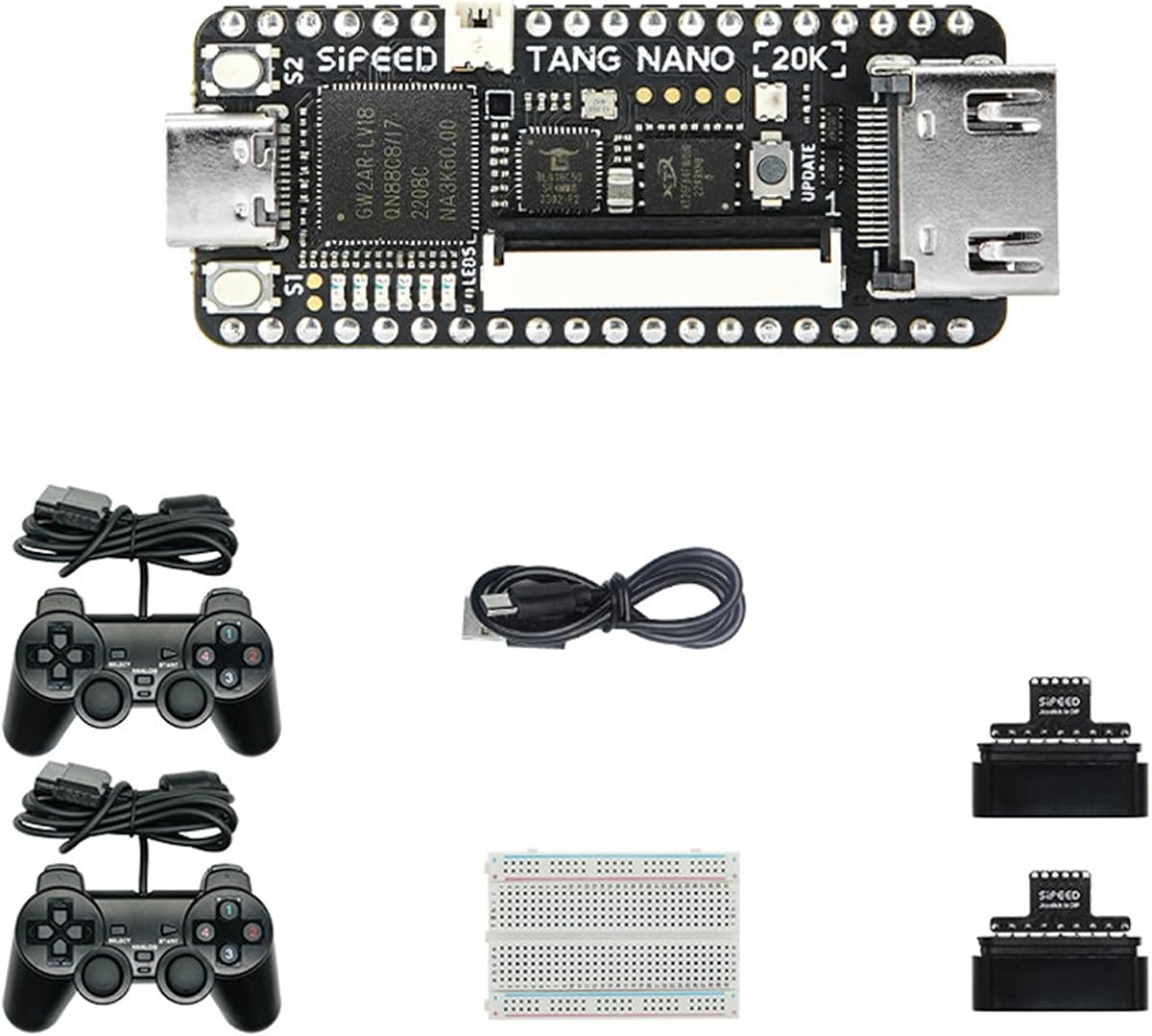
The Tang Nano 20K brings FPGA capabilities to a much lower price point making it accessible for students and hobbyists entering the field.
We may earn a commission when you buy through this link, at no additional cost to you.
It contains 20736 LUT4 logic cells and enough memory to run basic emulator cores for systems like NES and Game Boy reliably.
Onboard debugging features via JTAG and USB make it easy to develop and test custom hardware designs without extra tools.
While not powerful enough for high end 16 bit consoles it remains a solid option for entry level projects and learning.
Onboard USB to UART and JTAG interfaces allow for easy flashing and testing of FPGA bitstreams.
The small PCB size makes it ideal for integrating into tight spaces within handheld enclosures or custom builds.
We may earn a commission when you buy through this link, at no additional cost to you.
This kit version emphasizes the Linux capabilities of the Tang Nano 20K enabling a full desktop experience alongside retro gaming functionality.
We may earn a commission when you buy through this link, at no additional cost to you.
The RISC-V Linux system supports running modern applications while still providing access to FPGA peripherals and HDMI video output.
Documentation is robust with dedicated wikis and forums that help users get started with Linux development and FPGA toolchains quickly.
It is a versatile choice for users who want to explore both software development and hardware design on a single platform.
Run a complete operating system on the FPGA board for a truly flexible computing and gaming environment.
Access detailed wikis and community forums to troubleshoot issues and find inspiration for new projects easily.
We may earn a commission when you buy through this link, at no additional cost to you.
The Tang Nano 20K SBC variant adds a BL616 MCU that acts as a powerful debugger allowing for seamless FPGA code development and testing.
We may earn a commission when you buy through this link, at no additional cost to you.
It supports multiple display outputs making it suitable for projects that require dual screen setups or custom RGB LCD integration.
With 64Mbit SDRAM and a high speed SPI interface it can handle graphics tasks that demand more than minimal hardware resources.
This board is best suited for advanced users who want to build custom Linux based interfaces using both software and FPGA logic.
The BL616 MCU provides a native way to manage FPGA resources without needing external JTAG adapters.
Rapid data transfer rates ensure smooth communication with high resolution displays and fast storage devices.
We may earn a commission when you buy through this link, at no additional cost to you.
The Arduboy FX-C is a unique take on the retro handheld genre offering a pocket sized device packed with 300 classic games out of the box.
We may earn a commission when you buy through this link, at no additional cost to you.
Its compact credit card size allows it to fit in a wallet making it incredibly portable for gaming on the go without bulk.
Beyond playing it acts as a coding platform where users can learn C++ and create their own games using the Arduino IDE.
This device is perfect for enthusiasts who want a polished retro experience combined with educational value and community driven content.
Free tutorials and C++ coding tools turn this game console into a powerful learning device for developers.
Connect two devices with a custom I2C link for head to head battles without needing a screen.
We may earn a commission when you buy through this link, at no additional cost to you.
The Trimui Brick Pro delivers a high quality visual experience with a 3.95-inch IPS screen that offers vibrant colors and wide viewing angles.
We may earn a commission when you buy through this link, at no additional cost to you.
Powered by an Allwinner A133P chip it handles modern emulation needs smoothly ensuring stable frame rates across a wide library of games.
A massive 5000mAh battery ensures long play sessions while fast charging keeps the device ready for action when you need it.
While it lacks a preloaded card it provides a robust platform for those who want to organize their own library of ROMs.
Magnetic sensors ensure precise input without the risk of stick drift over time.
The high resolution IPS panel makes classic pixel art look crisp and colors pop on a modern handheld.
We may earn a commission when you buy through this link, at no additional cost to you.
The RG40XXV brings a Linux based system to the portable gaming space allowing users to run a vast array of emulators with ease.
We may earn a commission when you buy through this link, at no additional cost to you.
Its design focuses on comfort and control making it suitable for long play sessions without hand fatigue during extended use.
With preloaded games included the device is ready to use out of the box for those who want immediate access to classic titles.
This unit serves well as a daily driver for handheld gamers who prioritize system flexibility over raw hardware specs.
The underlying OS allows for extensive customization and community support through open source firmware.
A comfortable shape ensures that buttons are easy to reach during intense gaming moments.
We may earn a commission when you buy through this link, at no additional cost to you.
The Trimui Brick PRO features a stunning 3.95-inch fully laminated display that delivers crisp visuals with minimal glare and improved contrast.
We may earn a commission when you buy through this link, at no additional cost to you.
It runs a Linux 4.9 system with a user friendly OSD allowing you to manage your library and settings with ease.
Hall Effect joysticks provide precise analog control while the battery capacity supports hours of uninterrupted play in one charge.
This device is ideal for users who want a modern interface and premium build quality in a portable retro gaming package.
The 1024×768 resolution ensures that every pixel of your favorite games is rendered clearly on the screen.
Use a TF card up to 1TB to hold thousands of game ROMs without filling the internal memory.
We may earn a commission when you buy through this link, at no additional cost to you.
Choosing the right FPGA console requires understanding the tradeoffs between performance customization and ease of use.
Larger LUT counts like 138K allow for complex cores including Amiga or Saturn while 20K is best for simpler 8-bit systems.
Look for high capacity boards if you want the most accurate emulation of powerful legacy systems.
Linux boards offer deep customization and developer tools whereas closed systems provide a plug-and-play experience out of the box.
Decide if you prefer tinkering with software or simply want to play games immediately.
HDMI output is essential for connecting to modern TVs but check resolution limits as some boards max out at 720p.
Ensure the console supports your preferred display resolution for a smooth visual experience.
Ports like USB and PMOD let you add custom controllers or sensors for a personalized gaming setup.
Choose devices with multiple expansion interfaces if you plan to modify the hardware later.
Fanless boards run cooler and quieter but ensure the power draw fits your power source like a battery.
Low wattage models are crucial for portable projects where heat management matters.
Active forums and wikis help you troubleshoot issues quickly when setting up complex FPGA configurations.
Choose brands with strong developer communities to ensure long-term project success.
Always use a quality power supply to prevent voltage drops that could damage the FPGA chip during operation.
Keep firmware and cores updated from official sources to ensure compatibility with new game files.
Store boards in static free cases when not in use to protect sensitive components from static discharge.
FPGA consoles emulate hardware at the cycle level providing more accurate timing and visuals than software emulators. This results in a more authentic experience closer to the original hardware.
Not necessarily. While boards like the Tang Console are developer focused, many users find prebuilt cores available online. However basic Linux knowledge helps with setup.
Yes most FPGA boards include HDMI outputs that connect directly to modern TVs. Check the board specs for supported resolutions like 720p or 1080p.
Most development boards come with empty storage requiring you to load ROMs manually. Handhelds often include games but check the product details carefully.
Updates are usually downloaded as bitstream files and flashed using the manufacturer's toolchain or provided software. Check the official wiki for specific instructions.
Desktop boards offer more power and expansion but handhelds provide portability. Choose based on whether you prioritize performance or mobility.
The Sipeed Tang Console series stands out for its power and flexibility while the Arduboy FX-C offers a unique portable coding experience.
Prioritize your needs between raw performance and ease of use before committing to a specific board or handheld device.
Always verify current availability and firmware support on the product page before purchasing to ensure the latest features are available.