
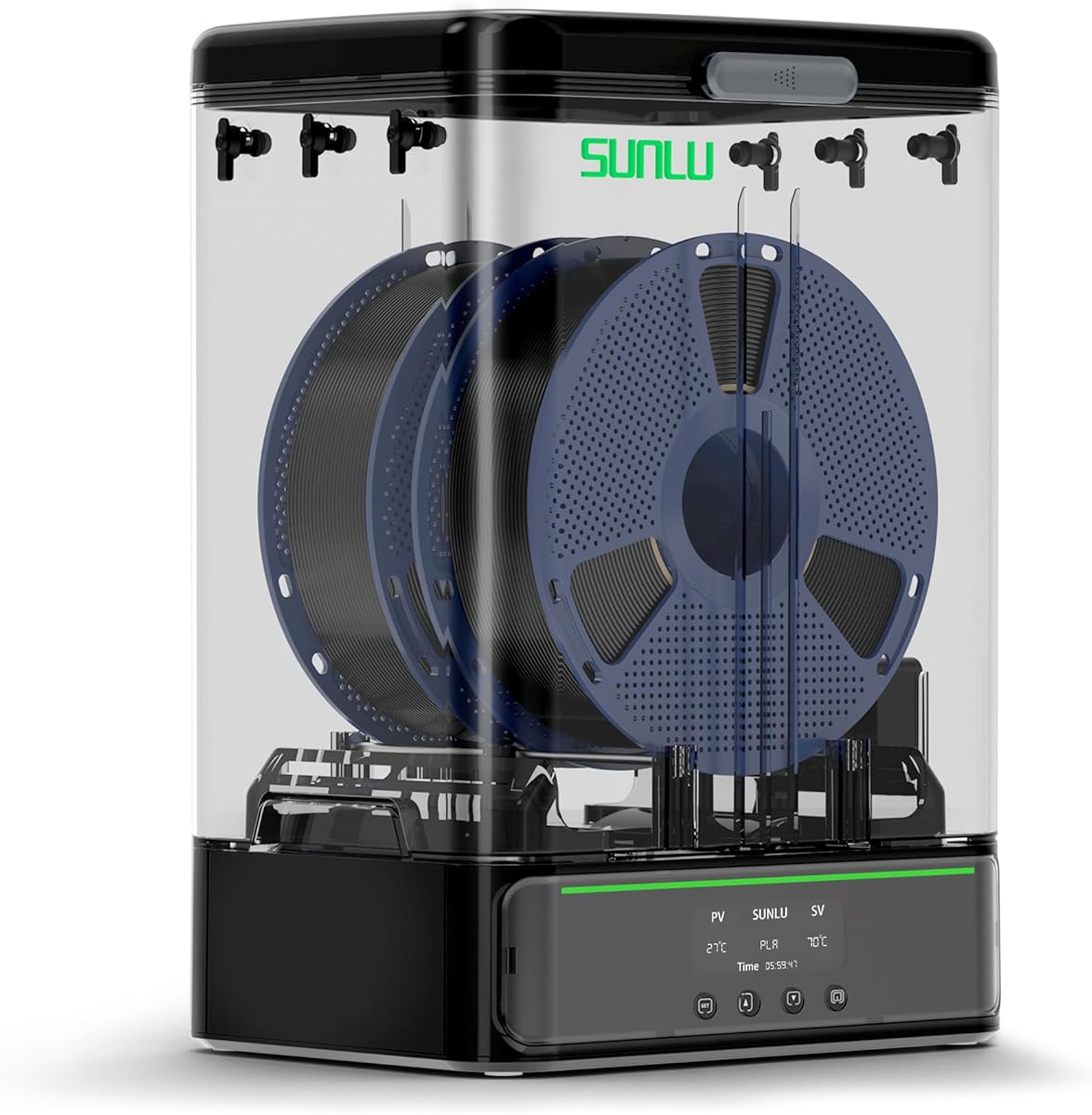
SUNLU Filament Dryer S2
4.3Editor score
265x274x118mm capacity
35 to 70 degree range
Translucent lid design
This guide compares the top 10 filament dryers for 3D printing to help you choose the best model for drying storage and printing.
Filament dryers are essential tools for 3D printing enthusiasts who want consistent results. Moisture in filaments causes issues like stringing and layer adhesion problems. A good dryer solves these problems efficiently.
We evaluated ten top models based on capacity heating technology and ease of use. Our comparison covers options for hobbyists and professionals alike. Each product brings unique features to the table.
Each pick shows key specs and real-world performance insights. Prices fluctuate often so check current deals before buying. This guide helps you find the right dryer for your needs.
4.3Editor score

4.6Editor score

4.5Editor score
This table offers a side-by-side look at every model reviewed. Compare key specs like capacity heating power and max temperature to find your match.


The Creality Space Pi X4 stands out as a top choice for serious users. With a 4.6 rating it promises reliable performance. Its dual heating chambers offer distinct advantages over single unit models.
We may earn a commission when you buy through this link, at no additional cost to you.
This unit uses two 200W PTC heaters to reach 85 degrees. This helps dry tough materials like ABS or Nylon quickly. The sealed design keeps moisture out during storage too.
The main trade-off is the size and cost. It takes up significant shelf space. However the dual chamber efficiency often offsets the investment for heavy users.
Anyone printing high volumes or using hygroscopic materials should consider this. It balances speed and storage well. This is a smart long term upgrade.
Using two chambers cuts drying time significantly compared to single units.
Reaching 85 degrees allows drying of advanced engineering filaments easily.
We may earn a commission when you buy through this link, at no additional cost to you.
The SUNLU S2 is a fantastic entry point for those new to drying. It carries a solid 4.3 rating from many users. Its design focuses on essential functions without unnecessary complexity.
We may earn a commission when you buy through this link, at no additional cost to you.
It heats quickly and uses a spindle to spin the spool evenly. This ensures consistent drying without hot spots. The translucent lid lets you check progress easily.
You miss out on advanced humidity monitoring or dual chambers. It also lacks the highest heat range of premium models. But for standard PLA or PETG it works fine.
If you are on a tight budget this is a top recommendation. It solves basic moisture issues well. Expect reliable drying for everyday prints without breaking the bank.
The user interface is straightforward for quick setup and use.
Built-in spindle ensures uniform heat distribution across the spool.
We may earn a commission when you buy through this link, at no additional cost to you.
The SUNLU S4 offers premium features for advanced 3D printing setups. Its 4.5 rating reflects strong performance in user reviews. This unit is built for multi printer environments.
We may earn a commission when you buy through this link, at no additional cost to you.
With 350W heating and three fans it dries fast and evenly. Eight exit holes allow feeding multiple printers at once. The timer runs up to 99 hours for deep drying.
The downsides are cost and size. It is one of the largest units on this list. The price is significantly higher than basic models.
Ideal for farms or makers with many printers. It provides serious drying capacity and flexibility. If you need high throughput this is worth the investment.
Eight outlets support simultaneous drying and feeding for several machines.
The 350W heater ensures rapid temperature rise and steady heat.
We may earn a commission when you buy through this link, at no additional cost to you.
The Comgrow SH01 is a well rounded dryer for hobbyists. It holds two 1kg spools comfortably. With a 4.4 rating it offers dependable moisture control.
We may earn a commission when you buy through this link, at no additional cost to you.
It uses a silicone sheath for the filament exit. This reduces friction during printing. The LCD shows temperature and humidity for real-time checks.
The max temperature is lower at 50 degrees. This limits use on engineering plastics. But it is great for PLA and PETG drying.
Buy this if you need reliable storage and drying. It is easy to use and fits standard spools. A solid option for moderate printing needs.
Designed for long-term storage as well as active drying.
Snap buttons and silicone holes ensure a tight seal.
We may earn a commission when you buy through this link, at no additional cost to you.
The SUNLU S1 Plus includes an upgraded fan for speed. It rates 4.3 from users. This model focuses on fast moisture removal from filaments.
We may earn a commission when you buy through this link, at no additional cost to you.
The fan design speeds up water discharge. This helps with wet filaments quickly. The display shows humidity levels clearly.
It lacks advanced features like high heat. The build is standard plastic. But the speed and price make it useful.
Use this for quick drying sessions. It handles various filament types well. A good choice for regular maintenance drying.
The fan helps circulate air for faster moisture evaporation.
Visual display tracks internal humidity for better control.
We may earn a commission when you buy through this link, at no additional cost to you.
The Creality Space PI Plus offers a lot of features. It holds two spools. With a 4.4 rating it is popular for its advanced control.
We may earn a commission when you buy through this link, at no additional cost to you.
It uses 360 degree hot air via a fan. This ensures uniform drying. The touch screen is large and responsive.
The presets simplify setup for different materials. However the interface can be tricky at first. It also costs more than basic units.
Ideal for those who love customization. It handles many filaments well. If you want control this is a strong pick.
A large 3.7 inch screen makes adjustments easy.
Twelve presets remove guesswork for common plastics.
We may earn a commission when you buy through this link, at no additional cost to you.
The Polymaker Polydryer focuses on integrated storage. It rates 4.3 from users. The design minimizes exposure to ambient air.
We may earn a commission when you buy through this link, at no additional cost to you.
It allows printing while sealed with desiccant. This keeps conditions stable. The hygrometer helps you track internal humidity levels.
It is less powerful than heated box models. Capacity is lower for standard spools. But it is great for sensitive materials.
Best for users prioritizing storage. It reduces waste from moisture. A unique solution for careful filament management.
Move from drying to storage without opening the box.
Includes desiccant for ongoing moisture defense.
We may earn a commission when you buy through this link, at no additional cost to you.
The Creality Space Pi SE is a compact choice. It rates 4.3 from buyers. It uses PTC tech for efficiency.
We may earn a commission when you buy through this link, at no additional cost to you.
It reaches 65 degrees fast. Insulation cotton keeps heat inside. The 360 flow helps avoid cold spots.
It handles only one 1kg spool. This limits output. But it is affordable and effective for light use.
Good for single printer hobbyists. It saves space and energy. A solid budget pick for PLA and PETG.
Cotton lining retains heat for efficient drying.
No assembly needed, ready to use out of the box.
We may earn a commission when you buy through this link, at no additional cost to you.
The SUNLU SP2 is built for speed. It rates 4.4 from users. The 250W heater reaches 70 degrees quickly.
We may earn a commission when you buy through this link, at no additional cost to you.
It supports large 3kg spools with rollers. This helps with bulk usage. The storage box detaches for easy transport.
It is heavier than smaller models. But the capacity is a plus. The silicone holes help with multiple feeds.
Great for heavy spool users. It balances speed and size well. A practical choice for large rolls.
Rollers hold spools up to 3kg capacity easily.
Detachable box seals for safe storage after drying.
We may earn a commission when you buy through this link, at no additional cost to you.
The Comgrow SH01 is a practical budget dryer. It rates 4.4 from many users. It offers two spool capacity for flexibility.
We may earn a commission when you buy through this link, at no additional cost to you.
The seal quality helps keep moisture out. The LCD allows monitoring during use. It fits PLA PETG and ABS well.
It lacks high temp or humidity sensors. But it does the core job. The sheath helps smooth filament feeding.
Perfect for entry level printers. It is reliable and cost effective. A great starter option for dryers.
Great value for those needing basic drying.
Snap buttons create a tight seal for storage.
We may earn a commission when you buy through this link, at no additional cost to you.
Choosing the right dryer depends on your volume and filament types. Below are key factors to consider.
Capacity refers to how many spools a dryer can hold. Single spool units are compact and ideal for hobbyists. Multi spool units support 2kg4 spools for higher volume printing.
Consider how many printers you have. If you run multiple machines a larger unit saves space and time.
Heating power determines how fast the dryer reaches temperature. Units with higher wattage like 350W heat up quickly. Lower wattage models take longer to dry.
Higher wattage helps with thicker or harder materials like ABS or Nylon. It ensures even drying across the spool.
Different filaments need different heat levels. PLA usually needs lower temps. Engineering plastics need higher heat up to 85 degrees.
Check if the dryer supports your specific material. If you print advanced filaments a higher max temp is essential.
Some dryers include humidity monitors. These track the internal moisture levels. Others rely on temperature settings alone.
Humidity control helps avoid guesswork. It ensures your filament stays dry even when not printing.
A good seal prevents outside air from entering. Look for silicone gaskets or tight latches. This helps keep dry filament safe.
If you store filament for long periods sealing matters. It protects against humidity in your workspace.
The outlet affects how filament feeds to your printer. Silicone sheaths reduce friction. Some units offer multiple outlets for several machines.
Smooth feeding prevents clogs. If you have multiple printers an 8-hole outlet saves effort.
Interfaces range from knobs to touch screens. Touch screens allow preset options for different materials. Knobs are simpler but less flexible.
Choose based on your tech comfort. Presets make it easier to switch filament types.
Large dryers occupy shelf space. Smaller units fit on desks. Consider your workspace layout.
Balance capacity with size. You do not want a dryer that overflows your workspace.
Place the dryer on a flat surface. Insert spools into the holders. Ensure they are not touching to allow airflow.
Set the temperature based on your filament. Use lower temps for PLA. Higher for ABS. Start a timer for the cycle.
After drying store spools in the sealed box or vacuum bags. Clean the outlet holes occasionally to prevent blockage.
Most dryers work for PLA PETG ABS and TPU. Some support Nylon or PC. Check max temp ratings before using engineering plastics.
Standard PLA needs 4 hours. ABS may need 8 or more. Check moisture indicators if available. Over drying rarely hurts.
Yes. Most dryers feed filament directly during printing. Keep outlet holes clear for smooth flow. This saves time.
PLA usually dries well at 45 to 50 degrees. Higher temps may warp it. Use lower heat to be safe.
Use compressed air to clear dust. Wipe inside with a dry cloth. Avoid liquids. Check cables for damage.
Yes. Drying removes moisture that degrades material. It helps prevent brittleness. Spools last longer.
Yes. Silica gel helps absorb moisture. Place it inside the dryer box. It works well for storage.
Fans help air circulation. They reduce hot spots. Models with fans dry faster. They are useful.
The top picks offer great options for different needs. The Creality X4 leads in capacity. The SUNLU S2 offers value.
Prioritize capacity and heat range. Consider your main materials. If you use Nylon or PC choose high heat.
Check current prices on our links. Models change often. Find the right fit for your setup today.