
Construction Adhesive – Fast Curing Anchoring Adhesive + Extra Nozzle
4.2Editor score
Extra nozzle included for convenience
Sets quickly for time-saving installation
Ideal for hollow materials with sleeve
This guide compares the top 10 chemical anchors for concrete based on strength, curing time, and ease of use to help you choose the right anchoring solution.
Chemical anchors for concrete provide a reliable way to secure heavy loads in masonry and stone. These systems use epoxy or polyester resins to bond fasteners deeply into the substrate for maximum stability.
We evaluated ten leading products based on their bonding strength, curing speed, and suitability for wet or dry conditions. Each option was analyzed for ease of application and compatibility with standard tools and fasteners.
Every pick highlights key performance traits and ideal use cases for your project. Keep in mind that product availability and pricing can shift over time, so verify current details before purchasing your supplies.
4.2Editor score
4.5Editor score

5.0Editor score
The following table offers a side-by-side comparison of all ten chemical anchors to help you quickly identify which system matches your specific structural requirements and budget constraints.





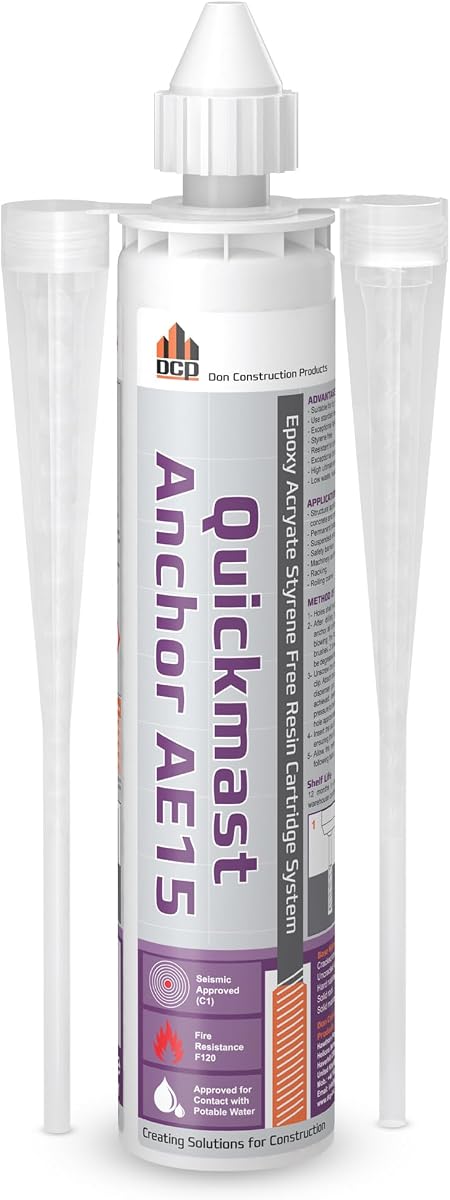
The DCP Quickmast AE15 Concrete Epoxy is a high-strength solution designed to anchor rebar and threaded rods into concrete. With a 4.5 rating, it stands out for its reliability in both dry and flooded conditions.
We may earn a commission when you buy through this link, at no additional cost to you.
This two-part acrylate epoxy delivers a strong bond to concrete and masonry. It cures rapidly, reaching full load capacity in as little as 40 minutes depending on temperature, which speeds up project timelines significantly.
While it offers impressive strength, you must ensure holes are cleaned properly before injection. The system works best with standard caulking guns, so confirm your tools match the cartridge size.
This product is ideal for handrails, heavy machinery, and structural anchors. If you need a secure hold that resists weather and chemical exposure, this is a top recommendation for your next build.
Its quick-curing formula allows you to move to the next task faster than traditional mechanical anchors.
Unlike many epoxies, this system bonds strongly even in wet or flooded concrete holes.
We may earn a commission when you buy through this link, at no additional cost to you.
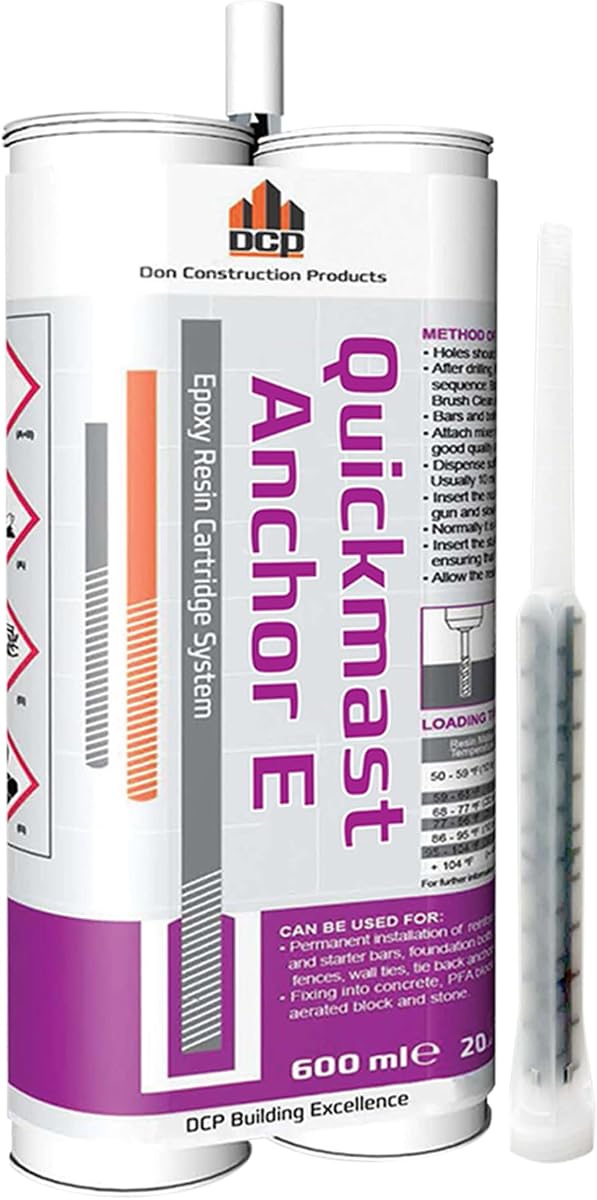
This construction adhesive offers a cost-effective solution for securing anchors in solid base materials. It is particularly useful when you need a quick fix without spending much money.
We may earn a commission when you buy through this link, at no additional cost to you.
The fast-curing polyester resin sets quickly, making it perfect for jobs where efficiency matters. It works well with hollow materials if you use the provided mesh sleeve for stability.
However, it may not match the sheer strength of high-end epoxy systems for heavy loads. For light-duty applications, it provides a durable hold that meets general construction needs.
Consider this if you are working on brick or cavity walls on a budget. It delivers reliability without compromising your finances for smaller anchoring tasks.
Comes with an extra nozzle to reduce downtime between multiple jobs or applications.
Ideal for hollow block and cavity walls when paired with the recommended mesh sleeve.
We may earn a commission when you buy through this link, at no additional cost to you.
This premium set includes a dual cartridge gun designed for precise application of high-strength epoxy. Its 5.0 rating reflects user satisfaction with its durability and ease of use.
We may earn a commission when you buy through this link, at no additional cost to you.
The 25:1 thrust ratio ensures a smooth mix without air pockets, which is critical for structural integrity. You get two large 20.2 fl oz cartridges, ideal for large projects requiring multiple anchors.
While the upfront cost is higher, the included tool eliminates the need to buy a gun separately. This convenience makes it a preferred choice for contractors and serious DIYers.
Choose this if you demand the highest quality for railway tracks or safety fences. The flawless dispense and strong bond offer peace of mind for critical structural attachments.
The 25:1 thrust ratio gun ensures less mess and more accuracy with every application.
Two 20.2 fl oz cartridges provide ample material for extensive anchoring needs.
We may earn a commission when you buy through this link, at no additional cost to you.
The Akona Fast-Setting Anchoring Epoxy is designed for quick applications where time is of the essence. It sets in just 12 minutes, allowing you to handle the fastener soon after application.
We may earn a commission when you buy through this link, at no additional cost to you.
Its gray color helps it blend into existing concrete or masonry surfaces, making it ideal for visible areas. It resists chemicals and solvents, which is a plus for industrial environments.
While the set time is short, full curing takes 16 hours, so plan accordingly for load-bearing tasks. The tube is easy to use without special equipment, which simplifies the process.
This is a great pick for floor or driveway repairs where speed and aesthetics matter. If you need a reliable bond that doesn't stand out visually, this product serves well.
Its gray hue blends seamlessly with concrete, stone, and masonry for a clean look.
Sets in 12 minutes, which reduces wait time for positioning your fasteners.
We may earn a commission when you buy through this link, at no additional cost to you.
These anchor rods are designed to work seamlessly with chemical resin systems for a secure hold. Each pack contains ten M8 x 130 mm rods, ideal for standard anchoring tasks.
We may earn a commission when you buy through this link, at no additional cost to you.
They are manufactured to high standards, ensuring consistent threads and durability. The 5.0 rating indicates users find them reliable when paired with the correct adhesive system.
Keep in mind that this product includes the rods but not the resin itself, so budget for the adhesive separately. Ensure the resin you buy is compatible with steel rods.
Use these for mounting equipment or structural elements where strong threaded connections are needed. They offer excellent value for projects requiring multiple anchor points in one go.
Each rod is pre-threaded and tested to ensure consistent performance with chemical epoxies.
A pack of ten rods provides ready-to-use stock for multi-anchor installations.
We may earn a commission when you buy through this link, at no additional cost to you.
SIKA AnchorFix-2 is a professional-strength epoxy that creates a secure hold for threaded bars in uncracked concrete. It is certified safe for drinking water systems, adding to its versatility.
We may earn a commission when you buy through this link, at no additional cost to you.
The epoxy cures quickly to prevent slipping, allowing you to finish jobs sooner. Its cartridge fits most applicator guns, and the narrow tip ensures accurate placement inside holes.
While the rating is solid, it may not be the absolute top performer in all load tests. However, its safety profile makes it excellent for projects near water or sensitive environments.
Choose this for plumbing or water-related structures where non-toxic anchors are required. It balances performance with health safety for professional contractors.
Certified free of styrene and solvents, making it safe for drinking water systems.
The cartridge tip allows precise placement of epoxy deep inside drilled holes.
We may earn a commission when you buy through this link, at no additional cost to you.
This epoxy system is built for the toughest fastenings, from safety fences to railway tracks. It provides a 3 to 20-minute working window, giving you ample time to adjust fasteners.
We may earn a commission when you buy through this link, at no additional cost to you.
The 20.2 fl oz dual cartridge delivers a strong bond that holds up under heavy loads. Its high rating of 4.7 reflects trust in its durability and performance in various job sites.
You may need to wait up to 24 hours to fully load the anchors depending on temperature. This trade-off ensures maximum stability for critical structural applications.
It is a top choice for industrial anchoring where long-term strength is non-negotiable. Use it when standard anchors cannot handle the weight or stress of your project.
With up to 20 minutes to set fasteners, re-drilling mistakes are minimized.
Engineered for railway tracks and ground anchors requiring maximum pull-out resistance.
We may earn a commission when you buy through this link, at no additional cost to you.
This internal threaded anchor is designed for vibration-resistant applications like theater seating or conveyor belts. It is made from zinc-plated steel for durability in tough conditions.
We may earn a commission when you buy through this link, at no additional cost to you.
Its design is better for close edge installations than standard mechanical anchors. This allows you to mount items near the edge of a surface without risking a crack.
While it does not have a public user rating, its German origin suggests high manufacturing quality. It is a specialized part best suited for specific industrial or theater setups.
Consider this if your project involves machinery that creates constant vibration. The internal threading helps secure fasteners reliably in challenging environments.
Built to withstand the vibratory conditions found in machinery and conveyor belts.
Optimized for secure mounting near the edge of concrete or masonry surfaces.
We may earn a commission when you buy through this link, at no additional cost to you.
These filters are designed to help secure anchors in overhead or challenging conditions. They allow the use of two mortar cartridges to ensure full hole filling and strength.
We may earn a commission when you buy through this link, at no additional cost to you.
You can process with these down to -30 C, which is excellent for cold environments. They are economical to set up thanks to efficient lamination processes.
While you need specific cartridges to use them effectively, they solve the drip problem in overhead installations. The high load level supports heavy fixtures safely.
Use these for ceiling mounts or vertical surfaces where resin might drip before curing. They ensure a stable bond even in difficult orientations.
Ideal for overhead installation where resin might otherwise drip before curing.
Processing can be done down to -30 C, making them reliable in cold conditions.
We may earn a commission when you buy through this link, at no additional cost to you.
This professional-grade epoxy is designed for both cracked and uncracked concrete with broad code compliance. It is a two-component system that meets various building and engineering standards.
We may earn a commission when you buy through this link, at no additional cost to you.
It is unique because it can be used in smooth bore holes without roughing the interior. It works in dry or water-filled conditions, offering flexibility for tough environments.
The 254 ml size is smaller than large cartridges, so it is best for fewer anchors. The USA-made quality ensures reliability for professional contractors.
Pick this if your project requires strict code compliance for bulk applications. Its ability to handle water-filled holes sets it apart from standard epoxies.
Meets IAPMO UES and IBC/IRC codes for bulk and structural anchoring applications.
Can be used in smooth bore holes without roughing interior walls manually.
We may earn a commission when you buy through this link, at no additional cost to you.
Selecting the right chemical anchor depends on several structural and environmental factors. Understanding these details ensures your installation is safe and long-lasting.
Chemical anchors use either epoxy or polyester resins. Epoxy offers higher strength and better chemical resistance, while polyester cures faster for quick projects.
Choose epoxy for structural loads and polyester for light-duty or speed-critical jobs.
Curing times vary by temperature and product. Some reach full load in hours, while others take a full day.
Pick a product that aligns with your project schedule to avoid delays.
Ensure the anchor works on your specific base material such as concrete, stone, or hollow blocks.
Check if it handles wet, flooded, or dry holes to match your site conditions.
The time you have to insert fasteners before the resin sets is critical.
Longer windows reduce stress during installation but may require longer full-cure wait times.
Assess the weight and tension the anchor must hold to avoid overloading.
Higher tensile strength anchors are necessary for heavy machinery or structural elements.
Most cartridges need a dual-cartridge gun. Some kits include the gun, while others do not.
Confirm your tools match the product to prevent application errors.
Some systems are safe for drinking water or perform in extreme cold.
Look for certifications like NSF or cold temperature ratings if needed.
For commercial projects, ensure the product meets local building codes.
Check for approvals like ICC-ES or local state standards before purchasing.
Drill the hole to the specified size and depth for your anchor. Clean out dust and debris using a brush and air blow pump to ensure a strong bond.
Inject the resin into the hole starting from the bottom. Avoid overfilling and ensure the hole is fully saturated before inserting the fastener.
Insert the threaded rod and let it cure for the recommended time. Protect the anchor from heavy loads until it is fully set to prevent structural failure.
Yes, chemical anchors typically offer higher pull-out strength and better performance near edges. They distribute load across the entire embedded length rather than relying on friction.
Many modern chemical anchors are rated for wet or even water-filled holes. Always check the product data sheet to confirm it is suitable for your specific moisture conditions.
You will need a hammer drill, brush, air blower, and a dual-cartridge applicator gun. Some kits include the gun, but it is best to verify before buying.
Clean the hole thoroughly using a wire brush and air pressure to remove dust. This step is crucial for achieving maximum bonding strength.
Yes, but you need systems designed for overhead application to prevent dripping. Some filters or injection methods help ensure the resin stays in the hole.
Cold temperatures slow down curing times significantly. Look for products rated for low temperatures or use heaters to maintain proper working conditions.
We reviewed ten top performers, highlighting their unique strengths in curing speed, load capacity, and versatility. The DCP Quickmast AE15 leads as the overall favorite for its balance of strength and speed.
Prioritize anchors that match your specific project demands. If you need to save costs, a budget option like the Fast Curing Adhesive works well for lighter tasks.
Always check current pricing and availability before you order. Conditions and product specs can vary, so verify compatibility with your tools and site requirements.