
BTMETER BT-100 Handheld Anemometer
4.5Editor score
Accurate wind speed measurement
Tripod mounting hole included
Multiple unit conversions available
Explore our top marine anemometers comparing handheld wind meters and boat displays for accuracy, durability, and easy wind data access on the water.
Marine anemometers are essential tools for sailors and boaters who need precise wind data to navigate safely. These devices measure wind speed and direction, helping you adjust sails and avoid dangerous conditions on open waters.
We evaluated ten top models ranging from portable handheld units to integrated masthead systems. Each product was compared on accuracy, build quality, ease of use, and suitability for various marine environments and activities.
Every pick highlights key features and real-world performance to help you choose the right wind meter for your boat. Please note that prices and availability can change quickly, so check current listings before purchasing.
4.5Editor score

4.4Editor score
4.6Editor score
This side-by-side comparison reviews all ten selected marine anemometers to highlight their unique specifications and ideal use cases for sailors and wind enthusiasts.



The BTMETER BT-100 is a versatile handheld anemometer with a 4.5-star rating, known for its accurate wind speed measurements. It excels in budget-conscious applications by delivering professional features without high costs.
We may earn a commission when you buy through this link, at no additional cost to you.
Its ability to measure in five units and include a tripod hole makes it ideal for drone flying, sailing, and outdoor shooting where stability and precise data are needed.
While it lacks heavy-duty weather sealing, the included case protects it during transport. Users should be aware that battery life depends on frequent use but auto-off helps conserve power.
Anyone needing a reliable, low-cost wind meter for intermittent marine or outdoor use should consider this model. It balances performance and cost effectively for recreational sailors.
This device offers precision comparable to expensive models, making advanced wind tracking accessible to everyone.
The tripod hole allows hands-free operation, which is crucial when managing sails or equipment simultaneously.
We may earn a commission when you buy through this link, at no additional cost to you.
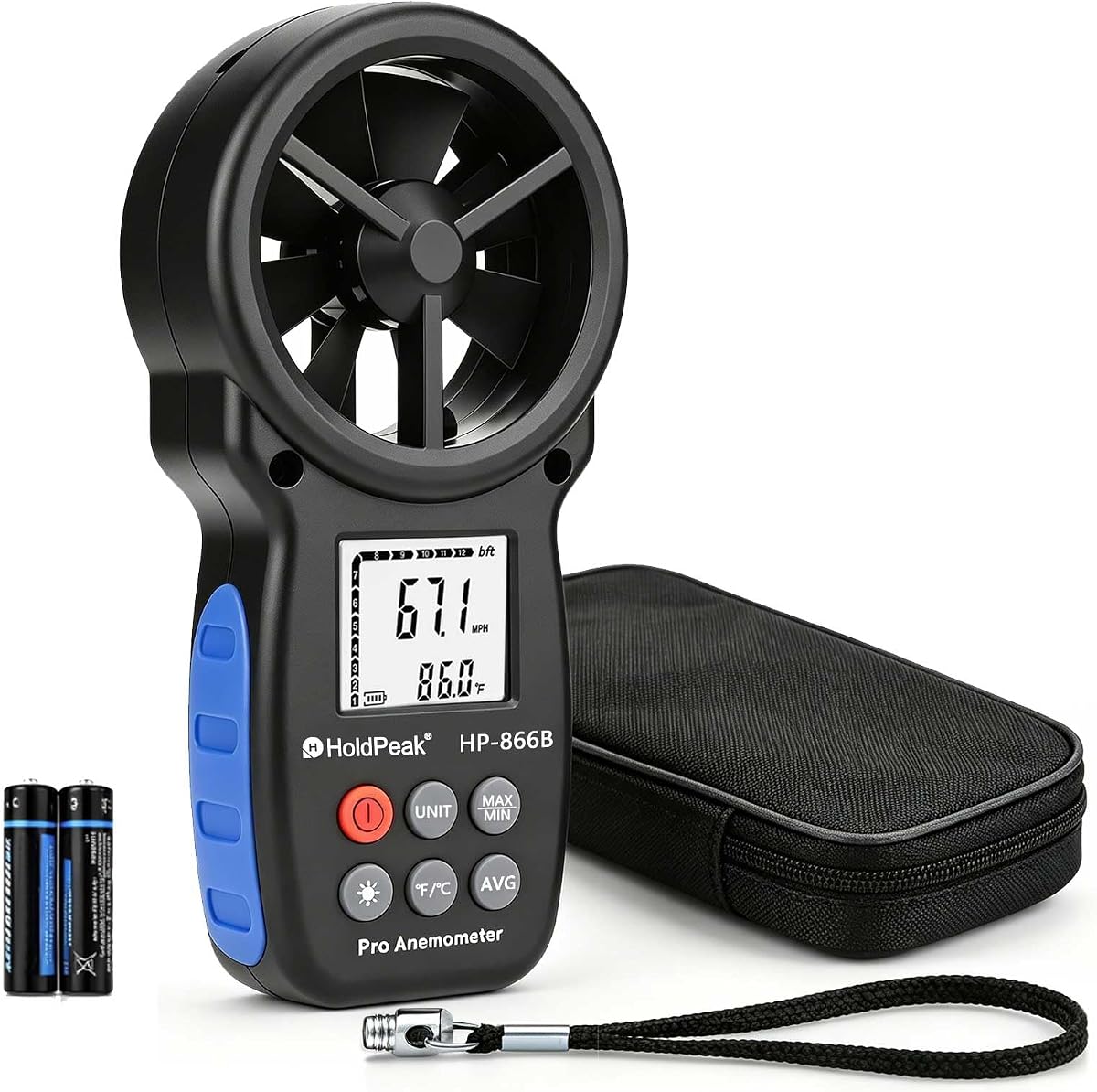
The HoldPeak 866B offers robust wind speed detection with a 4.5 rating, featuring dual sensors for accurate environmental readings. It stands out with practical accessories like a waterproof pouch.
We may earn a commission when you buy through this link, at no additional cost to you.
Its max/min/average modes help track wind trends over time, essential for planning sailing trips or monitoring HVAC systems. The hand strap ensures safety during active use.
The compact display can be hard to read in bright sun, and it lacks wind chill metrics. However, these are minor drawbacks compared to its durability and functionality.
Ideal for outdoor enthusiasts needing consistent readings with added protection. This unit is a solid choice for those who value safety and convenience in their gear.
Accessing max/min/average data allows users to understand peak gusts versus steady winds for better safety planning.
The included hand strap prevents accidental drops during rough conditions, a vital safety feature on boats.
We may earn a commission when you buy through this link, at no additional cost to you.
The Inspeed Magnetic Mount Anemometer scores 4.7 stars for its convenient magnetic attachment and calibrated precision. It simplifies the process of measuring wind instantly without tools.
We may earn a commission when you buy through this link, at no additional cost to you.
Its portability and accuracy make it suitable for quick checks before races or hikes. The strong magnetic base ensures it stays in place even on moving surfaces.
The higher cost may be a barrier for some, and unit options are limited compared to handhelds. However, the speed of installation often justifies the investment.
Perfect for users who prioritize quick deployment and reliable accuracy. It bridges the gap between professional equipment and casual usage effectively.
The magnetic base allows attachment to metal surfaces in seconds, saving valuable preparation time.
Factory calibration ensures readings are trustworthy immediately, reducing the need for user adjustments.
We may earn a commission when you buy through this link, at no additional cost to you.
This Raymarine I60 display unit offers a modular approach to marine instrumentation, rated 3.9 stars. It provides a sleek interface for existing wind systems or new setups.
We may earn a commission when you buy through this link, at no additional cost to you.
Its compatibility with ST series sensors allows for flexible integration into older vessels. The design focuses on readability with a high-contrast screen.
Without a sensor, it relies on separate purchases, which can increase total cost. Users must ensure their existing hardware is compatible before buying.
Best for sailors upgrading their dashboard or replacing a faulty display. It maintains the trusted Raymarine quality and integration standards.
Separating display and sensor allows for cost-effective upgrades when only one component fails.
Integration with existing ST50/60 systems protects previous investments in marine hardware.
We may earn a commission when you buy through this link, at no additional cost to you.
The TopTes TS-301 earns a 4.6-star rating for its large screen and comprehensive data display, including humidity. It is designed for quick outdoor assessments and HVAC checks.
We may earn a commission when you buy through this link, at no additional cost to you.
The bright backlight ensures visibility in low-light conditions like early morning sailing. Auto shut-off helps extend battery life during infrequent use.
Sensors may take 30 minutes to stabilize in new environments, which can delay immediate use. However, once stable, the readings are dependable.
Ideal for users who need clear, multi-parameter readings in a compact device. It combines ease of use with useful extra features.
The large screen reduces eye strain and makes data accessible even with gloves or sunglasses.
Auto power off saves energy, making it practical for long trips without frequent battery changes.
We may earn a commission when you buy through this link, at no additional cost to you.
This Raymarine kit provides essential replacement parts for ST50, ST60, and ST80 instruments, rated 4.1 stars. It ensures continued functionality for existing marine systems.
We may earn a commission when you buy through this link, at no additional cost to you.
It includes the vane, cups, and necessary hardware to rebuild a worn sensor. Genuine parts guarantee compatibility and longevity on saltwater vessels.
Installation may require some mechanical skill and tools, which could be a hurdle for novices. But for restoring old gear, it is the best path.
Perfect for boat owners maintaining older Raymarine systems. It offers a cost-effective way to extend the life of trusted instrumentation.
Replacing worn cups restores the sensitivity needed for precise wind direction and speed tracking.
Using genuine parts avoids the compatibility issues of third-party alternatives, ensuring system reliability.
We may earn a commission when you buy through this link, at no additional cost to you.
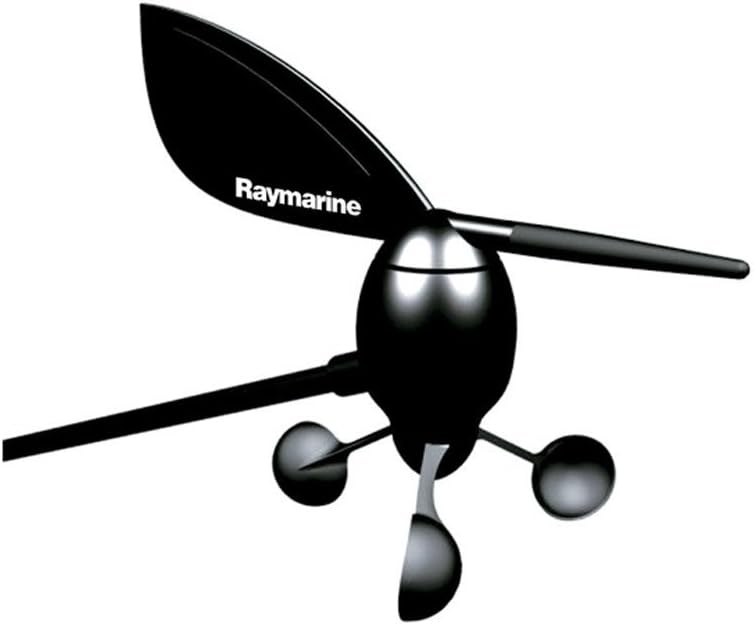
This Masthead assembly represents the latest in marine wind sensing, rated 4.4 stars. It is engineered to withstand harsh conditions while delivering reliable data.
We may earn a commission when you buy through this link, at no additional cost to you.
The design includes all necessary components for a fresh installation. Its resistance to saltwater corrosion makes it ideal for coastal and offshore use.
Installation requires climbing the mast or professional service, which adds to the overall effort. But the durability justifies the process for serious sailors.
Best for upgrading older sensors or replacing damaged units with a premium solution. It ensures accurate readings even in tough environments.
Modern materials resist corrosion better than older models, extending the lifespan significantly in marine environments.
Having all necessary parts in one package simplifies sourcing and ensures every component matches the design.
We may earn a commission when you buy through this link, at no additional cost to you.
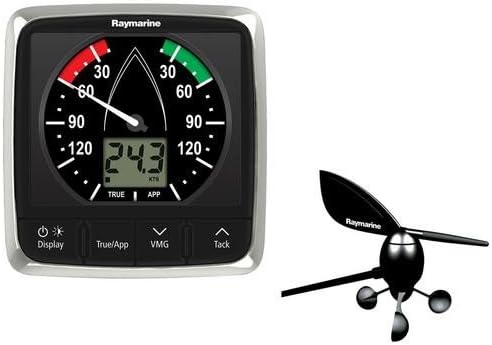
The Raymarine i60 Wind System earns 4.4 stars as an all-in-one solution for serious sailors. It combines a masthead transducer with a high-quality display.
We may earn a commission when you buy through this link, at no additional cost to you.
Its low power consumption ensures it won't drain your battery bank over long voyages. The high-contrast dial ensures visibility in all lighting conditions.
The price is higher than handhelds, and you must have access to the masthead for installation. However, it provides critical data integrated into the helm.
Perfect for boat owners seeking a reliable, integrated wind system. It balances performance, readability, and power efficiency for serious marine use.
A full kit simplifies setup by providing matching components that work seamlessly together.
Minimal power draw ensures continuous operation without impacting your vessel's battery management system.
We may earn a commission when you buy through this link, at no additional cost to you.
This system offers top-tier performance with a 4.6 rating, providing advanced data like true wind angle. It is built to withstand the harshest marine conditions.
We may earn a commission when you buy through this link, at no additional cost to you.
Its customizable display ensures you can access exactly the data you need instantly. The robust construction ensures trouble-free operation over years of use.
The cost is significant, and setup may require professional installation for optimal results. But for competitive sailors, the data precision is worth it.
Ideal for racers or cruisers demanding maximum accuracy and durability. It sets the standard for high-end marine wind instrumentation.
True wind angle data helps optimize sail trim and routing beyond simple speed readings.
Configurable screens let you prioritize the metrics that matter most for your specific sailing style.
We may earn a commission when you buy through this link, at no additional cost to you.
The Mcbazel 3-in-1 offers practical wind measurement with a 4.5 rating. It is designed for diverse uses from HVAC checks to fishing and sailing.
We may earn a commission when you buy through this link, at no additional cost to you.
Its Beaufort scale gives a quick reference for wind force, which is helpful for laypeople. The data hold function lets you record values away from the source.
Build quality is basic compared to marine-grade units, so it may need more care. But it is an excellent entry-level tool for casual use.
Best for casual users needing an affordable, multi-purpose wind meter. It provides essential data without overwhelming complexity or cost.
The Beaufort scale simplifies complex speeds into familiar categories for non-technical users.
Hold functions and auto-off ensure the device is easy to operate in dynamic environments.
We may earn a commission when you buy through this link, at no additional cost to you.
Selecting the right marine anemometer requires understanding your specific needs, from casual sailing to competitive racing.
Accuracy is paramount for sailing safety and performance. Look for devices with clear tolerances, such as +/- 2% of readings. Professional-grade units often undergo calibration to ensure reliability in varying conditions.
Prioritize models that offer verified accuracy to trust your navigation decisions completely.
Mounting styles vary from handheld units to fixed masthead systems. Handhelds are portable and easy to store but require manual holding. Fixed systems provide continuous data but need installation on the mast.
Choose handhelds for casual use and masthead systems for long-term navigation needs.
Marine environments are harsh with saltwater and UV exposure. Devices should have robust housing, IP ratings, and corrosion-resistant materials to withstand these elements over years of operation.
Always verify saltwater compatibility and durable construction materials for longevity.
Beyond basic wind speed, features like true wind angle, gust tracking, and wind chill can enhance performance. Decide which metrics are critical for your sailing style or professional needs.
Select features that directly support your navigation and safety requirements.
Battery life affects usability on long trips. Units with auto-shutdown and low-power designs extend battery life. Consider rechargeable options or standard batteries for convenience.
Choose power-efficient devices to avoid interruptions during critical moments.
Readability in bright sunlight or at night is crucial. Look for backlit LCD screens, high contrast, or red backlighting options. Larger displays reduce eye strain during extended use.
Opt for displays with backlighting for safety in all lighting conditions.
If integrating with existing marine electronics, ensure the anemometer works with your display or network. NMEA 0183 or NMEA 2000 standards are common for data transfer.
Check system compatibility to avoid integration issues with your current setup.
Cost ranges from budget handhelds to premium systems. Assess whether you need basic measurements or advanced data. Higher costs often reflect durability and accuracy, but mid-range options offer good value.
Set a realistic budget that balances performance needs with affordability.
Ensure the device is calibrated according to the manufacturer's instructions before first use to guarantee accurate wind readings. For masthead units, secure all connections tightly to prevent movement during high winds.
Regularly clean the sensors and cups with fresh water to remove salt deposits and debris. Salt buildup can hinder movement and accuracy, so a simple rinse after saltwater exposure helps maintain performance.
Store handheld units in a protective case to prevent physical damage and exposure to elements when not in use. Remove batteries if the device will not be used for extended periods to prevent leakage.
Apparent wind is the wind you feel on the boat, while true wind is the actual wind direction and speed over the water. Advanced marine anemometers calculate true wind by using boat speed and heading data alongside apparent wind measurements.
Yes, handheld anemometers can be used for casual sailing or checking conditions before launching. However, they lack the continuous data and mounting stability of dedicated marine systems for long voyages.
It is recommended to calibrate marine wind sensors annually or whenever accuracy is suspected to have drifted. Regular maintenance checks ensure the vane and cups rotate freely for precise readings.
Most quality marine anemometers are designed to withstand high winds typical of marine environments. Check the max wind speed rating to ensure it covers the conditions you expect to encounter on the water.
Most handheld marine anemometers use standard AAA batteries for convenience. Some models may require AA batteries. Always carry spares for long trips to ensure continuous functionality.
Installing a masthead sensor involves climbing the mast, which should be done by a professional for safety. Follow manufacturer instructions for cable routing to ensure no interference with other rigging.
The ten marine anemometers reviewed offer a range of options from portable handhelds to integrated masthead systems. Whether you need quick checks or continuous data, each model provides valuable features for different sailing needs.
Prioritize accuracy, durability, and ease of reading when selecting a device. Consider your specific use cases, such as racing or leisure, to ensure the chosen unit meets your expectations for reliability.
Remember that prices and availability can change frequently. Always verify current listings and compatibility with your boat before making a final purchase to ensure satisfaction.