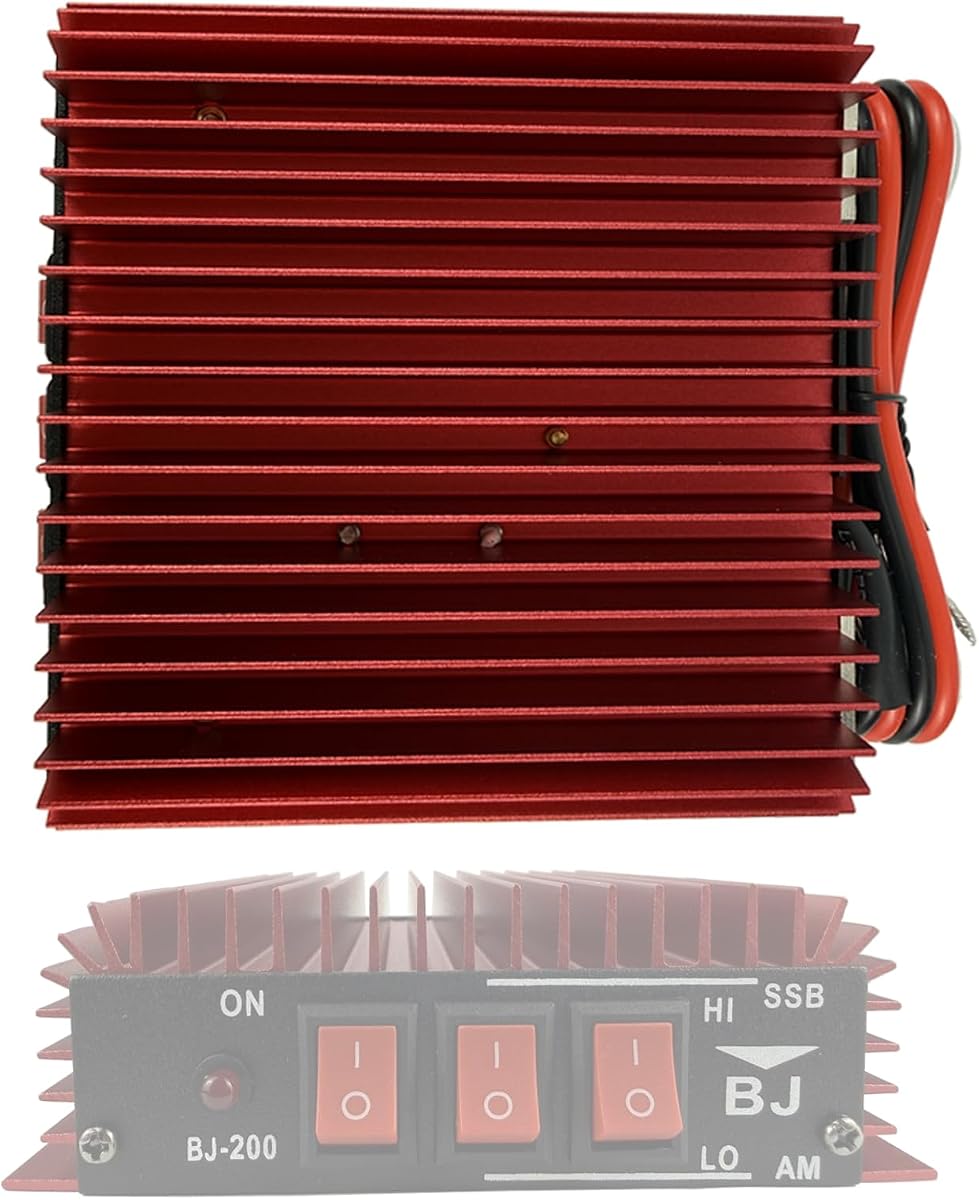
BJ-200 Linear Power AMP
5.0Editor score
Compact durable build
3-30MHz frequency range
Simple user controls
Explore our expert review of the top 10 linear amplifiers for ham radio in October 2026, comparing features and performance for HF operators.
Linear amplifiers are essential tools for ham radio operators seeking to extend their communication range and improve signal clarity across various bands and modes.
This guide evaluates ten distinct models based on power output, band compatibility, thermal management, and user feedback to help you find the right match for your station.
Each selection highlights specific strengths and limitations while noting that pricing and availability may fluctuate over time due to market demand and supply chain factors.
5.0Editor score

4.2Editor score

3.9Editor score
The following table provides a side-by-side overview of each model's core specifications and capabilities to assist in rapid comparison during your decision process.


The Xiegu GPA100 stands out as a high-performance linear amplifier designed specifically for operators needing reliable signal boost without complexity.
We may earn a commission when you buy through this link, at no additional cost to you.
Its intelligent control system detects high SWR or overheating to protect both the amplifier and your connected transceiver during extended sessions.
While it focuses on HF performance the Bluetooth integration with IC-705 offers seamless band switching that simplifies mobile or field operations significantly.
This model is ideal for those who value clean signal purity and automated features to enhance their QRP setup into a full-power station.
Wireless connectivity eliminates cable clutter while ensuring your radio always transmits on the correct frequency band automatically.
Built-in safeguards detect anomalies like overcurrent or low efficiency to maintain safety and extend the lifespan of internal components.
We may earn a commission when you buy through this link, at no additional cost to you.
This unit delivers strong power levels suitable for both CB and ham radio applications with clear switches for power and mode selection.
We may earn a commission when you buy through this link, at no additional cost to you.
It includes essential safety features like polarity reversal protection to prevent damage from incorrect connections which is vital for mobile setups.
The included cooling fan helps manage thermal load during long transmissions though users should monitor ambient temperatures in hot environments.
Best suited for hobbyists looking for an affordable way to boost signal strength across AM FM and SSB modes without complex integration.
Designed to work with low power inputs typical of many portable transceivers ensuring easy integration into existing radio setups.
We may earn a commission when you buy through this link, at no additional cost to you.
A versatile amplifier option that supports a variety of modulation modes making it useful for users who switch between voice and digital transmissions.
We may earn a commission when you buy through this link, at no additional cost to you.
The red aluminum heat sink combined with an active fan ensures components stay cool during operation which helps maintain consistent output power.
While it lacks advanced automation its straightforward interface allows new users to understand controls quickly without referencing extensive manuals.
This product serves well for casual operators or temporary setups where budget and simplicity are prioritized over high-end features.
Electronic protection circuits guard against electrical surges and reversed polarity providing peace of mind during installation and daily use.
We may earn a commission when you buy through this link, at no additional cost to you.
This broadband amplifier targets HF transceivers with specific low power input needs ensuring efficient signal boosting without excessive power draw from the source.
We may earn a commission when you buy through this link, at no additional cost to you.
It features a clear HI/LO power switch allowing operators to adjust output strength depending on propagation conditions or contact distance requirements.
Overvoltage protection helps prevent internal damage during power surges which is common in outdoor or vehicle-mounted radio environments.
Ideal for those needing a dedicated HF boost with straightforward controls and minimal setup complexity for reliable daily communication.
Switchable power levels let users balance signal strength and battery consumption effectively during portable operations or field days.
We may earn a commission when you buy through this link, at no additional cost to you.
With a perfect user rating this amplifier offers excellent value by delivering solid performance across 3-30MHz without breaking the budget.
We may earn a commission when you buy through this link, at no additional cost to you.
The red aluminum alloy heat sink provides reliable thermal management which is crucial for maintaining performance during continuous transmission periods.
Operators appreciate the clear ON/OFF switches and power adjustment knobs that make it easy to control output levels quickly in the field.
This model is highly recommended for beginners or those needing a secondary amp for casual CB and ham radio activities with minimal fuss.
The rugged compact form factor allows installation in tight vehicle spaces or small home stations without compromising operational stability.
We may earn a commission when you buy through this link, at no additional cost to you.
The XPA125B combines a power amplifier with an automatic antenna tuner simplifying station setup for QRP users needing 100 watt output reliability.
We may earn a commission when you buy through this link, at no additional cost to you.
Its large LCD screen displays vital parameters like SWR and voltage which helps operators monitor system health in real time during contacts.
Intelligent protection circuits detect faults and switch to bypass mode preventing damage to the amplifier or your connected transceiver automatically.
This unit is best for advanced operators who want integrated tuning capabilities to maximize efficiency across the HF and 6-meter bands.
The tuner can operate separately from the amp giving users flexibility to upgrade their station piece by piece over time.
We may earn a commission when you buy through this link, at no additional cost to you.
This amplifier board offers a flexible solution for custom radio builds targeting CW and SSB modes with minimal distortion for clear signals.
We may earn a commission when you buy through this link, at no additional cost to you.
It covers the entire shortwave spectrum using broadband circuitry so no manual tuning is required when switching between different frequency segments.
Integrated heat sinking and stable circuit design protect against voltage fluctuations ensuring the board runs cool even during extended transmitting cycles.
Ideal for DIY enthusiasts building portable stations who need a compact module to boost signal strength without full chassis enclosures.
High efficiency transistors ensure clean audio and precise Morse code transmission which is vital for contesting and DXing.
We may earn a commission when you buy through this link, at no additional cost to you.
Designed for straightforward integration this unit uses a simple three-wire connection to interface quickly with CB radio systems and antennas.
We may earn a commission when you buy through this link, at no additional cost to you.
Its wide DC input range ensures stable operation even when the vehicle power supply fluctuates which is common during engine startups.
Standard SO-239 connectors match common antenna cables so no adapters are required to link the amplifier into your existing transmission line.
This is a no-frills option for users who need basic signal amplification without complex features or additional setup requirements.
Compatible with standard automotive power supplies making it a suitable choice for mobile communication setups in trucks or cars.
We may earn a commission when you buy through this link, at no additional cost to you.
Unlike transmit amplifiers this device acts as a low noise amplifier to boost weak signals for better reception across a vast frequency range.
We may earn a commission when you buy through this link, at no additional cost to you.
With 32dB gain it significantly improves signal clarity for distant stations making it perfect for SDR software defined radio and shortwave listening.
It consumes very low current allowing portable battery operation which is ideal for field monitoring or temporary installation without mains power.
Buyers should note this is designed for receive applications only so it cannot increase transmission power for outbound communications directly.
Its low current draw and standard impedance make it a great companion for portable field operations and remote monitoring setups.
We may earn a commission when you buy through this link, at no additional cost to you.
This variant of the XPA125B is tailored for seamless integration with Xiegu host transceivers ensuring automatic tuning and efficient operation.
We may earn a commission when you buy through this link, at no additional cost to you.
Users benefit from consistent output power maintained by the advanced tuning system which reduces the need for manual frequency adjustments.
Premium materials and dedicated support from Xiegu technicians promise long-term reliability and quick resolution of any operational issues.
Best for existing Xiegu users seeking a cohesive upgrade path that maximizes communication efficiency without requiring third-party configurations.
Designed specifically for G90 and G106 series this unit ensures optimal performance when paired with Xiegu brand equipment directly.
We may earn a commission when you buy through this link, at no additional cost to you.
Selecting the right amplifier involves balancing power output, frequency coverage, and protection features to match your specific station goals.
Determine your target output wattage based on your operating needs such as local contacts or long-distance DXing. Most legal limits cap at 1500W so ensure your chosen model stays within regulations while providing enough margin for your setup.
Focus on models offering stable output at your desired power level without significant distortion or thermal stress.
Verify which bands the amplifier supports. Some units target HF only while others cover VHF or UHF bands. Broadband models offer flexibility but may lack optimization for specific frequencies compared to tuned designs.
Choose a unit that matches the bands you use most frequently to ensure optimal performance across your primary communication channels.
Ensure your transceiver can provide the required drive power. Some amps need 5W input while others work with 1W. Mismatched input levels can lead to poor amplification or damage to the amplifier components.
Check your radio's manual to confirm it meets the input specifications before purchasing the amplifier to avoid compatibility issues.
Reliable protection against overheating, high SWR, and overvoltage is critical for longevity. Look for units with automatic shutdown or bypass modes that prevent harm during transmission errors or antenna faults.
Prioritize amplifiers with multiple protection circuits to safeguard your investment and your connected radio equipment.
Continuous operation generates significant heat so efficient cooling is essential. Fan-cooled units handle higher loads than passive heat sinks but may be noisier. Consider where you will install the unit to balance noise and performance.
Select a cooling system that maintains safe operating temperatures during your typical transmission durations and duty cycles.
Modern units often offer Bluetooth or automatic band switching to reduce cable clutter and simplify operation. These features are especially helpful for mobile or remote stations where manual adjustments are inconvenient.
Evaluate whether smart features like automatic tuning align with your workflow preferences and available station infrastructure.
Look for units with robust enclosures and quality components if you plan to use the amplifier in vehicles or field environments. Rugged designs withstand vibration and temperature changes better than lightweight alternatives.
Invest in durable construction to ensure your amplifier performs reliably over many years of regular use.
After-sales support can be vital if issues arise. Check if the manufacturer provides clear manuals, responsive technical support, and a reasonable warranty period to cover potential defects.
Opt for brands with established service networks to minimize downtime if your equipment needs repair.
Always connect your amplifier between your transceiver and the antenna ensuring all cables are secure to prevent signal reflection or loss during operation.
Monitor the amplifier's temperature during extended transmissions and allow it to cool down after heavy use to prevent overheating and extend its lifespan.
Regularly inspect connectors and internal fans for dust accumulation which can impede cooling and lead to performance degradation over time.
Most high-power linear amplifiers need an external power supply capable of delivering sufficient current at the required voltage such as 13.8V. Always check the amp's specifications to ensure your power source can handle the load without voltage drops during transmission.
Not all amplifiers are compatible with every transceiver. Verify that your radio provides the necessary input drive power and supports the control protocols or band switching methods required by the amplifier for safe and effective operation.
High SWR can damage your amplifier or radio. Most modern amps have built-in protection that detects high SWR and reduces power or shuts off transmission to prevent component failure until the antenna system is corrected.
Yes, provided they comply with local regulations such as FCC limits. Ensure your amplifier does not exceed legal output limits like 1500W PEP and that you hold the proper license for the band you are using.
Many modern amplifiers include automatic tuning functions. For manual units, follow the manufacturer's steps to adjust capacitors and inductors while monitoring output power until peak efficiency is reached at your operating frequency.
Yes, linear amplifiers preserve signal integrity making them suitable for digital modes. Ensure the amplifier operates within its linear range to avoid distortion that could corrupt data transmissions during high-speed digital communication.
Our analysis highlights ten distinct options ranging from budget-friendly units to premium integrated systems suitable for various operating styles and technical preferences.
Prioritize models that offer robust protection and proper band coverage to ensure your station remains reliable during critical communications or field deployments.
Always verify current product listings and specifications before purchase as features and availability may change over time to meet evolving industry standards.