
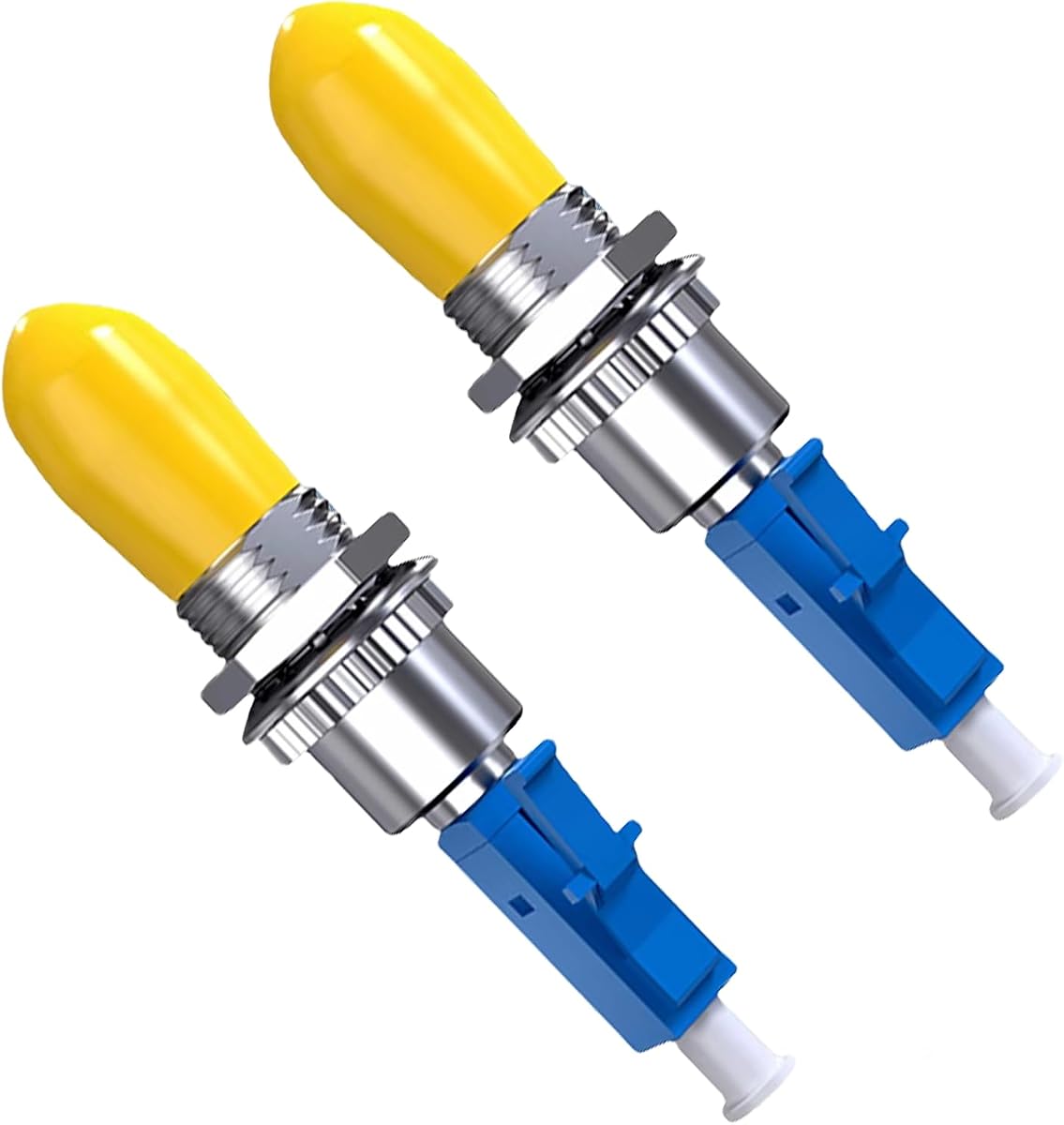
ST to LCU Fiber Optic Adapter 2Pack
5.0Editor score
Precision Ceramic Sleeves
Robust Metal Housing
Tool-Free Installation
This guide compares the top LC to ST fiber optic adapters for network upgrades, testing, and legacy integration with detailed specs and performance analysis.
Finding the right LC to ST fiber optic adapter is crucial for maintaining signal integrity during network transitions. These adapters bridge the gap between older ST connectors and modern LC interfaces, ensuring seamless connectivity across diverse infrastructure setups.
We evaluated ten top-rated products based on insertion loss, return loss, durability, and compatibility. Each option was selected for its ability to support single-mode and multimode applications while delivering reliable performance in demanding environments.
Each pick highlights key specifications and ideal use cases to help you choose wisely. Prices and availability may change over time, so verify current details before purchasing to ensure you get the best value for your project needs.
5.0Editor score

4.8Editor score

5.0Editor score
The following table provides a side-by-side comparison of all ten products. It highlights key specifications like fiber type, wavelength, and connector configuration to help you quickly identify the right fit for your specific networking requirements.


This adapter stands out as the top choice for professionals needing reliable single-mode conversions. With a rating of 4.8, it delivers exceptional insertion and return loss specs that minimize signal degradation in critical links.
We may earn a commission when you buy through this link, at no additional cost to you.
The ceramic and metal sleeve material ensures durability while the compact design fits standard panels. Its ability to handle wavelengths at 1310nm and 1550nm makes it ideal for telecom maintenance and optical power meter checks.
While it lacks multimode support, its performance for single-mode applications is unmatched in this price range. The inclusion of three adapters in one pack adds significant value for bulk projects or redundant setups.
Network technicians seeking a balance of price and performance should choose this model. It bridges legacy ST and modern LC systems efficiently without compromising signal integrity.
The low insertion loss of 0.2dB ensures minimal signal attenuation across 1310nm and 1550nm bands, critical for high-speed data transmission and accurate measurement readings.
With over 1000 plug insertions rated and high flame retardancy, this adapter withstands frequent use in harsh environments without degrading performance.
We may earn a commission when you buy through this link, at no additional cost to you.
Achieving a perfect 5.0 rating, this adapter pack offers exceptional value for budget-conscious users. It provides the same high-quality specs as the three-pack but focuses on cost-efficiency for smaller projects.
We may earn a commission when you buy through this link, at no additional cost to you.
Its design supports continuity checks with visual fault locators and ensures stable signal transmission. The hybrid connector configuration allows easy transition between LC and ST standards in optical networks.
The two-pack limit may require multiple purchases for large deployments, but quality remains high. Users prioritizing reliability over quantity will appreciate the robust construction and precise alignment features.
Ideal for field technicians needing spare connectors without breaking the bank. This adapter simplifies legacy equipment integration with modern LC-based systems effectively.
Designed to work seamlessly with visual fault locators and optical power meters, this adapter ensures accurate diagnostics and minimal disruption during network maintenance tasks.
Its small footprint allows dense packing in patch panels while maintaining structural integrity against impact and temperature fluctuations.
We may earn a commission when you buy through this link, at no additional cost to you.
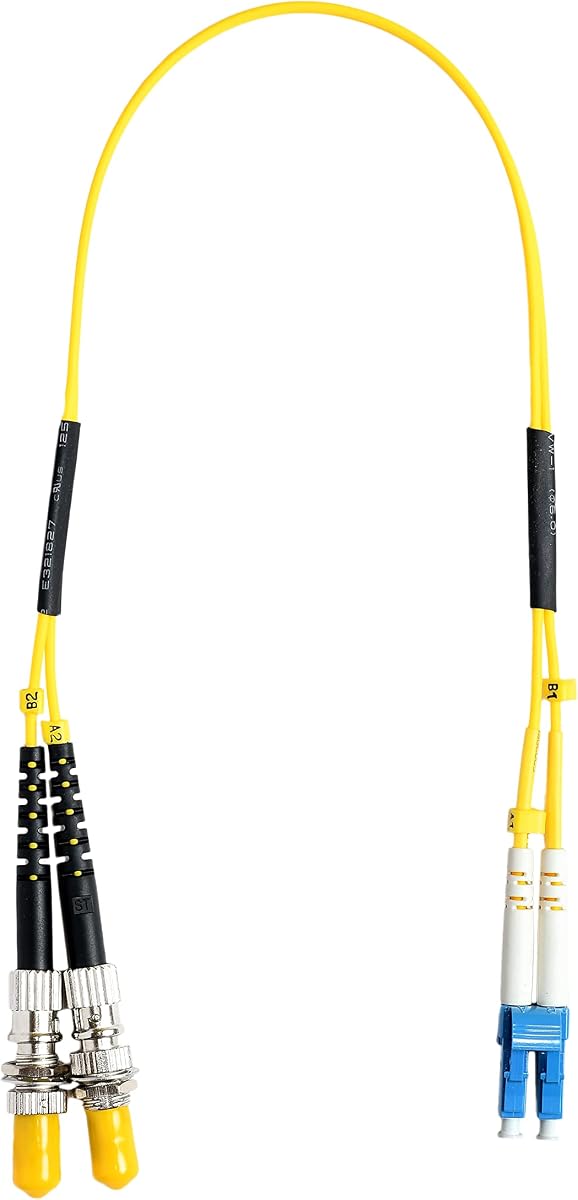
This product differs by including a 1ft cable lead, eliminating the need for separate patch cords. It is factory terminated and tested for link loss, ensuring immediate usability in sensitive environments.
We may earn a commission when you buy through this link, at no additional cost to you.
The LSZH jacket minimizes smoke and halogen emissions during fires, making it safer for enclosed spaces. Its duplex configuration supports bidirectional data flow over single-mode fiber efficiently.
While it lacks a user rating, the specifications indicate high manufacturing standards. The 2.0mm outer diameter provides a balance between flexibility and protection for the internal fibers.
Perfect for installations requiring quick connectivity without extra cabling work. It is an excellent choice for temporary setups or testing phases needing reliable short runs.
The Low Smoke Zero Halogen jacket ensures safer performance in confined spaces by reducing hazardous emissions during fire incidents.
Factory termination saves time during installation since the link is pre-tested for loss and return loss performance.
We may earn a commission when you buy through this link, at no additional cost to you.
Designed specifically for multimode applications, this adapter cable supports the 62.5/125 standard common in legacy LANs. Its optimized wavelength for 850nm ensures efficient signal transmission for short-range data.
We may earn a commission when you buy through this link, at no additional cost to you.
The standard zip cord jacket provides flexibility while maintaining durability for indoor use. It connects LC male to ST female ports easily, simplifying transitions in older network infrastructures.
Some users might find the 1ft length restrictive for complex routing. However, for direct patching or testing, it offers a straightforward solution backed by a strong rating.
Choose this for multimode projects where legacy equipment requires immediate connectivity. It saves time by combining the adapter and patch cord into one component.
Its multimode focus makes it ideal for connecting older servers or switches that use 62.5/125 fiber standards without requiring expensive upgrades.
Targeting 850nm ensures maximum efficiency for common multimode transmission ranges used in local area networks.
We may earn a commission when you buy through this link, at no additional cost to you.
This kit stands out as a premium solution for professionals managing diverse fiber types. It includes interchangeable connectors covering FC, SC, ST, and LC, offering a one-stop tool for various OTDR needs.
We may earn a commission when you buy through this link, at no additional cost to you.
Its metal housings provide excellent corrosion resistance and structural stability over long periods. With insertion loss under 0.2DB, it ensures precise measurements for testing and maintenance operations.
The cost is higher than single adapters, but the versatility justifies the investment for field teams. It eliminates the need to purchase multiple separate adapters for different connector types.
Ideal for service providers dealing with varied customer sites. This kit streamlines workflows by providing all necessary transitions in a single reliable package.
Covering all major fiber optic connector types allows technicians to handle any installation scenario without carrying multiple adapter boxes.
The durable metal housings withstand daily rough handling and exposure to environmental factors while maintaining precision alignment.
We may earn a commission when you buy through this link, at no additional cost to you.
This adapter pack combines affordability with top-tier performance metrics. It allows legacy ST systems to communicate with modern LC networks seamlessly without losing signal quality.
We may earn a commission when you buy through this link, at no additional cost to you.
The threaded ST coupling ensures vibration-resistant connections critical in industrial or high-traffic areas. Its push-pull LC side simplifies installation while maintaining security during data transfers.
Users should note that this is for single-mode applications only. But within its scope, the ceramic sleeves and metal housing provide reliability that matches pricier competitors.
Best for enterprise upgrades where budget matters. It bridges old and new systems efficiently while keeping downtime to a minimum.
The threaded ST coupling mechanism locks cables tightly, reducing the risk of accidental disconnections due to movement or vibration.
It helps organizations modernize their backbone without replacing existing equipment, extending the lifespan of legacy hardware cost-effectively.
We may earn a commission when you buy through this link, at no additional cost to you.
This adapter cable offers the reverse orientation of typical ST-to-LC options. It connects an LC female port to an ST male port, useful for specific legacy patching scenarios.
We may earn a commission when you buy through this link, at no additional cost to you.
With a 4.9 rating, it reflects high user satisfaction regarding build quality and signal integrity. The 62.5/125 multimode fiber ensures compatibility with older networking hardware.
The standard zip cord provides enough flexibility for routing without bulk. While limited to multimode, it is perfect for connecting end devices to legacy switches.
Select this when your setup requires a female LC input. It resolves connectivity issues where standard patch cables cannot fit the port configuration.
This specific female-to-male orientation solves unique connectivity challenges in legacy systems where port types are reversed.
High user ratings indicate reliability and ease of use, making it a trusted choice for quick fixes in office environments.
We may earn a commission when you buy through this link, at no additional cost to you.
This model targets single-mode networks requiring duplex connectivity. It supports 1310nm wavelength, making it suitable for medium-range transmission needs without extra adapters.
We may earn a commission when you buy through this link, at no additional cost to you.
Although it has a slightly lower rating than multimode counterparts, it remains reliable for specific testing or short connections. The LC male to ST female design fits standard patch panels easily.
Users should verify their fiber core size before purchase to avoid mismatch issues. It is best used in controlled environments where signal loss is carefully monitored.
Ideal for linking network cards to switches in office LANs. It simplifies cabling by combining the adapter and cable into one unit.
Designed for 9/125um fiber, this cable ensures precise alignment for single-mode transmission, minimizing losses over short distances.
Optimized for 1310nm, it provides stable performance for standard LAN data transmission requirements.
We may earn a commission when you buy through this link, at no additional cost to you.
This adapter excels in performance with incredibly low insertion loss. Its UPC contacts ensure smooth light transmission for optical power meters and red light pens used in diagnostics.
We may earn a commission when you buy through this link, at no additional cost to you.
Suitable for both 1310nm and 1550nm bands, it fits FTTH and CATV projects well. The simplex design means it handles one strand of fiber, ideal for specific test leads.
Users should note it is for simplex cables, not duplex. But for targeted tasks like continuity testing, its specs offer precision that exceeds average adapters.
A solid pick for specialized testing scenarios. It ensures your measurements are accurate without interference from connector mismatches.
With insertion loss as low as 0.04dB at 1550nm, this adapter minimizes signal degradation for precise optical measurements.
Compatible with visual fault locators and optical power meters, making it a reliable tool for field technicians and engineers.
We may earn a commission when you buy through this link, at no additional cost to you.
This adapter cable bridges an LC female port to an ST male port in single-mode duplex. It simplifies connections by eliminating separate adapter steps for quick installations.
We may earn a commission when you buy through this link, at no additional cost to you.
With a solid 4.6 rating, it is trusted for consistent performance in office LANs. The 1ft length is perfect for direct device connections without excess cable clutter.
Users should ensure the male ST connector matches their target port type. It is designed for standard duplex transmission in controlled environments.
Great for patching equipment with mismatched ports directly. It ensures reliable data flow between devices without needing custom wiring.
Integrating the adapter and cable saves setup time, reducing potential points of failure in the link chain.
Maintaining consistent specs for 1310nm wavelength ensures stable data transmission for business applications.
We may earn a commission when you buy through this link, at no additional cost to you.
Selecting the right adapter involves understanding fiber types, connector configurations, and environmental needs. This guide covers the essential factors to ensure compatibility and performance.
Fiber optic adapters are specific to the core size of the fiber cable. Single-mode adapters typically use 9/125um fibers, while multimode uses 62.5/125um or 50/125um. Using the wrong type can cause high insertion loss or signal failure.
Always check your existing infrastructure's core size before buying an adapter to ensure the connection matches perfectly.
Insertion loss measures how much signal is lost as it passes through the adapter. A value below 0.2dB is ideal for maintaining signal strength. Return loss measures reflected signal, where higher values (above 50dB) indicate better performance.
Prioritize adapters with low insertion and high return loss to minimize data degradation over long distances.
The end-face polishing affects return loss. UPC (Ultra Physical Contact) adapters are standard for most data networks, while APC (Angled Physical Contact) reduces reflection further for high-quality transmission.
Match the polish type on your patch cords with the adapter to avoid signal reflections.
Adapters connect two female connectors or act as a pigtail. Some options include integrated patch cables with male-to-female setups. Ensure the gender matches your equipment ports or cable connectors.
Check if you need a standalone adapter or a pre-terminated cable for your specific setup.
Industrial environments require adapters with robust metal housings and temperature ratings. Look for models that specify wide operating ranges (like -40 to 95C) and flame-retardant materials.
Select durable housings to withstand harsh conditions without failing.
Some adapters use bayonet-style ST couplings for secure locking, while others rely on snap-fit LC mechanisms. Ensure the coupling style fits your panel slots and allows tool-free installation.
Choose designs that offer secure locking to prevent accidental disconnections.
Many adapters come in 2 or 3 packs to reduce the per-unit cost. If you need multiple connectors, buying in bulk is more economical than single units.
Review the price per adapter to find the best value for your project size.
If you use optical power meters or red light pens, ensure the adapter is compatible with standard testing tools. Some models mention specific compatibility for continuity checks.
Verify that the adapter meets testing standards to avoid instrument errors.
Before installing, inspect the fiber ends for dust or scratches. Use a clean fiber optic cleaner to wipe the ferrules on your patch cords to avoid signal loss caused by debris.
Insert the ST connector into the male side of the adapter by twisting it clockwise until it clicks. Ensure the LC connector snaps securely into the female side without forcing it.
Avoid bending the cable too sharply near the adapter to prevent fiber breakage. Store unused adapters in protective caps to keep the ferrules clean for future use.
No, adapters are specific to single-mode or multimode fibers. Using a single-mode adapter with multimode cable can lead to signal loss. Always verify your fiber core size (9/125um vs 62.5/125um) before purchase.
UPC stands for Ultra Physical Contact. It refers to the polish of the fiber end-face, which is optimized for low reflection. It is the standard for most data networks compared to APC.
Most standard adapters work outdoors if housed in a weatherproof enclosure. For direct outdoor exposure, choose models with high temperature ratings and corrosion-resistant metal housings.
Simplex uses one fiber strand, while duplex uses two for bidirectional data. Most network connections require duplex. Check if your equipment requires separate Tx/Rx cables.
Yes, both configurations work depending on your port types. An ST male to LC female adapter connects a male ST plug to a female LC port, and vice versa for the reverse.
Quality adapters are rated for over 1000 mating cycles. With proper handling and cleaning, they can last many years in standard office or enterprise environments.
No, these adapters are designed for tool-free installation. The ST side twists and the LC side snaps into place, making setup quick and efficient without screwdrivers.
The adapter itself does not limit speed but can introduce loss. High-quality adapters with low insertion loss ensure that data rates are maintained without degradation.
The top picks in this guide cover a range of needs from budget-friendly 2-packs to premium kits with interchangeable connectors. Each option offers reliable performance for specific network setups.
Prioritize single-mode or multimode compatibility first to ensure your connection works correctly. Also consider the adapter's durability and insertion loss specs for your specific environment.
Always verify current prices and availability before finalizing your purchase since these factors fluctuate often. Choosing the right adapter ensures a smooth transition between legacy and modern fiber systems.