
1080P60 HDMI Video Encoder H.265/H.264
4.0Editor score
Compact palm-sized design
Browser-based setup interface
Reduces bandwidth usage significantly
Compare the top H265 H264 HDMI Iptv Encoders for live streaming and IPTV. This guide reviews features, protocols, and video quality to help you choose.
Finding the right encoder for your streaming setup can be challenging with so many options available today. You need a device that supports modern codecs like H.265 and H.264 to ensure high quality and efficient bandwidth usage for your viewers.
We have evaluated the market to bring you a comprehensive list of the best encoders currently available. Each product was selected based on its protocol support, video resolution capabilities, and ease of setup for professional and amateur streamers alike.
Every pick in this list highlights key strengths and potential limitations to help you make an informed decision. Keep in mind that prices and availability can change, so check the current links before purchasing your next encoder.
4.0Editor score

4.5Editor score
4.1Editor score
This table provides a side-by-side look at the key specifications and features of each encoder to help you compare them quickly.


This encoder stands out for its ability to handle 4K UHD inputs while maintaining compatibility with widely used streaming protocols. It is a robust choice for professionals who need to output high fidelity video without sacrificing stability during live broadcasts.
We may earn a commission when you buy through this link, at no additional cost to you.
The dual encoding chip ensures smooth visual experiences even at lower resolutions like 2K. Users can adjust resolution, frame rate, and bitrate freely. It also supports adding text, captions, and logos directly to the stream for branded content delivery.
While the setup requires some network knowledge, the intuitive interface makes it accessible. The main trade-off is the cost, but the lifetime warranty and development support justify the investment for enterprise or heavy professional use cases.
This product is ideal for studios or broadcasters needing 4K output and reliable multi-platform distribution. It is a top pick for those who prioritize high video quality and professional features over budget concerns.
The device handles 4K inputs up to 30fps with detailed visual output that ensures professional broadcast standards.
You can stream to YouTube, Facebook, and Twitch simultaneously using HTTP, RTSP, RTMP, SRT, and HLS protocols.
We may earn a commission when you buy through this link, at no additional cost to you.
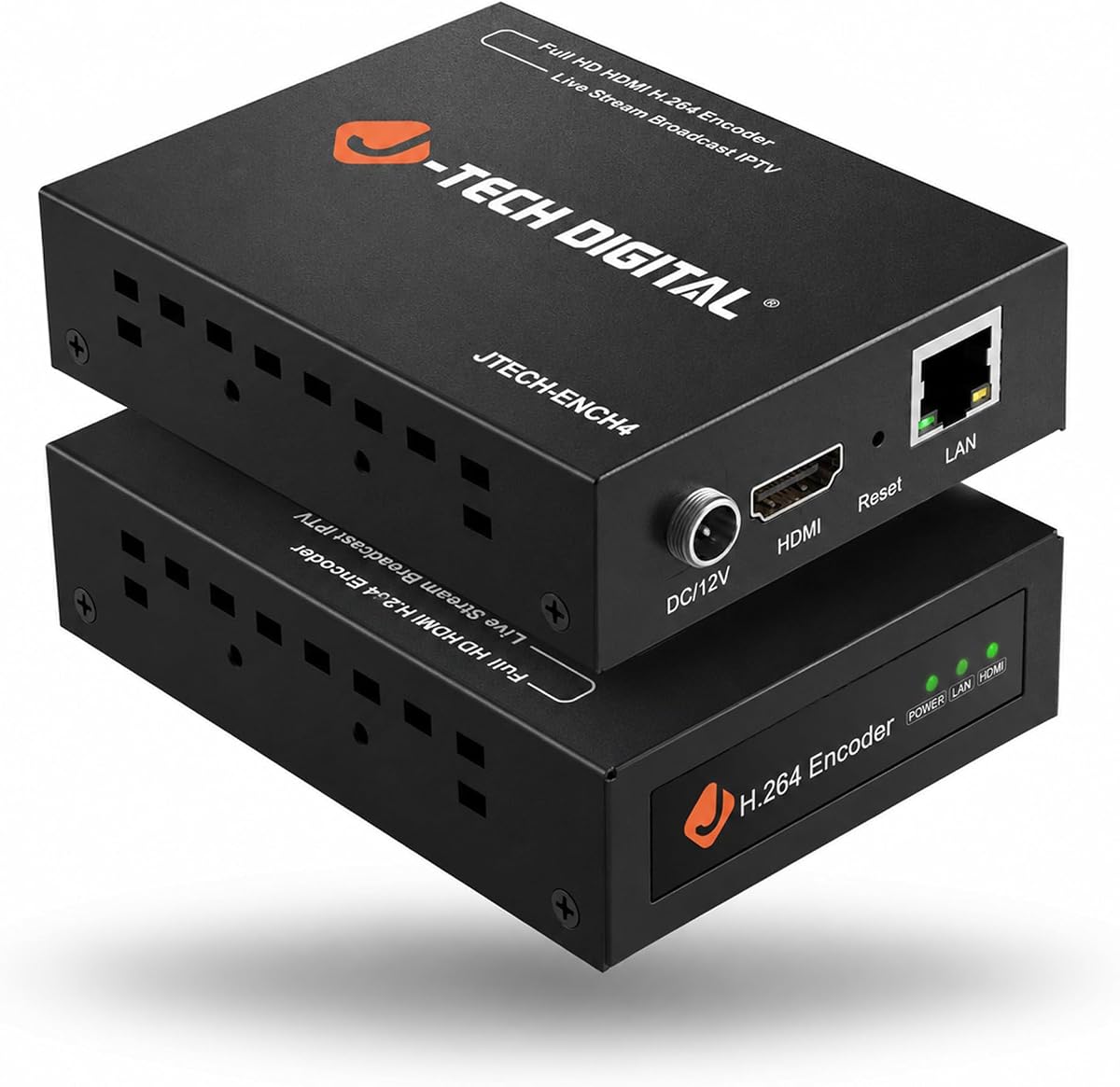
This compact encoder offers excellent value for those needing reliable 1080P60 streaming without breaking the bank. It uses hardware encoding to reduce bandwidth usage significantly compared to older solutions, making it efficient for stable connections.
We may earn a commission when you buy through this link, at no additional cost to you.
Setup is done entirely through a browser interface, removing the need for additional PC software or drivers. This simplifies the workflow and allows for quick deployment in various environments. The small design fits easily behind monitors or in racks.
The trade-off is the lack of 4K support, which limits high-resolution workflows. Additionally, audio options are basic compared to higher-end models. However, the stability and cost efficiency make it a strong choice for entry-level or casual streamers.
Ideal for users who need a straightforward solution for events or remote monitoring. This device is perfect for those prioritizing ease of use and low overhead costs over ultra high definition output.
Broadcast-quality streams use less bandwidth while maintaining crisp and crystal-clear video output for viewers.
The browser-based setup in minutes allows anyone to configure the device without installing complex software tools.
We may earn a commission when you buy through this link, at no additional cost to you.
The J-Tech Digital HDMI encoder is designed for high fidelity inputs, supporting 4K 60Hz inputs while delivering reliable 1080P output. It offers extensive protocol support including ONVIF, making it versatile for professional environments.
We may earn a commission when you buy through this link, at no additional cost to you.
Users can remotely control settings like bitrate, frame rate, and image adjustments via the web GUI. This allows for fine-tuned visuals without physical access to the device. The free lifetime technical support provides peace of mind for users.
The main limitation is that substreams will feature lower resolution than the main stream. Advanced features might also require networking expertise to configure properly. Despite these points, the hardware is robust for demanding applications.
This product is best for professional setups that need high input quality and remote manageability. It suits users who require detailed control over video parameters and reliable performance in complex network setups.
This encoder supports up to 4K at 60Hz input ensuring the source material is captured with maximum clarity.
The web GUI allows you to adjust core settings from anywhere on the network for flexible management.
We may earn a commission when you buy through this link, at no additional cost to you.
This encoder offers robust 4K input support with dual encoding chips that deliver smooth visuals. It is particularly strong for environments needing WebRTC and ICECAST compatibility, expanding integration possibilities for live streaming.
We may earn a commission when you buy through this link, at no additional cost to you.
The device allows simultaneous output of four video streams with different protocols. This flexibility means you can push to multiple platforms like YouTube and Twitch at once. The intuitive interface makes setup quick without deep technical skills.
A potential challenge is the reliance on network settings which might be tricky for non IT users. However, the lifetime warranty and customization services add value. It is a strong performer for multi-platform distribution.
This is a great choice for broadcasters needing WebRTC or low latency feeds. It suits users who want versatile protocol support and reliable performance for enterprise level live events.
Support for WebRTC and ICECAST alongside standard protocols ensures compatibility with modern streaming architectures.
Output four different streams simultaneously to reach multiple audiences without extra equipment.
We may earn a commission when you buy through this link, at no additional cost to you.
This model is designed for advanced users who need secondary development and customization. It supports dual video streams per HDMI input, allowing different protocols for each. This is ideal for complex broadcast environments.
We may earn a commission when you buy through this link, at no additional cost to you.
The manufacturer provides SDK and API docs for further integration. You can also request hardware and firmware development. This makes it a flexible solution for businesses with specific operational requirements beyond standard streaming.
The cost is higher due to the enterprise focused features. Developers will appreciate the customization options, but casual users might find it overkill. It is a tool for those who need tailored functionality.
Ideal for enterprise deployments where API integration is required. This device is best for organizations needing tailored hardware features and robust multi-stream capabilities.
SDK and API documents allow you to build custom software around the encoder for tailored workflows.
Dual video streams per input allow you to push different protocols to different servers simultaneously.
We may earn a commission when you buy through this link, at no additional cost to you.
This device supports 1080P outputs with realistic color reproduction and lossless detail. It enables real-time stream status viewing via URL which helps maintain broadcast quality. Management is possible via computers or mobile phones.
We may earn a commission when you buy through this link, at no additional cost to you.
Users can adjust audio quality and video parameters freely. It supports adding logos and timestamps to the video stream for branding. The lifetime warranty provides security for long-term use in demanding environments.
The mobile management feature is convenient but depends on network stability. Setup requires some networking knowledge for advanced streaming. However, the customization services make it suitable for specialized needs.
This encoder is great for users managing streams remotely via mobile devices. It is best for those who need real-time monitoring and flexible adjustment capabilities.
View video stream status in real time via a URL to ensure uninterrupted broadcasting during events.
Manage the device from computers or mobile phones without needing direct physical access to the unit.
We may earn a commission when you buy through this link, at no additional cost to you.
This encoder includes Power over Ethernet support which simplifies wiring by using a single cable for power and data. It supports analog audio input allowing integration with mixers or church setups. It can broadcast to four platforms simultaneously.
We may earn a commission when you buy through this link, at no additional cost to you.
You can add custom logos and no signal images for professional branding. The hardware encoder ensures optimized bandwidth usage and video quality. It comes with free lifetime technical support from the manufacturer.
The main requirement is a PoE network switch which might need extra investment. It is priced higher than basic models but offers valuable features for AV setups. The flexibility for audio input sets it apart.
Ideal for churches or AV setups needing analog audio integration. This device is best for those who want simplified cabling and robust multi-platform streaming.
Power over Ethernet allows both power and data through a single cable reducing clutter in equipment rooms.
Embed 3.5mm audio into HDMI video to synchronize audio from external mixers perfectly.
We may earn a commission when you buy through this link, at no additional cost to you.
This encoder delivers 4K UHD inputs with HDCP decryption for ultra HD sources. It supports TRTC and ICECAST protocols for diverse streaming needs. The instruction manual ensures easy setup for users without deep technical backgrounds.
We may earn a commission when you buy through this link, at no additional cost to you.
It offers low latency transmission adapting to various network environments. Users can adjust parameters freely for personalized branding. Lifetime warranty ensures reliable quality and worry-free after-sales service.
The main limitation is that it is not designed for portable use. It relies on stable Ethernet connections for optimal performance. However, for fixed locations it performs consistently well.
Best for fixed installations needing 4K inputs and diverse protocol support. This device is ideal for broadcasters prioritizing stability and compatibility.
Supports 4K UHD inputs with HDCP decryption for smooth cinematic visual experiences.
Includes support for TRTC and ICECAST protocols for specialized streaming applications.
We may earn a commission when you buy through this link, at no additional cost to you.
This encoder is ultra-mini and lightweight making it ideal for portable streaming scenarios. It is USB powered eliminating the need for extra power adapters. You can control it remotely via web UI and the cloud system.
We may earn a commission when you buy through this link, at no additional cost to you.
You can edit OSD in real time to add text or logos anywhere on the stream. It supports up to 1080P at 60Hz. The built-in protocols secure end-to-end video streaming reliably.
The main drawback is the lack of user ratings which makes performance less clear. It might not suit those needing 4K output. However for portable use it is excellent.
Best for travelers or mobile setups needing a small encoder. This device is ideal for those prioritizing portability and cloud management.
The ultra-mini size allows you to carry the device easily for streaming anywhere.
Manage the encoder remotely via the cloud system when there is an internet connection.
We may earn a commission when you buy through this link, at no additional cost to you.
This device features a 4K UHD encoder supporting H.264 and H.265 formats. It offers dual stream encoding for adapting to different terminals. Telnet remote access and Web UI managing system provide flexible control.
We may earn a commission when you buy through this link, at no additional cost to you.
It supports HTTP, HLS, RTSP, and RTMP protocols for IPTV distribution. The high rating suggests strong user satisfaction with its performance. It is ideal for customers needing lower bit rates over LAN or WAN.
The main trade-off is limited audio features compared to higher end models. The higher price point might be a concern for some. However the remote management is robust and user friendly.
Best for users needing 4K inputs with flexible remote access. This encoder is ideal for those prioritizing adaptability and high resolution output.
Capable of up to 3840 x 2160P at 30fps ensuring high fidelity video quality.
Use Web UI and Telnet to control the encoder at anytime and anywhere.
We may earn a commission when you buy through this link, at no additional cost to you.
Selecting the right encoder depends on understanding your specific streaming needs and technical requirements.
Ensure the encoder supports the resolution of your source material. If you are using 4K inputs you need a device that can handle them efficiently without downscaling too early. This affects the final quality viewers see.
Look for models offering 4K input options even if you stream in 1080P. This ensures flexibility for future upgrades and high fidelity content capture.
Check that the encoder supports the streaming protocols you plan to use. Common options include RTMP, SRT, HLS, and WebRTC. Compatibility ensures your stream reaches the desired platforms without issues.
Choose a device that supports multiple protocols for versatility. This allows you to switch platforms or adapt to network changes easily.
Consider how easy the device is to set up. Some encoders offer browser-based interfaces while others require dedicated software. A simple setup reduces the time spent configuring your stream before going live.
Prioritize models with intuitive interfaces and clear documentation. This minimizes technical hurdles for users without deep networking expertise.
Evaluate the audio input capabilities. Some models support HDMI embedded audio while others offer analog inputs for external mixers. This affects how you integrate audio sources into your broadcast.
Look for adjustable sound quality features if audio mixing is important. This allows you to customize the audio to match your content requirements.
Check the reputation of the manufacturer and their after-sales support. Reliable brands often provide lifetime warranties and technical assistance. This is crucial for enterprise users needing stable operations.
Choose models with clear warranty terms and responsive customer service. This ensures you have help if technical issues arise.
Understand the network requirements for the device. Some need Power over Ethernet switches or specific network configurations. Ensure your environment supports these requirements to avoid connectivity issues.
Look for stable and low latency transmission features. This helps maintain stream quality even on fluctuating networks.
Some encoders allow for overlays like logos and scrolling text. These features help brand your content and provide context for viewers. Check if the device supports these customizations easily.
Choose models that allow text and logo adjustments during streaming. This enhances the professional look of your broadcast.
Consider the price in relation to the features offered. More expensive models might provide advanced capabilities like dual streams. Ensure the cost justifies the benefits for your specific use case.
Look for devices offering lifetime warranties at a fair price. This provides long-term value and security for your investment.
First connect the HDMI source to the input port and the encoder to your network. Ensure all cables are secure and the network is stable to prevent interruptions during operation.
Access the web interface or configuration tool provided by the manufacturer. Set your streaming parameters like resolution and protocol then connect to your preferred platform server to start broadcasting.
Regularly check for firmware updates to maintain performance. Keep the device in a well ventilated area to avoid overheating and ensure reliable operation over time.
H.265 provides better compression efficiency reducing bandwidth by up to 50% compared to H.264. This allows for higher quality video at lower bit rates. However it requires more processing power to encode the video signal.
Many models support 4K inputs allowing you to capture high fidelity video. Check specific specifications as output may vary. Some encoders offer 4K output capabilities depending on the model selected.
No many modern encoders offer browser-based setup requiring no PC software. You can configure settings via any web browser on your computer or mobile device for easy initial setup.
Some models support multi-platform streaming allowing you to push to four platforms at once. This is done by setting different protocols for each output stream to broadcast to services like YouTube and Twitch.
Common supported protocols include RTMP, HLS, SRT, and WebRTC. Some models also support TRTC and ICECAST for specialized streaming needs across various network environments.
Encoders typically support HDMI embedded audio and some offer analog audio inputs. You can adjust sound quality through the web interface to match your broadcast requirements.
Most products come with lifetime technical support and warranties. You can contact the manufacturer for assistance or refer to detailed manuals provided with the device.
Many models offer lifetime warranties covering manufacturing defects. This provides long-term security for your purchase ensuring reliable performance and support over time.
We have reviewed ten top encoders ranging from budget friendly options to professional grade models. Each device offers distinct features tailored to different streaming needs and technical preferences.
Prioritize factors like resolution support protocol compatibility and setup ease when making your choice. The right encoder ensures your broadcasts reach viewers smoothly without technical hiccups.
Remember to check current prices and availability before purchasing as these details may change. Invest in a device that aligns with your long-term goals for high quality live streaming.