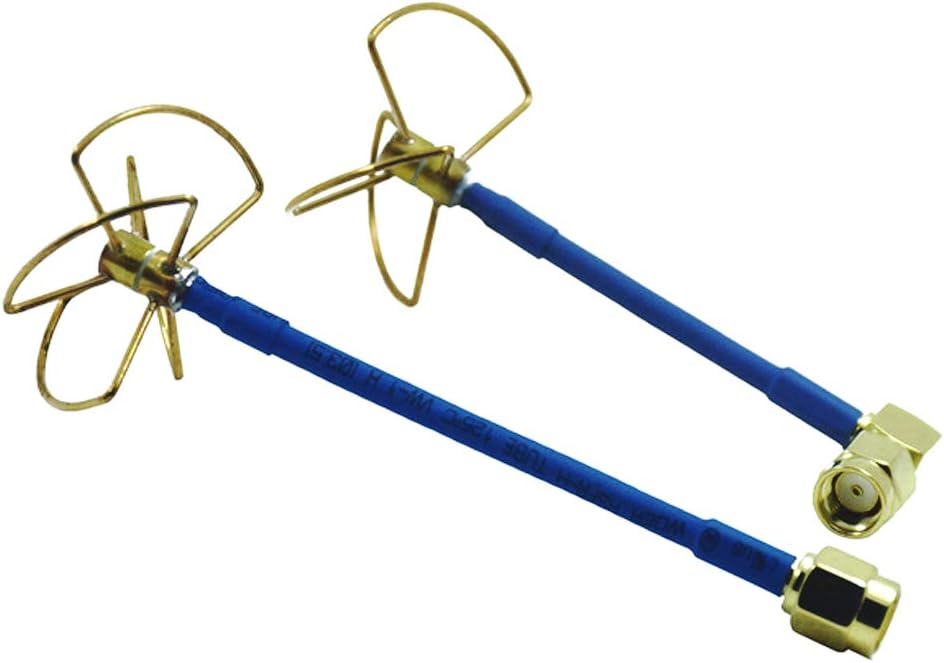
Anbee 2pcs FPV 5.8Ghz Antenna
4.3Editor score
Clover-Leaf Style Antenna
RP-SMA Female Connector
3dBi Gain Precision
This guide compares the top ten circular polarized antennas for FPV drones, FM broadcasting, and ultra wideband applications to help you choose the best
Circular polarized antennas are essential for minimizing signal loss and reducing multipath interference in wireless communication systems. Whether you are flying an FPV drone or broadcasting FM radio, the right antenna ensures stable video transmission and clear audio coverage in challenging environments.
We compared ten real products based on their frequency range, gain specifications, polarization type, and build quality. Each entry offers unique benefits for different use cases, from budget-friendly FPV setups to professional broadcast infrastructure requiring high power handling and weather resistance.
Every pick below highlights specific strengths and ideal applications to help you make an informed decision. Note that prices and availability change frequently, so check the current listings for the most accurate information before placing your order online.
4.3Editor score

4.5Editor score

5.0Editor score
The following table provides a side-by-side comparison of all ten products reviewed in this guide. It highlights key specifications such as frequency bands, gain values, and connector types to help you quickly identify which antenna matches your specific technical requirements.


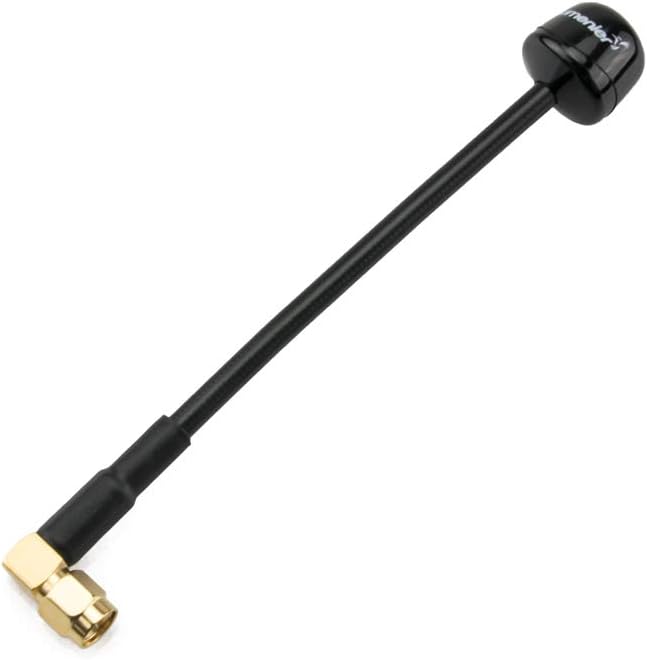


This antenna stands out as the top choice for serious FPV pilots seeking reliable video transmission over long distances. Its 11dBi high gain ensures that your signal remains strong even when the drone is flying at high speeds or through obstructed areas.
We may earn a commission when you buy through this link, at no additional cost to you.
The right-hand circular polarization significantly reduces multipath interference, which is a common issue in urban environments or crowded race courses. This technical feature translates to a clearer picture on your goggles with fewer dropouts during aggressive maneuvers.
While the build quality is exceptional with military-grade Teflon materials, the price is higher than standard FPV options. However, this cost is justified by the durability and performance stability you get during critical flight sessions.
Buy this if you prioritize range and signal integrity for racing or freestyle drones. It is specifically designed to work seamlessly with popular goggles like Fat Shark and Skyzone, making it a versatile upgrade for your ground station.
The optimized beam angle balances near and far-field performance, ensuring stable video transmission whether you are hovering close or flying far.
High-frequency PCB and Teflon construction resist extreme temperatures and corrosion, ensuring reliable performance in all weather conditions.
We may earn a commission when you buy through this link, at no additional cost to you.
This is the most cost-effective choice for hobbyists who need functional circular polarization without spending a lot of money. The package includes two antennas, which is perfect for setting up a diversity system on your receiver and transmitter.
We may earn a commission when you buy through this link, at no additional cost to you.
The clover-leaf style provides omnidirectional coverage, meaning you do not need to point the antenna directly at the drone to get a signal. This is particularly useful for beginners or casual flyers who want simplicity over extreme range.
The gain is modest at 3dBi, so it will not reach as far as high-gain patch antennas. However, it is more than sufficient for standard racing and freestyle flights within a typical flying field or local park.
Choose this if you need a reliable backup set or are building a first FPV setup on a tight budget. It works well with common FPV systems and ensures basic signal stability for RC cars and multicopters.
Receiving two antennas in one package allows for immediate diversity setup, improving signal reliability without extra purchases.
Designed for 5.8GHz common use, these antennas fit most standard FPV transmitters and receivers in the hobby market.
We may earn a commission when you buy through this link, at no additional cost to you.
This premium bundle offers a top-tier experience specifically tuned for HDZERO goggles users. The set includes two antennas that work together to provide excellent coverage and signal penetration even in challenging environments.
We may earn a commission when you buy through this link, at no additional cost to you.
With a 10dBic gain and a 120-degree beam width per antenna, the coverage is both wide and strong. This ensures that you maintain a clear image even when flying at long ranges or through obstacles that cause reflection.
The custom knurled SMA connectors are designed for a secure fit, reducing the risk of accidental disconnection during transport or flight. The low profile design makes them easy to store and transport with your gear.
Invest in this if you use HDZERO goggles and demand the best possible performance. The combination of durability, ease of installation, and superior signal clarity makes it a worthwhile upgrade for professional or advanced pilots.
Custom knurled SMA connectors ensure a robust mechanical connection, preventing accidental disconnects during active use.
Large SWR and axial ratio bandwidth allow the antenna to work even slightly outside the 5.8GHz band for added flexibility.
We may earn a commission when you buy through this link, at no additional cost to you.
This antenna is designed for pilots who need maximum range in a specific direction. The directional nature of the patch design allows you to focus the signal energy where it is needed most for long-distance flights.
We may earn a commission when you buy through this link, at no additional cost to you.
It supports both LHCP and RHCP configurations, giving you versatility depending on your drone and receiver setup. The included dummy load terminator ensures you can use unused connectors properly to maintain maximum performance.
The gain is strong at 9.4dBi, which is a significant boost for range. However, you must keep the antenna pointed at your drone to maintain the connection, unlike omnidirectional options.
Select this if you are pushing your drone to long limits and need every bit of signal strength. It is well suited for Eachine goggles and other standard FPV systems that support SMA connectors.
The antenna can be set to LHCP or RHCP, allowing you to match your specific system requirements easily.
A 50ohm dummy load terminator is included to ensure proper signal termination for optimal performance.
We may earn a commission when you buy through this link, at no additional cost to you.
This module is ideal for applications requiring ultra wideband capabilities rather than standard FPV video transmission. It operates across common UWB frequencies to ensure stable signal for positioning and communication tasks.
We may earn a commission when you buy through this link, at no additional cost to you.
The circular polarization design helps minimize multipath interference in complex environments. This feature makes it suitable for scenarios where signals bounce off walls or surfaces, causing distortion for standard linear antennas.
Built with robust materials, it can handle consistent performance in both indoor and outdoor applications. Its design focuses on easy integration with compatible UWB modules and RF equipment for testing.
Use this for broadband testing, directional radio, or coverage analysis. It provides a professional solution for engineers or hobbyists working with precise ranging or communication protocols.
Circular polarization technology minimizes signal loss and multipath interference in complex environments effectively.
Designed for straightforward installation onto compatible UWB modules and RF equipment, simplifying setup for users.
We may earn a commission when you buy through this link, at no additional cost to you.
This bundle brings together two of Lumenier's most popular antennas in one box. It offers a perfect diversity combo by pairing the standard AXII 2 with an AXII Patch Antenna for varied signal coverage.
We may earn a commission when you buy through this link, at no additional cost to you.
The AXII 2 provides clear and even signal with near perfect circularity, while the patch antenna offers incredible range and penetration when pointed correctly. This combination covers most flying scenarios effectively.
Buying this set saves money compared to purchasing each antenna individually. It is an excellent upgrade for your goggles or ground station where diversity reception is preferred.
Get this if you want a complete solution with different radiation patterns. The bundle simplifies the setup process and ensures you have the right tool for both general and long-range flying.
Combining two distinct antenna types in one package maximizes signal reliability through diversity reception techniques.
Purchasing the bundle saves money compared to buying individual antennas separately from the store.
We may earn a commission when you buy through this link, at no additional cost to you.
This right-angle version of the AXII 2 takes the best parts of the original and makes them even better. It features improved range, bandwidth, and durability compared to previous iterations.
We may earn a commission when you buy through this link, at no additional cost to you.
The right-angle connector makes it ideal for lightweight racing builds where space and orientation matter. It fits well on small drones without adding bulk or causing balance issues during flight.
With its RHCP polarization, it ensures standard compatibility with most FPV receivers. The durability is enhanced, making it a true successor to the original AXII antenna line.
Choose this for freestyle quads or lightweight racing builds where aerodynamic clearance is a priority. It balances performance and weight perfectly for agile flight characteristics.
The right-angle connector allows for better clearance on small frames, preventing crashes caused by antenna interference.
Improved range and bandwidth over the original model provide better signal quality in high-speed scenarios.
We may earn a commission when you buy through this link, at no additional cost to you.
This antenna is designed with an equiangular spiral structure to support an ultra wide working range. It delivers stable directional gain and is well suited for users who need broad frequency coverage in one compact antenna.
We may earn a commission when you buy through this link, at no additional cost to you.
You can choose between left or right hand circular polarization to better match your receiving or testing needs. This flexibility makes it useful for demanding RF and measurement work where signal conditions vary.
The PCB material ensures reliable operation while offering a lightweight solution. Its compact size helps save space in installations without occupying excessive room or weight.
Use this for direction finding, spectrum analysis, or navigation positioning. It covers many commonly used frequency points, making it a versatile tool for technical applications beyond typical FPV.
Supports an ultra wide working range of 0.51 to 10GHz to help cover diverse signal tasks effectively.
Constructed from durable PCB material with a spiral equiangular gradient form to support impedance matching.
We may earn a commission when you buy through this link, at no additional cost to you.
This antenna is a reliable option for users of older Fat Shark goggles or legacy FPV systems. It features a standard RP-SMA connector and a circular polarization design to reduce interference effectively.
We may earn a commission when you buy through this link, at no additional cost to you.
The SpiroNet design is known for its robust signal performance in common FPV environments. It works well as a replacement antenna for systems that still require this specific connector type.
While it may lack some advanced features of modern patch antennas, it provides consistent performance for standard range. The build is simple but functional for basic flying needs.
Select this if you need a compatible antenna for your existing Fat Shark equipment. It ensures you can maintain your setup without switching to a new connector standard.
Uses RP-SMA connectors which are common on many FPV goggles and transmitters for easy replacement.
The SpiroNet design is proven to reduce interference effectively in standard 5.8GHz environments.
We may earn a commission when you buy through this link, at no additional cost to you.
This antenna is specifically designed for FM broadcast transmitters operating between 88 and 108MHz. It features a dual-polarization technology that ensures superior signal penetration and coverage in dense urban environments.
We may earn a commission when you buy through this link, at no additional cost to you.
It supports up to 350W of input power, ensuring highly stable signal transmission. The rugged outdoor design protects the transmitter from overheating and withstands harsh weather conditions effectively.
The installation process is straightforward and takes only minutes, getting your broadcast on the air quickly. It delivers a solid 3dB gain to significantly boost your radio station's coverage and audio clarity.
Choose this if you are setting up an FM radio station and need a reliable outdoor antenna. Its heavy-duty aluminum alloy construction provides a long service life for professional or hobbyist broadcast use.
Supports both vertical and horizontal polarization to ensure superior signal penetration in dense environments.
Operates with an extremely low VSWR to ensure highly stable signal transmission across the entire FM band.
We may earn a commission when you buy through this link, at no additional cost to you.
Selecting the right circular polarized antenna requires understanding your specific frequency needs and performance goals. The following factors will help you narrow down the options to find the perfect fit.
Antennas are designed to operate within specific frequency bands. Ensure the antenna matches your system, such as 5.8GHz for FPV or 88-108MHz for FM broadcast, to avoid signal loss or poor performance.
Always verify the frequency range in the product specifications before purchasing to guarantee compatibility with your existing equipment.
Gain indicates how much the antenna amplifies the signal in a specific direction. Higher gain is better for long-range directional use, while lower gain is suitable for omnidirectional coverage.
Choose higher gain for distance and lower gain for general coverage depending on your flight or broadcast style.
Circular polarization (CP) reduces interference from reflections compared to linear polarization. Ensure both the transmitter and receiver antennas share the same handedness, either RHCP or LHCP, to minimize signal loss.
Always match the polarization handedness between your antennas for optimal performance and minimal dropouts.
Connectors must match your device's ports to ensure a secure connection. Common types include SMA, RP-SMA, and MMCX. Using mismatched connectors can damage the equipment or lead to connection failures.
Double-check the connector type on your goggles or transmitter before ordering to ensure a perfect fit.
Outdoor or high-power applications require durable materials like aluminum alloy or weatherproof coatings. For indoor use, lightweight materials may suffice. Consider the environment where the antenna will be installed.
Prioritize weatherproof and rugged builds for outdoor use to ensure longevity and resistance to harsh conditions.
Directional antennas focus energy in one direction for better range but require aiming. Omnidirectional antennas provide 360-degree coverage but have less range. Choose based on whether you need distance or mobility.
Select directional antennas for long-range flights and omnidirectional ones for agile or close-range flying.
Broadcast antennas must handle the transmitter power without burning out. Check the maximum wattage rating to ensure the antenna can support your signal output safely.
Ensure the antenna power rating meets or exceeds your transmitter output to avoid equipment failure.
Prices vary based on performance, build quality, and features. Budget options work for casual flying, while premium options offer better durability and signal stability for advanced needs.
Invest in higher value options only if your specific use case requires the extra performance or durability features.
Install your antenna securely using the correct connector type. For FPV setups, ensure the antenna is positioned upright and not bent, as this can distort the circular polarization pattern and reduce performance.
Check the polarization matching between transmitter and receiver regularly. If you experience static or dropouts, verify that both antennas are using the same handedness, such as RHCP for both.
Store your antennas in a padded case when not in use to prevent physical damage. Avoid exposing outdoor antennas to extreme weather when not in use to extend their service life.
Circular polarization reduces multipath interference caused by signal reflections. This leads to a clearer video feed and fewer dropouts when flying through buildings or in areas with many obstacles.
No, you should not mix handedness. If one antenna is RHCP and the other is LHCP, the signal will be severely degraded. Always use matching pairs for both transmitter and receiver.
Higher gain focuses the signal in a specific direction, increasing range but requiring precise aiming. Lower gain provides wider coverage but less distance. Choose based on your flying style.
No, they operate at different frequencies. FPV antennas are typically 5.8GHz, while FM radios use 88-108MHz. Using the wrong antenna will result in no signal or damage.
Most FPV goggles use RP-SMA connectors. However, some high-end models use MMCX or SMA. Always check your specific device manual before purchasing a replacement antenna.
Look for specifications mentioning weatherproof or IP ratings. For outdoor broadcast use, ensure the antenna is made of aluminum or coated materials designed for external mounting.
We have reviewed ten excellent options ranging from budget FPV sets to professional broadcast antennas. The JeeFly 5.5-5.8GHz offers the best overall performance, while the Anbee 2pcs is ideal for those on a strict budget.
When choosing, prioritize the frequency range and polarization matching to ensure your signal remains stable. A well-chosen antenna can transform your flying experience by providing clear video and reliable control.
Remember to check current prices and availability before buying. Our selection ensures you have the best technology available for your specific needs this month.