
Mcbazel 3 in 1 Handheld Digital Anemometer
4.5Editor score
Wind level Beaufort scale
Double line LCD display
Multiple speed units switchable
Auto power off function
This guide compares the top ten anemometers for measuring wind speed, covering features, accuracy, and durability to help you find the perfect wind meter for
Finding the right tool to measure air movement is crucial for many activities. Whether you are sailing, shooting, or working in HVAC, an accurate wind meter ensures safety and efficiency. A good anemometer provides reliable data across various conditions and units of measurement for diverse users.
We evaluated ten top-rated models based on accuracy, features, build quality, and user feedback. Each product offers unique capabilities ranging from basic wind speed to advanced temperature and airflow calculations. Our selection includes options for beginners and professionals needing precise environmental monitoring tools.
Each pick highlights key strengths and ideal use cases to simplify your decision. Note that product availability and pricing can fluctuate regularly. Always check current listings for the latest offers before making your final purchase decision today.
4.5Editor score

4.5Editor score

4.6Editor score
The following table provides a side-by-side comparison of all ten selected wind meters, highlighting their key specifications and primary capabilities for easy reference and informed purchasing decisions.



The BTMETER BT-100 stands out as a top choice for diverse applications. It holds a strong 4.5-star rating and offers five distinct wind speed units. Its ability to calculate CFM makes it ideal for HVAC professionals needing precise airflow data.
We may earn a commission when you buy through this link, at no additional cost to you.
Key strengths include a bright backlit LCD screen for clear visibility in low light. The tripod hole allows for stable, hands-free measurements during shooting or drone flights. The dual temperature sensors ensure reliable wind chill and temperature readings across varied environments.
While accurate, the unit is slightly bulkier than some competitors. Battery inclusion varies by batch so you might need to purchase spares separately. These minor trade-offs are acceptable given the high accuracy and professional-grade features provided.
This model is perfect for HVAC technicians, shooters, and drone operators needing reliable data. It balances portability with advanced measurement capabilities effectively. We highly recommend it for anyone needing a versatile and accurate wind meter.
The CFM calculation feature simplifies airflow assessments for ducts and vents. This saves time and effort for technicians working on complex systems.
The threaded tripod hole enables secure mounting for long-duration readings. This is essential for consistent data collection during photography or monitoring.
We may earn a commission when you buy through this link, at no additional cost to you.
The Mcbazel 3 in 1 offers excellent value for casual users and hobbyists. Rated 4.5 stars, it measures wind speed, temperature, and Beaufort levels. Its double-line LCD display shows all data simultaneously for quick interpretation.
We may earn a commission when you buy through this link, at no additional cost to you.
It features MAX MIN and AVG functions that help track wind fluctuations effectively. The backlight ensures readability even in darker conditions. This unit is lightweight and easy to carry for activities like sailing or fishing.
While it lacks a tripod hole and may be less precise at extreme speeds, it covers most common needs. Batteries are not included so plan accordingly. The price point makes it an accessible entry-level choice for many.
Ideal for hobbyists, students, or occasional users needing basic wind data. It combines essential features with a friendly user interface. We recommend it for those seeking functionality without a high cost.
Measuring Beaufort levels helps users understand wind impact on activities. This contextual data is often missing on basic meters.
Auto power off extends battery life significantly during intermittent use. This ensures the device is ready when you need it.
We may earn a commission when you buy through this link, at no additional cost to you.
The TopTes TS-301 boasts a massive 2.26-inch screen for effortless reading. It holds a 4.5 rating and uniquely measures humidity alongside wind and temperature. This makes it valuable for outdoor enthusiasts tracking multiple weather variables.
We may earn a commission when you buy through this link, at no additional cost to you.
Key benefits include a rotatable fan design for flexible airflow measurement. The carry pouch protects the device during transport. Auto shutdown after ten minutes helps preserve battery life during long sessions.
Users should note the sensors may take thirty minutes to stabilize in new environments. The device is slightly heavier than ultra-compact options. These factors are minor given the comprehensive data and large readable display provided.
Best suited for golfers, hikers, and drone pilots needing broad environmental data. It simplifies monitoring complex conditions with one tool. We recommend it for those prioritizing display clarity and multi-sensor functionality.
Tracking humidity alongside wind allows for better activity planning. This helps predict comfort levels and equipment suitability.
The large screen ensures quick glances without strain. This is crucial during fast-paced outdoor activities.
We may earn a commission when you buy through this link, at no additional cost to you.
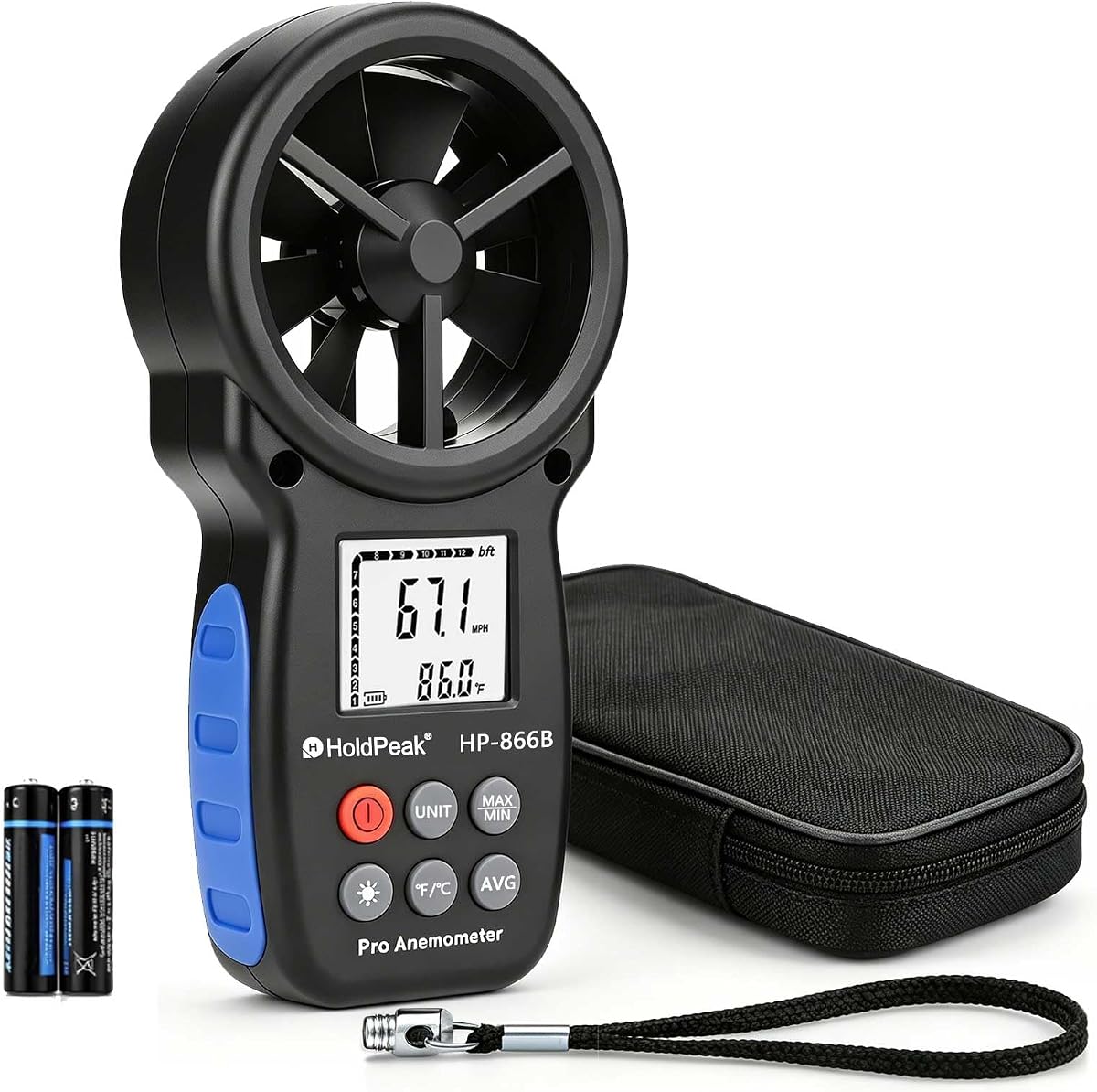
The HoldPeak 866B is a robust tool for professionals requiring precision. With dual temperature sensors and eight vanes, it ensures high accuracy. Its CFM helper simplifies airflow calculations for HVAC technicians and engineers.
We may earn a commission when you buy through this link, at no additional cost to you.
Key strengths include a hand strap for secure handling during critical measurements. The waterproof pouch protects the device against environmental hazards. Users appreciate the reliable backlight for dim workspaces.
It lacks humidity sensors found in some competitors. The unit focuses strictly on speed and temperature data. This specialization ensures reliability in core functions without unnecessary complexity.
Ideal for HVAC specialists and industrial workers needing dependable airflow data. It prioritizes functionality and durability over extra features. We recommend it for professional environments where precision is paramount.
The waterproof pouch ensures the device survives rough job sites. This extends the lifespan of your investment.
The hand strap prevents drops during precise measurements. This safety feature is vital for expensive equipment.
We may earn a commission when you buy through this link, at no additional cost to you.
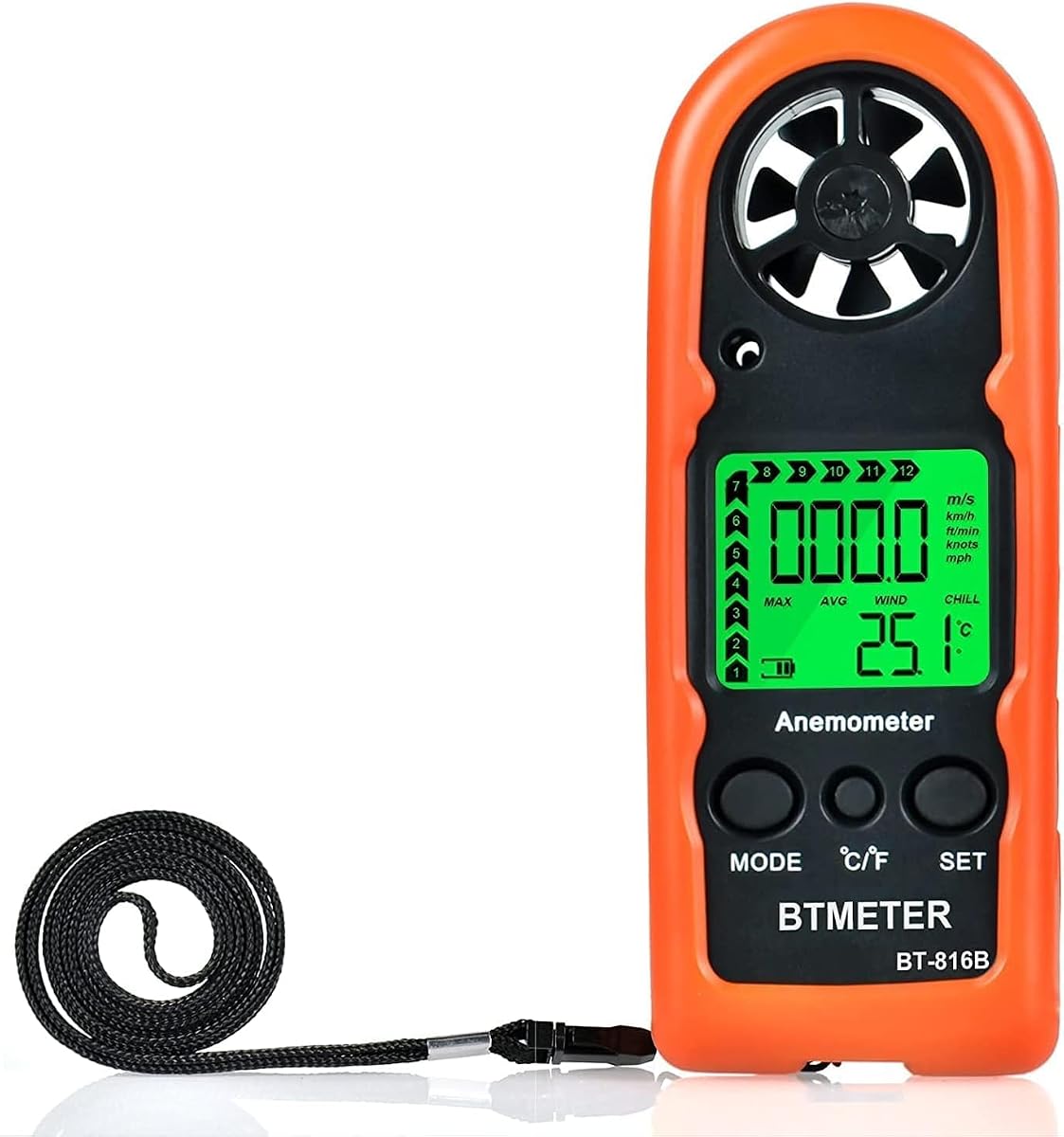
The BTMETER BT-816B excels in portability for travelers and hikers. Weighing only 53 grams, it fits easily in pockets or bags. Its wind chill feature provides immediate safety insights for outdoor adventurers.
We may earn a commission when you buy through this link, at no additional cost to you.
Key strengths include seven smooth blades for responsive low-flow detection. The LCD backlight ensures visibility in dark conditions. Users appreciate the simple interface for quick checks during activities.
While less accurate at extreme ranges than premium models, it suffices for most casual needs. The limited feature set keeps it intuitive and reliable. This trade-off supports its primary goal of lightweight convenience.
Best for hikers, campers, and travelers needing minimal gear. It balances essential functions with maximum portability. We recommend it for those prioritizing weight and ease of use.
Its small footprint saves valuable luggage space. This is crucial for backpackers and tourists.
Knowing real-time chill helps plan safe outdoor exposure. This feature prevents hypothermia risks effectively.
We may earn a commission when you buy through this link, at no additional cost to you.
The Soonkoda 3 in 1 serves well in industrial and mechanical contexts. It covers a wide range from 0.06 to 30m/s. The Beaufort scale helps communicate wind levels effectively in team settings.
We may earn a commission when you buy through this link, at no additional cost to you.
Key strengths include a clear double line display for simultaneous data viewing. It supports multiple unit options for diverse regional requirements. The low battery indicator prevents unexpected shutdowns during critical tasks.
It offers standard build quality without premium materials. Data storage features are limited compared to high-end models. These limitations are acceptable given its affordability and functional scope.
Ideal for factory workers, maintenance crews, and industrial technicians. It provides reliable basics for daily operational checks. We recommend it for budget-conscious industrial applications.
The wide detection range covers most machinery ventilation needs. This ensures accuracy across varied environments.
Beaufort levels offer a universal language for wind impact. This simplifies safety communication in field teams.
We may earn a commission when you buy through this link, at no additional cost to you.
The POROMETISTO AEM01S features a unique 3-color alarm system for safety. It changes backlight color based on wind danger levels. This immediate visual cue is invaluable for high-risk outdoor work.
We may earn a commission when you buy through this link, at no additional cost to you.
Key strengths include a rapid 0.5-second sampling rate for real-time data. The ergonomic housing ensures comfortable handling during extended use. Users value the one-year replacement service for peace of mind.
Some users may find alarm thresholds too conservative or specific. Unit options are limited compared to multi-region models. These trade-offs support its primary focus on safety and reliability.
Best for construction workers and safety officers needing immediate warnings. It prioritizes hazard detection over complex data. We recommend it for environments where visual alerts are critical.
The color-changing backlight provides instant hazard awareness. This prevents accidents without requiring constant screen checking.
Quick data refresh captures sudden wind changes accurately. This ensures safety during unpredictable weather shifts.
We may earn a commission when you buy through this link, at no additional cost to you.
The Caldwell Wind Wizard II is tailored for precision shooters and hunters. It holds a high 4.6 rating and features a lifetime warranty. This assurance underscores its reputation for reliability and durability.
We may earn a commission when you buy through this link, at no additional cost to you.
Key strengths include water-resistant materials and a non-slip grip for adverse conditions. The lanyard adds security during critical moments. Users appreciate the optimized display for quick range checks.
It comes at a higher price point than general models. Features are focused on shooting scenarios rather than broad HVAC uses. This specialization justifies the cost for target professionals.
Ideal for long-range shooters and hunting enthusiasts. It combines durability with specific shooting needs. We recommend it for those prioritizing warranty and specialized design.
This rare warranty offers long-term protection for your investment. It reflects high manufacturer confidence.
Water resistance ensures functionality in rain and snow. This reliability is vital for hunting trips.
We may earn a commission when you buy through this link, at no additional cost to you.
The Proster Digital Anemometer offers versatile volume measurement options. It calculates CFM, CMM, and CMS for diverse airflow needs. This flexibility suits various industries from manufacturing to ventilation.
We may earn a commission when you buy through this link, at no additional cost to you.
Key strengths include a large LCD with backlight for clear viewing. The reading hold function freezes data for easy transcription. Users appreciate the straightforward interface for daily tasks.
It relies on a specific 9V battery type which may be harder to find. Build materials are standard rather than rugged. These limitations are minor for users needing specific volume calculations.
Best for engineers and technicians requiring multiple volume units. It simplifies data conversion with built-in tools. We recommend it for versatile airflow assessments.
Supporting CFM, CMM, and CMS removes manual conversion needs. This saves time in technical reporting.
The hold function allows recording data without rushing. This ensures accuracy during busy shifts.
We may earn a commission when you buy through this link, at no additional cost to you.
The VEVOR Split Handheld Anemometer connects directly to PCs for data management. This feature supports long-term tracking and analysis. Users value the 2-meter cord for reaching difficult ducts.
We may earn a commission when you buy through this link, at no additional cost to you.
Key strengths include IP44 waterproof rating for resilience in rain. The split design allows remote sensing without direct device contact. Storage bags ensure safe transport during field work.
Software setup adds initial complexity compared to standalone devices. The unit is heavier than basic handhelds. These factors are acceptable for professionals needing data logging and remote access.
Best for researchers and HVAC managers requiring data logs. It bridges the gap between manual tools and digital records. We recommend it for long-term monitoring projects.
The extendable cord reaches high or awkward vents easily. This improves measurement access significantly.
USB connectivity simplifies creating professional reports. This saves significant administrative time.
We may earn a commission when you buy through this link, at no additional cost to you.
Choosing the right wind meter requires evaluating your specific needs and environment. The following factors ensure you select a model that delivers accuracy and longevity.
Ensure the device covers the wind speeds you expect to encounter. Professional-grade models offer high accuracy at low speeds. Check if the error margin aligns with your precision requirements.
Prioritize units with clear error percentages for reliable data collection.
Look for meters supporting multiple units like mph, km/h, knots, and m/s. This flexibility prevents manual conversions and errors. Some models also offer CFM or CMM calculations for airflow.
Select a device matching your industry's standard reporting units.
Industrial users need rugged housings that withstand drops and water. Waterproof ratings like IP44 protect against rain and snow. Rubberized grips prevent slips during critical measurements.
Choose a model with weather-resistant features for outdoor work.
Large LCD screens with backlighting ensure visibility in low light. Clear digits prevent reading errors during night or dim work. Some models feature color alarms for visual data warnings.
Prioritize high-contrast displays for safety and efficiency.
Long battery life prevents interruptions during extended use. Auto power-off features conserve energy when not active. Check if the device uses standard batteries to avoid replacement issues.
Opt for efficient power management to ensure reliable performance.
Tripod holes allow stable, hands-free readings for photography. Compact designs fit easily into pockets for travel. Weight matters significantly if you carry the device daily.
Balance portability with stability needs for your specific workflow.
Advanced models save readings for later review and analysis. USB ports enable direct PC connection for detailed reporting. This is vital for long-term environmental monitoring.
Select models with storage features if historical data is needed.
Long warranties signal manufacturer confidence in product quality. Accessible customer support ensures quick resolution for issues. Some brands offer free replacements for manufacturing defects.
Invest in a brand with reliable support and coverage.
Turn on your device and allow sensors to warm up for a few minutes. Position the fan blades directly facing the wind source for accurate readings. Avoid blocking the airflow with your hand or body.
Switch units as needed and record values using the hold function. For prolonged use, mount the device on a tripod to prevent shaking. Always calibrate according to the manufacturer's instructions regularly.
Store the unit in a dry, protective case when not in use. Clean the blades gently to remove dust or debris. Replace batteries promptly when the low indicator appears to ensure reliability.
Anemometers measure wind speed and direction. They are used in weather stations, HVAC systems, sailing, shooting, and aviation. Professionals use them to ensure safety and calculate airflow rates efficiently.
Quality handheld models typically offer accuracy within 2 to 5 percent. Professional units often exceed this with tighter margins. Always verify specific error rates based on the model you choose.
Many modern handheld models measure both wind speed and air temperature. Some even provide wind chill calculations. This dual functionality helps users assess environmental conditions more comprehensively.
Yes, specialized models work well for HVAC ducts and vents. They measure airflow velocity to balance heating and cooling systems. Ensure the device supports low-speed detection for indoor use.
Battery life varies based on usage and features. Auto power-off helps extend life significantly. Most models last several weeks with intermittent use. Always check battery status before critical tasks.
Many professional models have IP ratings for water resistance. This allows use in rain or humid conditions. Always check specific waterproof claims before relying on the device in wet environments.
CFM stands for Cubic Feet per Minute. It calculates air volume moving through a duct. This is essential for HVAC professionals to assess system performance and efficiency.
Calibration usually involves checking the device against a known standard. Refer to the user manual for specific steps. Professional units may require periodic factory calibration for highest accuracy.
We reviewed ten top anemometers suitable for HVAC, shooting, sailing, and general outdoor use. Models like the BTMETER BT-100 and Caldwell Wind Wizard II offer high reliability for professionals. Budget options like the Mcbazel provide essential features without breaking the bank.
Prioritize accuracy, durability, and display readability based on your specific environment. Ensure the chosen model supports necessary units and weather protection for your tasks. Investing in a quality device prevents errors during critical operations.
Product prices and availability change frequently so always verify current listings. Check for included accessories like batteries or carrying cases before buying. With the right wind meter, you can confidently handle any weather challenge.