
Entina Tina2C
4.4Editor score
Compact STEM friendly
App guided setup
Power loss recovery
This guide compares the top 3D printer for educational use models for schools and students, evaluating speed, safety, ease of use, and learning features to
Choosing the right 3D printer for educational use requires balancing performance, safety, and ease of operation. Schools and educators need devices that foster creativity while minimizing maintenance and setup time for teachers and students alike.
We evaluated ten leading models based on reliability, print quality, and educational features like AI tools or STEM modules. Our analysis focuses on how each printer supports learning outcomes in classroom or home study environments effectively.
Each pick below highlights key strengths and ideal use cases to help you decide. Remember that pricing and availability can change frequently, so verify current details before purchasing to ensure the best value for your institution.
4.4Editor score

4.7Editor score

4.6Editor score
The following table provides a side-by-side comparison of all ten evaluated printers. It highlights key specifications and features to help you quickly identify which model best fits your educational requirements and technical constraints.





The Bambu Lab A1 stands out as a top choice for educational environments due to its exceptional ease of use and high-quality output. Its rating reflects strong performance in reliability and precision, making it ideal for students learning design principles.
We may earn a commission when you buy through this link, at no additional cost to you.
Key strengths include its full-auto calibration system which eliminates common setup barriers for educators. The high-speed printing capability ensures projects complete quickly, keeping students engaged. Additionally, the quiet operation makes it suitable for classroom settings without disruption.
While the AMS lite accessory is sold separately for multi-color printing, the base unit remains highly capable for standard educational tasks. The higher price point is justified by the reduced maintenance time and professional-grade results it delivers consistently.
We recommend this printer for schools seeking a reliable, high-performance device that minimizes technical overhead. Its combination of speed, ease, and quality makes it a valuable investment for fostering student creativity and technical skills.
The automatic calibration process ensures every print starts correctly without teacher intervention, saving valuable class time and reducing frustration for beginners.
Fast print speeds allow students to iterate designs quickly, encouraging experimentation and deeper learning through rapid prototyping cycles.
We may earn a commission when you buy through this link, at no additional cost to you.
The Entina Tina2C offers an accessible entry point into 3D printing for younger students and beginners. Its focus on simplicity and educational modules makes it an excellent tool for introducing STEM concepts in home or classroom settings.
We may earn a commission when you buy through this link, at no additional cost to you.
The guided setup via the Poloprint Cloud app ensures users can start printing in minutes. With a library of over 3000 models and 20+ creative DIY modules, it provides structured learning opportunities that keep students engaged.
Although the print volume is small, it is sufficient for many educational projects and models. The power loss recovery feature prevents wasted materials during unexpected interruptions, a practical benefit for school environments.
This printer is ideal for educators looking for a cost-effective solution that prioritizes safety and ease. It empowers students to explore creativity and engineering without requiring advanced technical knowledge or extensive supervision.
The included creative modules and model library provide structured lessons that help students learn design and engineering principles through hands-on practice.
WiFi control and app integration allow students to manage prints easily from tablets or computers, enhancing the interactive learning experience.
We may earn a commission when you buy through this link, at no additional cost to you.
The Ugee Funbox is designed specifically with safety and creativity in mind for children. Its premium features include a fully enclosed safe design and AI tools that transform ideas into printable models effortlessly.
We may earn a commission when you buy through this link, at no additional cost to you.
The patented leveling-free technology ensures a perfect first print every time without any tweaking. The built-in camera allows teachers and parents to monitor progress remotely and create time-lapse videos for sharing.
While it supports only single-color printing, the emphasis on safe materials and low emissions makes it ideal for indoor classrooms. The AI engines encourage design thinking and spatial reasoning through interactive projects.
We recommend this for institutions prioritizing safety and ease of use. Its combination of premium safety features and creative tools makes it a standout choice for engaging young minds in maker education.
UL GREENGUARD certification ensures low emissions, protecting students from harmful fumes and making it suitable for any indoor environment.
AI engines allow students to turn photos or drawings into 3D models instantly, lowering the barrier to entry for design projects.
We may earn a commission when you buy through this link, at no additional cost to you.
The Bambu Lab P1S offers an enclosed design that supports a wider range of filaments including engineering-grade materials. This makes it suitable for advanced high school or university engineering classes.
We may earn a commission when you buy through this link, at no additional cost to you.
Its speed and auto calibration features ensure efficient workflow for students working on complex projects. The fully enclosed body improves print performance and provides a safer environment compared to open frame printers.
While it requires the AMS accessory for multi-color printing, the base printer remains highly capable. The setup is quick, allowing educators to get started with minimal preparation before the semester begins.
This printer is ideal for programs needing versatility and robustness. It balances performance with ease of use, making it a strong choice for institutions advancing into more complex fabrication tasks.
The enclosed design maintains stable temperatures for difficult materials like ABS while containing noise and fumes safely.
500mm/s speed ensures that larger projects finish faster, allowing students to focus more on design than waiting.
We may earn a commission when you buy through this link, at no additional cost to you.
The FLASHFORGE Adventurer 5M prioritizes speed with its high-speed CoreXY structure and auto leveling system. It is designed to maximize efficiency for prototyping and rapid project turnaround.
We may earn a commission when you buy through this link, at no additional cost to you.
The app monitoring features allow remote tracking of prints, which is useful for busy classrooms. The quick-change nozzle system simplifies maintenance and minimizes downtime during technical school.
However, the open frame design may require supervision for younger students due to heat exposure risks. The rating reflects a focus on performance which sometimes trades off with some ease of use nuances.
This printer is best suited for vocational or technical training environments where speed is essential. It offers robust performance and reliability for users who need high throughput and precision.
With speeds up to 600mm/s, it significantly reduces project times, allowing students to complete multiple iterations in one class.
Smart mobile control allows teachers to monitor progress from anywhere, ensuring safety and timely completion of assignments.
We may earn a commission when you buy through this link, at no additional cost to you.
The AD5M offers a robust balance of speed and reliability with its auto calibration and resume features. It is designed to handle daily use in educational settings efficiently and with minimal fuss.
We may earn a commission when you buy through this link, at no additional cost to you.
The power loss recovery ensures that long prints are not lost due to interruptions, saving materials and time. The network monitoring feature allows teachers to manage multiple devices from a single interface.
While it lacks an enclosure, the performance is solid for standard materials like PLA and PETG. The tool-free nozzle swap simplifies maintenance, making it accessible even for novice users.
We recommend this for schools needing a dependable daily printer. Its combination of speed and practical features like resume makes it a versatile choice for general education purposes.
Resume prints after power outages protect students from losing their work, ensuring continuity even with unstable power sources.
Network monitoring allows educators to oversee all connected printers from a central location, streamlining classroom management.
We may earn a commission when you buy through this link, at no additional cost to you.
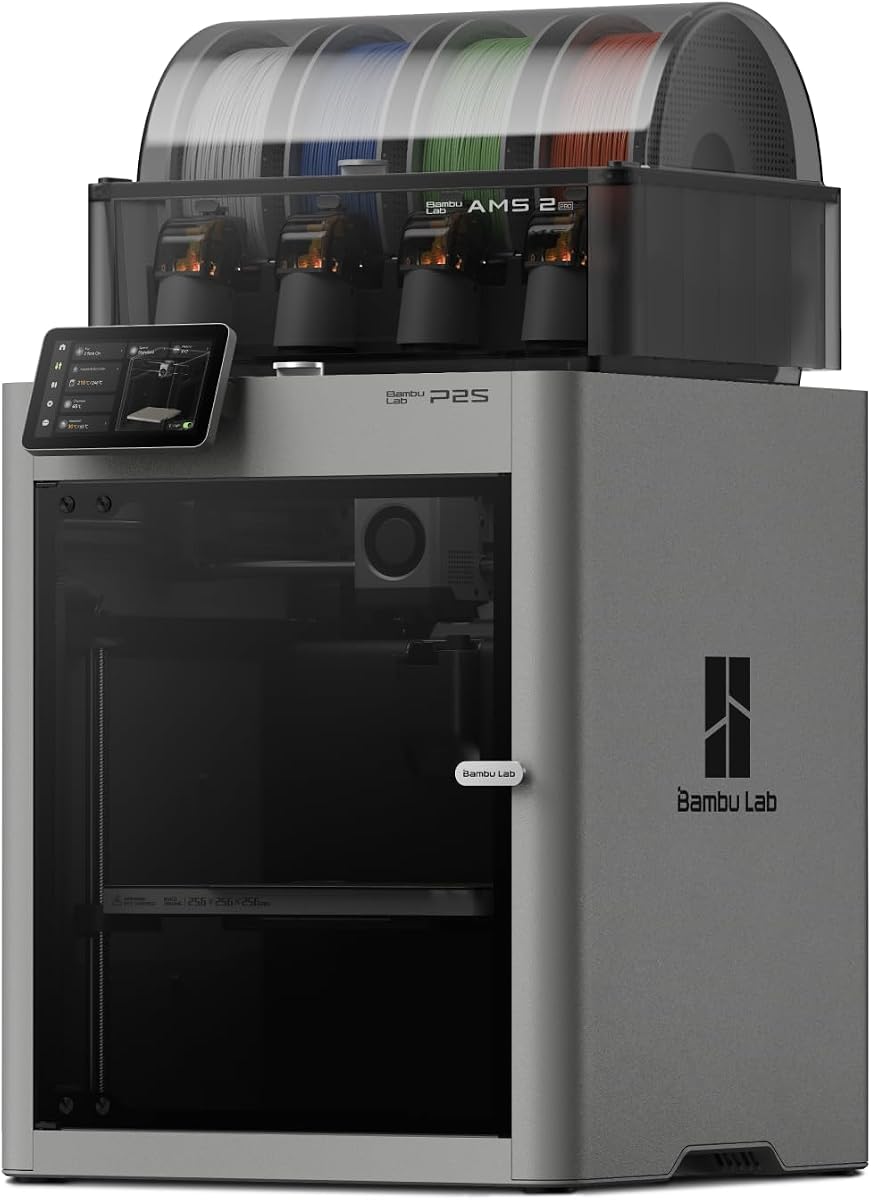
The P2S Combo combines a high-performance printer with a dedicated AMS unit for seamless multi-color printing. It is ideal for art or design classes requiring vibrant prototypes without manual filament swaps.
We may earn a commission when you buy through this link, at no additional cost to you.
The adaptive airflow system adjusts cooling for different materials, ensuring high-quality prints across various filaments. Filament drying built into the AMS maintains print quality by reducing moisture-related failures.
With a 15-minute setup time, it minimizes downtime. The enclosed body ensures safe operation and consistent thermal performance even in fluctuating classroom temperatures.
This model is best for creative programs focusing on visual output. Its ability to print complex multi-material parts simplifies advanced projects and enhances the learning experience for students.
The AMS unit enables smooth transitions between colors and materials, allowing students to create realistic and functional multi-part prototypes.
Built-in drying ensures prints are free of bubbles or weak layers caused by moisture, improving overall print success rates.
We may earn a commission when you buy through this link, at no additional cost to you.
This variant of the Adventurer 5M offers similar performance with specific improvements like vibration compensation and improved nozzle systems. It serves well for technical training where speed and precision are paramount.
We may earn a commission when you buy through this link, at no additional cost to you.
The filament run-out sensor alerts users when material is low, preventing failed prints. The dual-sided PEI plate allows easy removal of prints and accommodates different materials with specific surface properties.
While the open frame requires supervision, the performance and features justify it for older students. The high speed allows for quick iteration during lab sessions or workshops.
We recommend this for technical colleges or high school labs. It provides a balance of performance and practical features that support efficient learning and project development.
Vibration reduction technology minimizes ghosting artifacts in prints, ensuring cleaner lines and more professional-looking results.
Filament sensors ensure prints stop safely if material runs out, preventing waste and machine damage during unattended periods.
We may earn a commission when you buy through this link, at no additional cost to you.
The Snapmaker U1 offers a unique 4-toolhead system that enables true multi-material printing without purging. It is designed for advanced users needing flexibility in engineering and prototyping tasks.
We may earn a commission when you buy through this link, at no additional cost to you.
Tool changes take just seconds, significantly reducing waste and time compared to traditional systems. The open-source software and model library provide flexibility for customization and learning.
While expensive, its capability to combine materials in a single print opens new creative possibilities. This is ideal for high school engineering programs or university labs.
We recommend this for institutions needing advanced prototyping capabilities. It supports complex designs and multi-part prints, making it a powerful tool for serious educational projects.
Supporting rigid and flexible materials together allows for functional prototypes like hinges or grips printed in one go.
The open-source software invites students to learn the logic behind printing, encouraging deeper technical understanding and modification.
We may earn a commission when you buy through this link, at no additional cost to you.
The A1 Mini offers the same high performance as the larger A1 in a smaller package. It includes the AMS lite, making multi-color printing accessible even on a compact build volume.
We may earn a commission when you buy through this link, at no additional cost to you.
Its setup is quick and fully automated, reducing barriers for beginners. The quiet operation and simple maintenance make it ideal for libraries or home study environments.
The build area limits large projects, but it is perfect for small parts and detailed models. The multi-color capability enhances creativity without needing separate color tools.
This is perfect for individual student use or small groups. Its balance of features and footprint makes it a practical choice for limited space setups.
Inclusion of AMS lite ensures students can experiment with colors immediately, enhancing engagement and design variety.
The small size allows placement in tighter spaces like bookshelves or small desks, making it versatile for various rooms.
We may earn a commission when you buy through this link, at no additional cost to you.
Selecting the right 3D printer involves balancing safety, ease of use, and technical features that support learning objectives. Here are the key factors to consider.
In educational environments, safety is paramount. Look for enclosed designs that reduce exposure to hot parts and emissions. Certification like UL GREENGUARD ensures low emissions, which is critical for indoor classrooms.
Prioritize models with enclosures and safety certifications to protect students from hazards and maintain air quality in shared spaces.
Educators need printers that minimize downtime and manual adjustments. Features like auto bed leveling and calibration ensure prints start successfully without technical intervention from teachers.
Choose printers with automated calibration and quick setup to focus on teaching rather than troubleshooting technical issues.
Fast print speeds allow students to complete projects within class time or homework hours. High acceleration and speed ratings contribute to better workflow and iterative learning.
Select models with high-speed capabilities to maximize engagement and allow more iterations per project cycle.
Educational use often starts with PLA but may expand to PETG or TPU. Ensure the printer supports a wide range of materials for versatility in projects and lessons.
Check that the extruder can handle various materials to allow flexibility in creative and engineering tasks.
WiFi and app control enable remote monitoring, which helps teachers track progress without being near the machine. Network monitoring features are useful for managing multiple printers in labs.
Look for WiFi control and remote monitoring apps to facilitate easier classroom management and student supervision.
Some printers include apps or tools for STEM learning and design. These resources help structure lessons and provide curated models that align with curriculum goals.
Opt for models with educational modules or app integration to support structured learning and student creativity.
Consider not just the purchase price but also maintenance costs. Reliable printers reduce material waste and repair needs, saving money over the long term.
Evaluate total cost of ownership to ensure the investment aligns with the program's budget and longevity expectations.
Ensure the build size matches typical student projects. Large builds allow for bigger creations but may take longer to print than smaller compact options.
Select a build volume appropriate for the typical project sizes students will undertake to balance output and time.
Start by placing the printer on a stable, level surface away from edges to prevent accidents. Ensure proper ventilation in the room to avoid fume accumulation during operation.
Regularly clean the build plate and replace nozzles as needed to maintain print quality. Use a microfiber cloth and mild cleaning agents to avoid scratching surfaces.
Keep filament spools in a dry place to prevent moisture absorption. Check printer software updates periodically to ensure optimal performance and security.
Yes, most modern educational printers include safety features such as enclosures and auto shut-offs. Look for UL GREENGUARD certification to ensure low emissions.
Many educational models feature auto calibration and intuitive interfaces. You do not need technical expertise to start printing basic projects.
PLA is the most common choice due to its ease of use and low odor. It is biodegradable and ideal for educational environments.
Regular maintenance includes cleaning the build plate and checking nozzles. Automated features reduce the need for manual adjustments during classes.
Yes, many models support WiFi and app control. This allows teachers and students to track progress without being physically present.
Most educational printers have a build volume around 220x220x220mm. This size accommodates most standard school projects and creative models.
Several models come with apps that offer guided tutorials and model libraries. These resources help students learn design basics effectively.
Project duration varies by model and complexity. High-speed printers can finish small models in under an hour to save class time.
This guide highlights the top 3D printers tailored for educational needs. Models like the Bambu Lab A1 and Ugee Funbox offer exceptional ease and safety for diverse learning environments.
When choosing, prioritize features that reduce maintenance and maximize student engagement. Speed and safety certifications are vital for effective classroom integration and long-term success.
Prices and availability change frequently. Verify current details and stock before purchasing to ensure the best value and fit for your educational program.