
Askar 71F Flat-Field Telescope
4.9Editor score
Self-flattened quad design
Compact and portable
360-degree rotator
This guide compares the top apochromatic refractors for 2026, analyzing optics, portability, and value for astrophotography and visual observation enthusiasts.
Apochromatic refractors are the gold standard for clear, color-free views of the night sky. They use special glass to eliminate chromatic aberration, making stars sharp and true to life across the entire field of view.
We evaluated ten top models based on optical quality, build materials, focal ratios, and included accessories. Our analysis focuses on real-world performance for both visual observers and astrophotographers looking for reliable gear.
Each pick below highlights specific strengths like ED glass types, focuser quality, and bundle value. Prices and availability can change quickly, so verify current details on the manufacturer or retailer pages before purchasing.
4.9Editor score

4.5Editor score

5.0Editor score
The following table provides a side-by-side comparison of all ten apochromatic refractors evaluated in this guide. Review the key specifications, optical designs, and bundle inclusions to determine which telescope fits your specific astronomy needs.




The SVBONY SV550 AP0 stands out as a top choice for observers seeking high-quality optics at a reasonable price point. Rated highly by users, this telescope delivers crisp, color-free images thanks to its air-spaced triplet design.
We may earn a commission when you buy through this link, at no additional cost to you.
Its optical structure uses S-FPL51 low-dispersion glass combined with correction elements to virtually eliminate chromatic aberration. This results in bright, high-contrast images that are perfect for observing galaxies and deep sky objects with clarity.
While the scope performs exceptionally well, users should note that it comes as an optical tube assembly. Accessories like field flatteners or carrying cases may need to be purchased separately to achieve full imaging potential or transport convenience.
This model is ideal for astrophotographers and visual observers who want a portable yet powerful 80mm aperture. Its magnesium alloy construction keeps weight down, making it easy to carry to dark sky sites or mount on lighter tripods.
The triplet apochromatic optics effectively address blue-edge chromatic aberration, ensuring stars remain pinpoint and sharp even at the edges of the field.
A 2.5-inch magnesium alloy dual-speed toothed focus mount provides precise control, reducing vignetting on full-frame cameras while maintaining stability during adjustments.
We may earn a commission when you buy through this link, at no additional cost to you.
Explore Scientific is known for reliable optics, and the ED80 Essential Series continues this tradition with high-contrast views. It combines genuine FCD1 HOYA extra-low dispersion glass with multi-layer coatings for stunning detail in planetary and deep sky views.
We may earn a commission when you buy through this link, at no additional cost to you.
Designed with portability in mind, this refractor features a retractable dew shield and a versatile f/6 focal ratio. These traits make it easy to set up for spontaneous stargazing sessions or mount as a guide scope on larger systems.
The front cell includes push-pull adjustments to optimize collimation, ensuring the tightest stars possible. While the focus mechanism is robust, some users might find the pull action requires a bit of force to maintain tension over time.
This telescope is perfect for those who value optical quality and brand support. USA-based customer service ensures assistance is available for any issues, making it a reliable choice for both beginners and experienced astronomers.
Proprietary enhanced multi-layer coatings on all optical surfaces reduce internal reflections, enhancing contrast and color fidelity across the entire field.
With its 480mm focal length, the ED80 is compact enough for wide-field astrophotography or visual use without needing excessive tube length.
We may earn a commission when you buy through this link, at no additional cost to you.
This bundle takes the SV550 and adds essential imaging accessories to create a ready-to-use astrophotography package. With a perfect 5.0 rating from users, it offers exceptional value for those entering deep sky imaging.
We may earn a commission when you buy through this link, at no additional cost to you.
The inclusion of the SV209 Field Flattener is crucial for correcting field curvature, ensuring sharp stars from center to edge on full-frame sensors. This solves a common issue when using refractors for wide-field capture.
The telescope itself features extreme extinction measures with multiple light barriers inside the focusing seat and lens barrel. These design choices minimize stray light, resulting in higher contrast images against the night sky background.
For serious imagers who want a complete solution without hunting for parts, this bundle is hard to beat. The magnesium alloy focuser and extensive compatibility make it a flexible tool for various camera mounts and setups.
The M63 extension tube and M48 adapter ring ensure standard 55mm back focus length, simplifying the connection of cameras and filters.
Internal extinction barriers and a hollow dovetail plate enhance stability and image quality, providing a solid foundation for long-exposure sessions.
We may earn a commission when you buy through this link, at no additional cost to you.
This 122mm aperture version of the SV550 brings more light-gathering power to the table. While heavier, the inclusion of a comfortable carrying handle makes transport manageable for observers needing larger optics for fainter objects.
We may earn a commission when you buy through this link, at no additional cost to you.
The FPL-51 triplet apochromatic lens structure ensures better correction of aberrations, enhancing clarity and sharpness compared to standard doublets. This makes it suitable for deep sky photography where limiting magnitude is key.
A 203mm dovetail base adds stability and allows for versatile accessory mounting. However, users should be aware of the weight; at over 14 pounds, it requires a sturdy mount to ensure stability during tracking.
Ideal for intermediate to advanced observers who need extra aperture but still value portability features like integrated handles, this kit provides a balance between performance and ease of setup.
The larger 122mm aperture gathers more light than smaller scopes, allowing for better detail in fainter deep sky objects and nebulae.
The included SV211 base features multiple screw holes for guide scopes, making it easy to expand your imaging or guiding capabilities.
We may earn a commission when you buy through this link, at no additional cost to you.
The Askar 71F offers remarkable performance for its size, weighing only 2.5kg. Its quadruplet air-spaced design delivers excellent correction and field flattening without requiring external adapters for most cameras.
We may earn a commission when you buy through this link, at no additional cost to you.
High-quality CNC processing and matte paint inside the barrel reduce stray light, ensuring clean images. The built-in rotator allows for perfect camera alignment without needing to rotate the entire tube assembly.
While the 71mm aperture is smaller than others, it excels in wide-field imaging and visual use. It is incredibly portable, making it perfect for travel or casual observing sessions where setup time must be minimal.
Budget-conscious photographers will appreciate the value this scope provides. It simplifies the imaging process by integrating key corrections, allowing you to focus on capturing the night sky rather than fiddling with optics.
The self-flattened optical design eliminates the need for separate field flatteners, saving money and simplifying the optical train.
With its small size and weight, this scope fits easily into backpacks or smaller cases, making it ideal for impromptu dark sky trips.
We may earn a commission when you buy through this link, at no additional cost to you.
With a 102mm aperture, the SV503 bridges the gap between lightweight portables and larger imaging telescopes. Its FMC coating and ED glass improve light transmission and reduce internal reflections significantly for brighter views.
We may earn a commission when you buy through this link, at no additional cost to you.
The dual-speed focuser with a 360-degree rotator allows precise focusing and alignment. This flexibility is valuable for both visual observers and those capturing planetary or deep sky images with DSLRs.
A 133mm retractable hood actively blocks stray light and prevents dew, protecting the objective lens. While excellent for visual use, the focus travel may limit some large filter wheels unless careful planning is done.
This model is best suited for observers who want a step up in aperture without sacrificing portability. It offers a balance of light grasp and handling that works well for a wide variety of celestial targets.
FMC coatings ensure maximum light reaches the eye or sensor, making faint objects more visible and improving overall contrast.
The retractable hood not only blocks stray light but also serves as a dew shield, extending observation time on humid nights.
We may earn a commission when you buy through this link, at no additional cost to you.
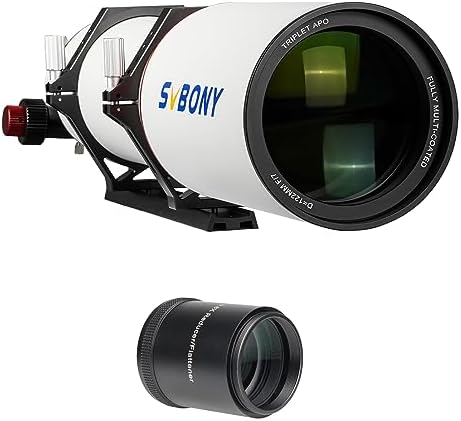
This bundle offers the benefits of a large 122mm aperture with a focal reducer to create a faster, wider field system. It is specifically designed for prime focus astrophotography, optimizing the setup for deep sky targets.
We may earn a commission when you buy through this link, at no additional cost to you.
The SV209 field flattener corrects field curvature, improving imaging quality at the edges. This is essential for large sensors where corners often show stars before the center does.
While the added optics increase the weight slightly, the efficiency gain in exposure times and field of view is substantial. Enthusiasts capturing large nebulae or galaxy clusters will find this combination highly effective.
Ideal for those who have already committed to the SV550 122mm platform but need the speed and coverage of a focal reducer, this package provides a complete solution for ambitious imaging projects.
The 0.8X reducer shortens the focal length, effectively speeding up the system and allowing for shorter exposures while capturing more area.
Flattener integration ensures that stars remain crisp across the entire sensor, crucial for mosaics and large format imaging.
We may earn a commission when you buy through this link, at no additional cost to you.
This comprehensive kit combines the SV550 122mm scope with essential accessories like the SV209 field flattener and a handle base. It targets users who want everything needed for deep sky photography in one purchase.
We may earn a commission when you buy through this link, at no additional cost to you.
The high limiting magnitude of the 122mm aperture makes it suitable for faint deep sky objects. The triplet lens structure ensures that clarity and sharpness remain high throughout your images.
Transport is facilitated by the comfortable carrying handle, which aids in managing the bulkier tube. Despite the size, the design prioritizes usability for field astronomers who move locations frequently.
For dedicated astrophotographers looking to streamline their workflow, this kit is a strong candidate. It eliminates the guesswork of compatibility and ensures all components work well together for consistent results.
Includes necessary adapters and flattening optics, reducing the time spent sourcing compatible parts for your imaging setup.
The larger aperture gathers more photons, allowing for the detection and imaging of dimmer objects that smaller scopes might miss.
We may earn a commission when you buy through this link, at no additional cost to you.
This kit focuses on the 80mm variant with the essential SV209 field flattener for correcting image quality issues. It is a practical choice for those starting with astrophotography or wanting a secondary guide scope.
We may earn a commission when you buy through this link, at no additional cost to you.
The ultra-wideband fully multilayer coated lens ensures bright and clear images. The design minimizes reflections that can reduce contrast, which is crucial for capturing faint nebulae and star clusters.
A carrying handle is included to improve safety and ease of transport. While simple, it adds significant value for users who need to move their scope between the car and the tripod quickly.
If you are looking for a simple, effective setup that delivers sharp results without high cost, this kit is an excellent starting point. It balances optical quality with practical accessories for everyday use.
Double glass and 30mm achromatic optics prevent irritating reflections, delivering clean views even when using an eyepiece.
Adjustable handle positions improve the safety factor during installation and transport, reducing the risk of accidental drops or damage.
We may earn a commission when you buy through this link, at no additional cost to you.
This bundle provides the 122mm scope along with a dedicated guide scope and camera. It creates a complete autoguiding setup, which is essential for long exposures needed to capture faint deep sky details.
We may earn a commission when you buy through this link, at no additional cost to you.
The SV905C camera features a highly sensitive CMOS sensor with low read noise, allowing for tight tracking of faint guide stars. This ensures your mount stays locked on target even during challenging conditions.
Despite the camera's small size, it is compatible with mainstream auto guiding systems. The compact design ensures it does not add excessive backfocus requirements to your optical train.
For beginners who want to jump into guided astrophotography without buying parts separately, this kit is a smart choice. It provides the necessary components to achieve professional-looking results with minimal setup complexity.
The mini guide scope and camera work together to correct tracking errors, resulting in round stars even during long exposures.
The high peak quantum efficiency of 80% ensures maximum light capture from faint guide stars, improving the reliability of the guiding process.
We may earn a commission when you buy through this link, at no additional cost to you.
Choosing the right apochromatic refractor requires balancing optical quality, portability, and budget. This guide outlines the critical factors to consider before making a purchase.
Aperture determines light-gathering ability and resolution. Larger apertures like 122mm reveal fainter deep sky objects but add weight and cost.
For beginners, an 80mm aperture often offers the best balance between clarity and portability for both visual use and imaging.
Focal ratio affects exposure times and field of view. Fast scopes like F/6 are ideal for wide-field astrophotography, while slower ones like F/7 offer higher magnification.
Choose a focal ratio that aligns with your primary target types, whether it is nebulae or planetary detail.
Look for triplet designs using ED glass to minimize chromatic aberration. Air-spaced designs often provide better thermal performance and color correction.
Verify the type of glass used, such as S-FPL51 or HOYA FCD1, to ensure high contrast and sharp star images.
A high-quality focuser is vital for precise focusing. Dual-speed focuser with toothed gears prevent slipping during adjustments.
Ensure the focuser supports the camera setup you plan to use without vignetting or requiring excessive spacers.
Weight and size matter for travel. Check if the scope comes with carrying handles or cases to simplify transport to dark sites.
Lightweight alloys like magnesium can significantly reduce the overall load on your mount and transport vehicle.
Bundles often include field flatteners or guide scopes that add value. Verify which accessories are necessary for your setup to avoid extra costs.
A complete kit can save money compared to buying components separately, but ensure compatibility with your cameras and mounts.
Select brands with reliable customer service and warranty coverage. USA-based support can be crucial if issues arise with optical collimation or parts.
Research community forums for real user feedback on reliability and long-term durability of the chosen model.
Ensure the scope includes a standard dovetail plate like Vixen or Losmandy. This ensures easy attachment to most equatorial mounts.
Consider the weight distribution when choosing a mount to avoid tracking errors caused by imbalance.
Allow your telescope to acclimate to outdoor temperatures before observing to avoid internal tube currents that degrade image quality. Leave the scope outside for at least an hour to stabilize.
Use a dew heater or dew shield to prevent condensation on the objective lens. This protects your optics and extends the life of your equipment during humid nights.
Clean lenses only when necessary using specialized lens tissues and solutions to avoid scratching the delicate coatings. Store the scope in a dry place to prevent fungal growth.
An apochromatic refractor is a type of telescope that uses special glass elements to eliminate chromatic aberration. This results in sharper, color-free images compared to standard refractors.
Apochromatic refractors offer superior optical performance with high contrast and sharpness. They are ideal for both visual astronomy and high-quality astrophotography.
Yes, many 80mm models are excellent for beginners due to their ease of use and lightweight design. They provide stunning views without the complexity of reflectors.
For visual use, a field flattener is optional. However, for astrophotography with DSLRs or large sensors, it is essential to correct field curvature.
Use the provided carrying handle and a padded case. Ensure the scope is secured firmly to prevent movement during transit to dark sky locations.
Choose a mount that can handle at least 1.5 times the weight of the scope. This ensures stable tracking for both visual and imaging sessions.
We have reviewed ten top models ranging from budget-friendly 80mm optics to robust 122mm imaging kits. Each offers unique advantages for visual or astro use.
Prioritize aperture and focal ratio based on your target interests. A lighter scope ensures you will actually use it more often in the field.
Always check current availability and prices as they change frequently. Investing in quality optics today ensures years of clear views of the universe.