
Whirlwind IMP 2
4.8Editor score
Economical price point
TRHL transformer design
Compact inline footprint
This guide compares the top 10 direct boxes for recording to help you choose the best passive or active DI box for your instruments and studio setup.
Direct boxes are essential tools for connecting instruments to mixing consoles and audio interfaces. They ensure your signal is balanced, clean, and ready for professional recording environments.
We evaluated ten top-rated models based on build quality, sound fidelity, and feature sets. Our comparison covers passive and active designs for every budget and use case.
Each pick highlights key strengths and potential trade-offs to guide your decision. Prices and availability change frequently, so verify current details before purchasing your unit.
4.8Editor score
4.8Editor score

4.6Editor score
The table below compares all ten featured models side by side. Review specifications and features to find the model that fits your workflow needs.


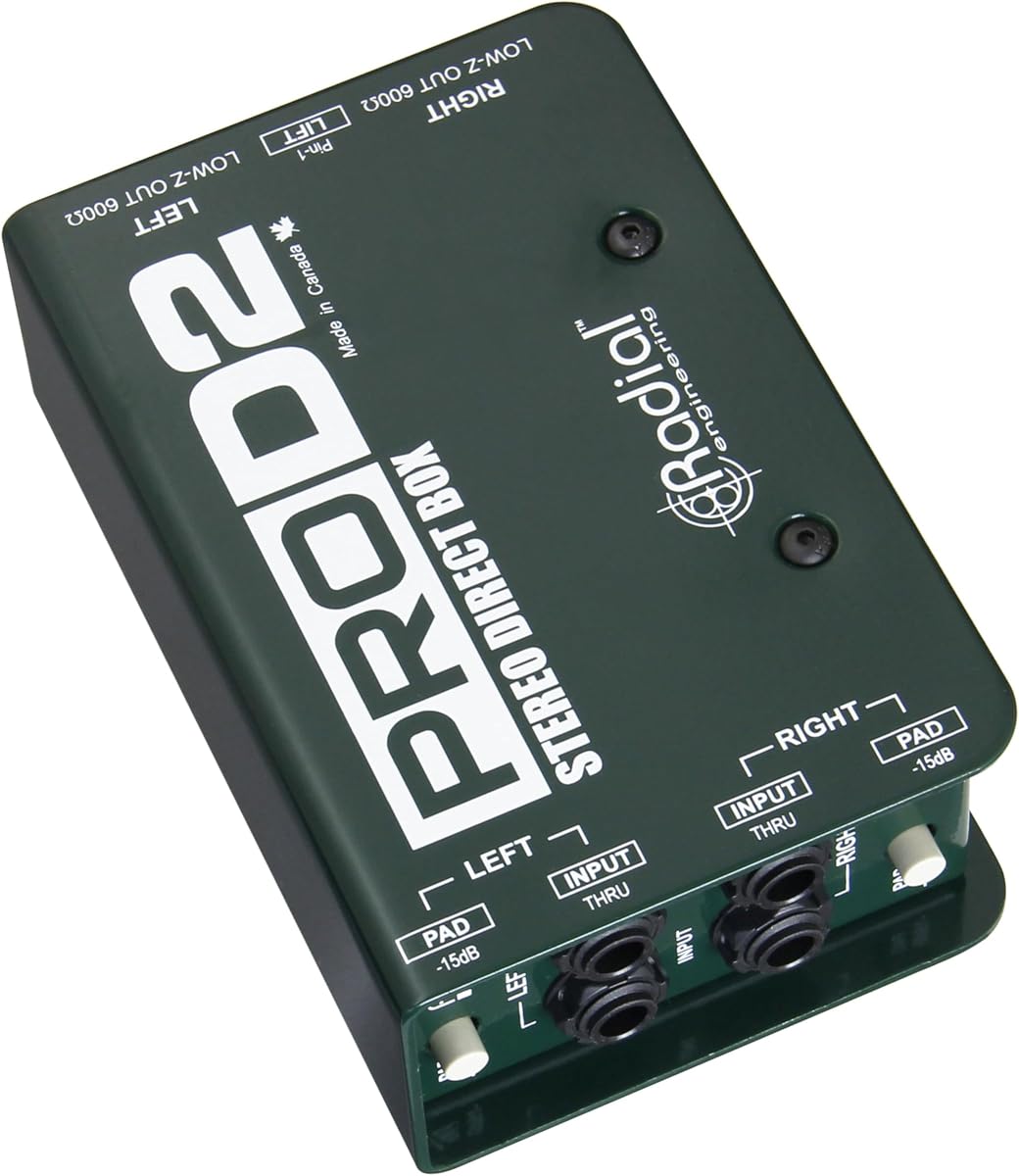
The Radial ProD2 is a top-tier passive stereo direct box designed for demanding recording scenarios. It carries a high user rating and is known for its robust construction and sound fidelity.
We may earn a commission when you buy through this link, at no additional cost to you.
Its custom wound transformer provides excellent isolation and impedance matching. The 15dB pad and ground lift switch allow precise control over signal levels and noise rejection.
While it costs more than basic models, the build quality justifies the investment. It is larger than some portable units but offers superior performance in live and studio contexts.
Musicians needing reliable stereo capture should choose this model. It delivers professional results that withstand years of touring and daily use.
Dual channels maintain full separation for keyboards and synths.
Steel housing protects internal components from impact and stress.
We may earn a commission when you buy through this link, at no additional cost to you.
The Whirlwind IMP 2 offers professional quality at an economical price. It is highly rated for its ability to convert unbalanced signals to balanced mic levels without coloration.
We may earn a commission when you buy through this link, at no additional cost to you.
Its TRHL transformer is riveted rather than glued, enhancing longevity. The compact size makes it easy to carry in any gig bag or studio rack.
It lacks advanced controls like pads or stereo channels. However, for simple instrument connections, it performs as well as more expensive competitors.
This unit is perfect for beginners or those needing a backup box. It ensures clean audio transmission without breaking the bank.
The riveted construction ensures long-term reliability in tough conditions.
Its small footprint saves space on crowded pedalboards and desks.
We may earn a commission when you buy through this link, at no additional cost to you.
The Radial USB-Pro is a premium active direct box with integrated USB interface capabilities. It receives excellent ratings for enabling direct digital recording from instruments.
We may earn a commission when you buy through this link, at no additional cost to you.
Its 24bit 96k converters ensure studio-quality digital signals. The built-in headphone amp allows musicians to monitor their sound while recording without latency issues.
It is priced significantly higher than standard passive boxes. This model is intended for users who need USB functionality without buying a separate audio interface.
Choose this unit if you want an all-in-one recording solution. It bridges the gap between traditional analog connections and modern digital workflows.
USB outputs connect directly to laptops for seamless DAW recording.
Built-in headphone amp enables real-time monitoring during recording.
We may earn a commission when you buy through this link, at no additional cost to you.
The Radial Pro DI is a classic passive direct box built for road use. It features a custom transformer and an I-beam steel chassis for maximum durability.
We may earn a commission when you buy through this link, at no additional cost to you.
Users appreciate its ability to handle high input levels without distortion. The ground lift switch eliminates hum caused by ground loops in complex environments.
It lacks a padding switch found on other Radial models. For standard instrument levels, this is rarely an issue for most recording and live situations.
This box is ideal for touring musicians needing a reliable tool. Its construction ensures it survives the rigors of travel and daily use.
The I-beam construction protects against physical impacts and drops.
Custom transformer ensures low noise and high fidelity transmission.
We may earn a commission when you buy through this link, at no additional cost to you.
The Pyle Premium DI Unit is an effective tool for eliminating hum and buzz. It includes an input attenuator for managing high level signals from keyboards.
We may earn a commission when you buy through this link, at no additional cost to you.
Its impedance transformer converts unbalanced signals to balanced XLR outputs. This ensures clean audio transmission over long cable runs to PA systems.
Construction is lighter than professional models. It may not withstand heavy touring but works well for home studios or light gigging.
Consider this if your main issue is ground noise. The included attenuator adds utility for high input sources without extra cost.
Impedance transformer cancels buzz and hum effectively.
Input attenuator manages strong signals without clipping.
We may earn a commission when you buy through this link, at no additional cost to you.
The PYLE-PRO PDC22 provides two channels in a single passive unit. It uses a steel chassis for durability while keeping costs low for budget users.
We may earn a commission when you buy through this link, at no additional cost to you.
Its hum cancellation ability helps isolate ground loops. The balanced XLR outputs send clean signals to mixers and audio interfaces.
This model is less refined than premium units. It works well for casual use but may lack the sonic precision of higher-end gear.
Buy this for general instrument connections. It offers practical functionality for those needing two inputs in a compact box.
Dual channels allow connecting two instruments simultaneously.
All steel construction guarantees longevity and durability.
We may earn a commission when you buy through this link, at no additional cost to you.
The Bolanle J22 is an active stereo DI with versatile power options. It runs on 48V phantom, a 9V battery, or USB power for maximum flexibility.
We may earn a commission when you buy through this link, at no additional cost to you.
Dual XLR outputs maintain stereo separation for synths. The ground lift switch helps eliminate interference from lighting rigs and power circuits.
It is a newer product with limited long-term reviews. However, users appreciate its adaptability for various stage and studio power environments.
Choose this if you need stereo capture with reliable power options. It offers professional utility at a competitive price point.
USB, phantom, and battery options ensure it runs anywhere.
Dual outputs keep left and right channels fully separated.
We may earn a commission when you buy through this link, at no additional cost to you.
The Radial ProDI Bundle includes the direct box plus a quality cable and cloth. It holds a perfect rating for its performance and ease of use.
We may earn a commission when you buy through this link, at no additional cost to you.
Its high 140k ohm input impedance ensures optimal signal matching. The transformer-isolated output eliminates ground loop noises for clean audio.
The included cable adds immediate value upon purchase. You get everything needed for setup without needing extra accessories.
This bundle is ideal for users wanting a complete package. It offers high performance and convenience in one purchase.
Includes mic cable and cloth for immediate ready use.
Custom transformer handles extreme signal levels cleanly.
We may earn a commission when you buy through this link, at no additional cost to you.
The PRORECK DC21 features a Thru output for live and studio use. It maintains perfect user ratings for its lossless sound reproduction and impedance matching.
We may earn a commission when you buy through this link, at no additional cost to you.
Balanced and unbalanced outputs support various setups. The ground lift switch eliminates hum and buzz effectively during live performances.
It is a simple unit without advanced features like USB. For standard analog signal paths, it performs reliably without adding noise.
Choose this if you need a Thru option for monitors. It offers professional signal path quality at an affordable price.
Thru jack sends signal to amp while recording to mixer.
Built-in transformer preserves high-frequency details fully.
We may earn a commission when you buy through this link, at no additional cost to you.
The ART DualZDirect is a passive dual channel box with flexible switching. It includes input attenuation and phase invert options for signal control.
We may earn a commission when you buy through this link, at no additional cost to you.
Its transformer design converts unbalanced inputs to balanced outputs efficiently. The ground lift isolates inputs to reduce noise effectively.
While it lacks premium features, it offers solid utility. It is useful for connecting two instruments or running split signals.
Select this for dual input needs without active power. It provides practical control features for a reasonable price.
Attenuation and phase switches offer detailed signal adjustment.
No battery needed ensures operation whenever plugged in.
We may earn a commission when you buy through this link, at no additional cost to you.
Selecting the right direct box depends on your instruments, budget, and recording setup. Understanding key factors ensures you get the cleanest signal possible.
Passive boxes do not require power and use transformers to convert signals. They are generally more rugged and reliable for live use. Active boxes need power but offer higher signal levels and better frequency response for passive instruments.
Choose passive for durability and active for high-impedance sources.
Impedance matching ensures the instrument signal is transferred without tone loss. High impedance inputs like 100k ohm are best for guitars and bass. Low impedance outputs like 600 ohm are ideal for mixers.
Ensure the box impedance matches your specific instrument needs.
Ground lift switches break ground loops that cause hum and buzz. This feature is essential for live stages and complex electrical environments. It isolates the input from the chassis effectively.
Look for a dedicated ground lift switch to reduce noise.
Attenuation pads reduce input signal levels to prevent clipping. They are useful for keyboards and synthesizers with high output voltages. A 10dB to 20dB pad provides necessary control.
Select a model with a pad if you use high output gear.
Mono boxes handle single instruments while stereo boxes handle left and right signals. Stereo units are vital for preserving the depth of synthesizers. Mono units are simpler and more compact for guitars.
Choose stereo for keyboards and mono for simple instruments.
USB integration allows direct digital recording to a computer. This eliminates the need for a separate audio interface. It is a premium feature ideal for home studios and remote work.
Opt for USB models if you want direct digital connectivity.
Steel chassis and heavy duty construction protect internal components. Rugged units survive drops and rough handling during tours. Plastic cases are lighter but less durable over time.
Prioritize steel housing for professional and touring use.
Look for balanced XLR outputs to prevent noise over long cables. Some models offer 1/4 inch thru outputs for monitoring. Dual outputs allow simultaneous connection to amp and mixer.
Ensure balanced outputs are present for clean signal transmission.
Connect your instrument to the input using a 1/4 inch cable. Connect the balanced XLR output to your audio interface or mixer. If using active models, ensure power is supplied via phantom or battery.
Engage the ground lift switch if you hear hum or buzz. Use the attenuation pad if the signal is too hot. This prevents distortion and keeps your recording clean.
Store the box in a padded case when not in use. Avoid moisture and extreme temperatures to protect the transformer. Check cables regularly for wear to maintain signal integrity.
Yes, especially if recording directly into an audio interface. It balances the signal and prevents noise. While amps can be mic'd, a direct box allows for flexible tone shaping later.
Passive boxes do not require power and use transformers for conversion. Active boxes need power but offer higher output levels. Active models are better for passive instruments like piezo pickups.
Hum is often caused by ground loops. Use the ground lift switch to isolate the ground connection. Ensure all equipment shares a common power source to reduce interference.
Yes, direct boxes are essential for connecting keyboards to mixers. A stereo model is recommended to preserve the width of the sound. Ensure the impedance matches the keyboard output.
Yes, they are standard for bass recording. They ensure low frequencies are captured without signal loss. Use a passive model for durability or an active one for high output clarity.
A USB box adds convenience for home studios needing digital recording. Standard boxes work with interfaces but lack USB output. Choose based on whether you need direct computer connectivity.
Most direct boxes offer 100k ohm input impedance for instruments. This matches guitars and basses well. Ensure the output impedance is low, around 600 ohm, for mixers.
High quality boxes do not add noise. Poor units may introduce hiss. Always choose models with transformer isolation and good shielding. This ensures clean audio without added interference.
The Radial ProD2 and Whirlwind IMP 2 top our list for their reliability and value. Each model offers unique strengths for different recording needs and budgets.
Prioritize build quality and impedance matching when selecting your unit. These factors ensure your instruments sound their best in any environment.
Check current prices and availability before making a decision. Prices fluctuate and bundles may offer better value at times.