This comprehensive guide compares the top 10 Arduino ADC boards for precision sensor data, featuring 16-bit and 24-bit converters with I2C and SPI interfaces
As an Amazon Associate we earn from qualifying purchases. We may earn a commission when you buy through links on this page, at no additional cost to you.As an Amazon Associate we earn from qualifying purchases.Purchases through our links may earn us a commission, at no extra cost to you.
Arduino boards lack native analog inputs for high precision. An Arduino ADC Board solves this by converting analog signals to digital values accurately.
We evaluated ten top-rated modules based on resolution, channel count, speed, and ease of integration with popular microcontrollers like Arduino and ESP32.
Each pick highlights key strengths and ideal use cases. Please note that availability and pricing may change frequently across different online retailers.
Top 3 Picks for Best Arduino ADC Board
Best Budget
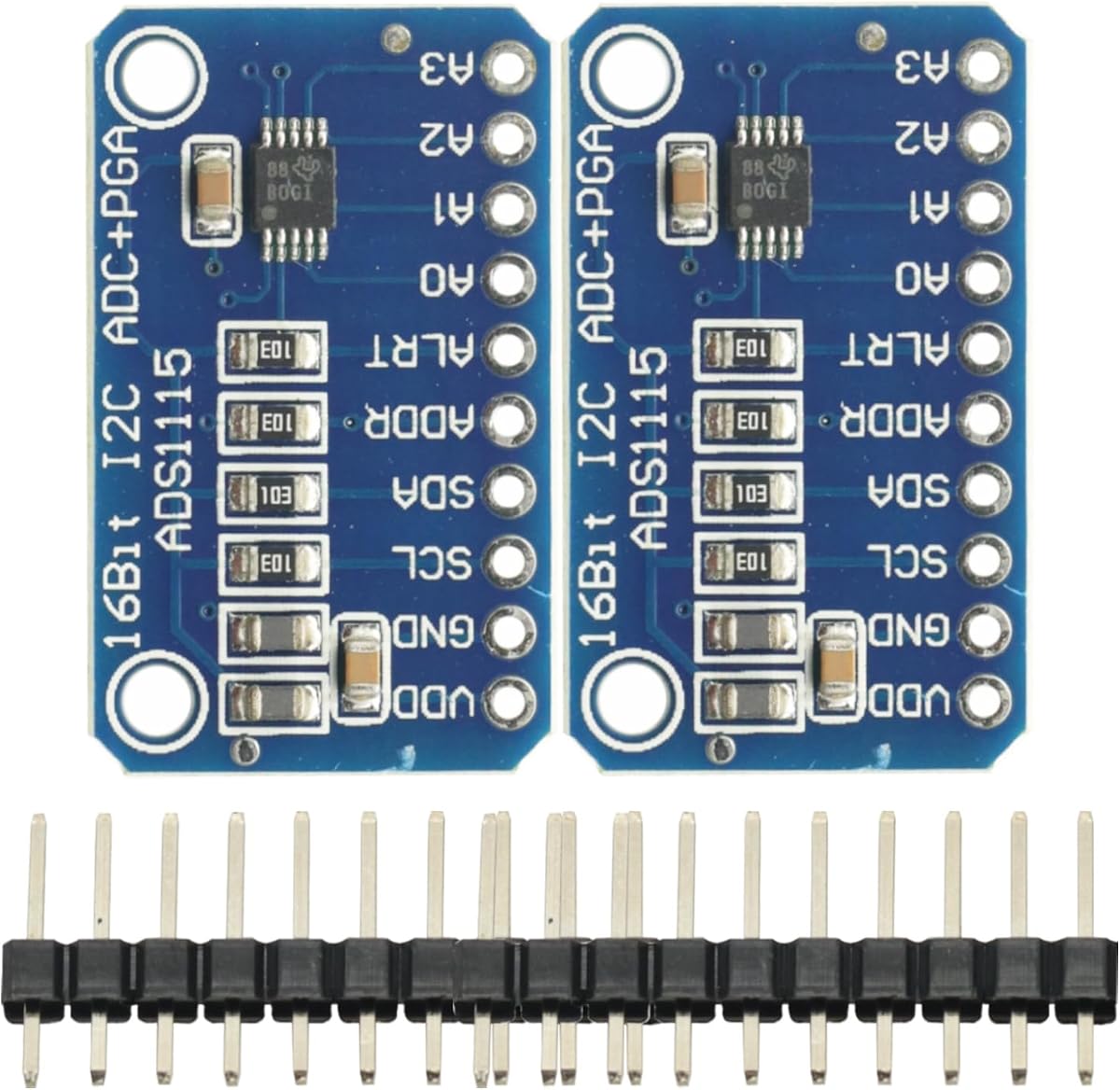
2Pcs ADS1115 16 Bit I2C Module Precision ADC 4 Channel Analog-to-Digital Converter Development Board Pro Gain Amplifier for Arduino Raspberry Pi ADC Module
This ADS1115 module stands out as the top pick for most Arduino users needing reliable analog input expansion. It offers a solid 16-bit resolution with four input channels, making it versatile for various sensor projects.
Pros
High precision conversion
Affordable multi-pack pricing
Wide supply voltage range
Simple I2C integration
Programmable data rate
Cons
Limited data rate
Basic packaging materials
We may earn a commission when you buy through this link, at no additional cost to you.
The standout quality is its internal programmable gain amplifier which allows for fine-tuned sensitivity across different voltage ranges. This feature is crucial when measuring low voltage signals from delicate sensors like thermocouples or strain gauges.
While the maximum data rate is limited to 860 samples per second, this is sufficient for most monitoring applications rather than high-speed signal processing. The trade-off is acceptable given the low cost and high precision it delivers.
We recommend this board for hobbyists and professionals alike who need a reliable ADC solution for Arduino or Raspberry Pi. It is particularly useful when you require multiple units for distributed sensor networks.
Programmable Gain Amplifier Advantage
The built-in PGA allows you to amplify small signals before conversion, significantly improving measurement resolution for low-voltage inputs.
Versatile Voltage Compatibility
Operating on a wide supply voltage from 2.0V to 5.5V ensures it works seamlessly with 3.3V and 5V logic systems without extra level shifting.
The ADS1256 module is a powerhouse for applications demanding extreme precision and speed. With 24-bit resolution, it can detect minute changes in voltage that other boards simply cannot resolve accurately.
Pros
Extremely high resolution
High sample rate
Differential input support
On-board reference voltage
Low linearity error
Cons
Requires more complex wiring
Higher power consumption
We may earn a commission when you buy through this link, at no additional cost to you.
Its data output rate reaches up to 30,000 samples per second, making it ideal for capturing dynamic signals or high-frequency monitoring tasks. The on-board reference voltage source ensures stable and consistent measurements over time.
However, using this module requires navigating SPI communication which is slightly more complex than I2C. The higher power draw is also a consideration for battery-powered projects. These trade-offs are worth it for industrial-grade accuracy.
Select this board if you are working on advanced data acquisition projects requiring detailed signal analysis. It is perfect for laboratory setups or engineering experiments where every bit of precision counts.
Industrial Grade Accuracy
The 24-bit resolution provides exceptional detail allowing you to distinguish between incredibly small voltage differences in sensitive measurement tasks.
Flexible Input Configuration
You can configure the module for eight single-ended inputs or four differential inputs giving you flexibility based on your specific sensor wiring needs.
This two-pack of ADS1115 modules offers the best value for makers on a budget. It provides all the essential features of a high-quality ADC at an unbeatable price point for entry-level projects.
Pros
Incredible value for money
Perfect rating score
Wide input range options
Easy I2C setup
Includes two modules
Cons
Basic build quality
No extra accessories
We may earn a commission when you buy through this link, at no additional cost to you.
The high rating reflects user satisfaction with its performance and reliability. It supports seven programmable input ranges allowing you to adapt to different sensor types without changing hardware components.
While the packaging is minimal and build materials are standard, the electrical performance remains consistent and accurate. These minor compromises make it an ideal choice for prototyping and classroom use.
We recommend this option for students or hobbyists building multiple projects where cost is a primary concern. Having two units on hand allows for redundancy and easier project expansion.
Programable Input Ranges
Seven different input voltage ranges allow you to optimize resolution for both small and large signal measurements without additional external circuitry.
Multi-Device Availability
Getting two modules in one package means you can run separate sensor networks or keep a spare unit ready for future prototyping needs.
This three-pack provides excellent value for projects requiring multiple ADC channels across different locations. It uses the trusted ADS1115 chip ensuring consistent performance across all three modules.
Pros
Three units included
High precision ADC chip
Comparator mode support
Wide voltage range
I2C interface
Cons
Slightly lower rating
Standard packaging
We may earn a commission when you buy through this link, at no additional cost to you.
The ability to operate in comparator mode helps maintain accuracy when monitoring thresholds rather than continuous data streams. This makes it particularly useful for alarm systems or automated control loops.
Some users report slightly more variable quality control compared to single units which affects the overall rating. However, the performance per dollar remains very competitive for large-scale deployments.
Choose this pack if you need to equip several workstations or build a distributed monitoring system. The redundancy ensures you have backups ready if any module encounters issues during development.
Comparator Mode Feature
The comparator mode allows the module to trigger alerts when a signal crosses a specific threshold, ideal for monitoring systems requiring immediate reaction.
Extended Voltage Range
Operating safely between 2.0V and 5.5V supply voltage makes it compatible with both 3.3V and 5V microcontroller logic levels without risk.
For bulk needs this four-pack offers the most cost-effective solution available for standard ADC requirements. It simplifies purchasing by bundling four reliable units into a single order.
Pros
Four units per pack
Highly cost-effective
Internal oscillator included
Wide voltage support
Simple I2C wiring
Cons
Lower overall rating
Basic construction
We may earn a commission when you buy through this link, at no additional cost to you.
The internal oscillator ensures consistent timing for conversions without needing an external crystal. This design choice reduces component count and simplifies the overall circuit design for embedded projects.
The lower rating suggests some variability in build quality which is common with bulk electronics. However, for non-critical applications this does not significantly impact the core functionality of the board.
We recommend this for classroom labs or prototyping phases where you need many boards at low cost. It is an excellent way to experiment freely without worrying about budget constraints.
Internal Oscillator Benefit
The built-in oscillator provides the necessary clock signal for accurate data conversion, eliminating the need for extra components on your schematic.
Bulk Packaging Advantage
Having four boards in one package ensures you have spares for testing and prototyping, reducing downtime caused by individual component failures.
This module delivers standard reliable performance that earns perfect marks from users who appreciate consistency and ease of use. It follows the classic ADS1115 design with no unnecessary complications.
Pros
Perfect user rating
Standard reliable performance
Multiple address options
Programable data rate
Differential input support
Cons
No unique features
Standard I2C limits
We may earn a commission when you buy through this link, at no additional cost to you.
Supporting multiple I2C addresses allows for chaining multiple modules on the same bus which is a key feature for scalable projects. This flexibility makes it easy to expand input capacity over time.
The programmable data rate lets you balance speed and power consumption based on your application needs. This control is vital for battery-powered projects where efficiency matters as much as precision.
It is an excellent choice for general purpose data acquisition where proven reliability is paramount. You can trust this board to perform consistently over long-term monitoring deployments.
I2C Address Flexibility
Four selectable I2C addresses allow you to chain up to four modules on a single bus, effectively multiplying your analog input channels.
Rate Control
Adjusting the data rate helps manage power consumption and noise levels, ensuring optimal performance for both slow and fast signal applications.
This premium pack stands out for its superior build quality and attention to detail. The ENIG gold plating ensures excellent solderability and long-term oxidation resistance for professional projects.
Pros
ENIG gold plating
High quality build
Logic tolerant design
Excellent documentation
Australian brand support
Cons
Higher price point
Limited availability
We may earn a commission when you buy through this link, at no additional cost to you.
The logic tolerant design eliminates the need for level shifters when connecting to 3.3V or 5V systems making it highly versatile for mixed voltage environments. This simplifies wiring significantly.
While the cost is higher than standard options, the quality and included documentation justify the investment for critical applications. The brand focus on open-source compatibility is another major plus.
Choose this for projects where reliability and long-term stability are critical. It is particularly suited for commercial prototypes or industrial environments where component failure is not an option.
ENIG Gold Plating
Electroless Nickel Immersion Gold plating provides a flat surface for soldering and protects against corrosion ensuring a robust connection over years of use.
Logic Tolerant Design
Built-in tolerance for both 3.3V and 5V logic levels means you can connect directly to various microcontrollers without extra shifting circuits.
This module is unique in offering simultaneous sampling across all eight channels which is essential for measuring signals that change rapidly in relation to each other. It provides high bandwidth performance.
Pros
Simultaneous sampling
High sampling rate
Multiple voltage ranges
Parallel data output
Internal reference
Cons
Low user rating
Complex interface
We may earn a commission when you buy through this link, at no additional cost to you.
The 200KHz sampling rate ensures you capture fast transients without missing critical data points. Internal reference voltage and multiple input range options add to its versatility for advanced engineering tasks.
However, the complex SPI interface and specific driver requirements can make integration difficult for average users. The low rating reflects these challenges despite the impressive technical specifications.
We recommend this only for advanced users with experience in high-speed data acquisition. It is ideal for industrial control systems or research requiring synchronized multi-channel measurements.
Simultaneous Sampling
All channels sample at the exact same time preventing phase shifts between channels which is vital for accurate multi-signal analysis.
High Speed Performance
A 200KHz sampling rate allows you to track rapid signal changes ensuring that fast transients are captured with high fidelity.
This four-pack combines good quality with competitive pricing making it a top contender for bulk projects. Users appreciate the stable readings it delivers consistently across various conditions.
Pros
High quality to price
Excellent user rating
Simple integration
Wide compatibility
Stable readings
Cons
Standard features only
Basic documentation
We may earn a commission when you buy through this link, at no additional cost to you.
The easy integration via I2C interface reduces wiring complexity allowing for quick setup and testing. Wide compatibility with popular platforms ensures it fits into almost any existing system.
It may lack advanced features compared to higher-end modules but it excels at fundamental accuracy and reliability. For most hobbyist needs these standard features are entirely sufficient.
We recommend this pack for those looking to equip multiple projects without breaking the bank. It strikes an excellent balance between cost and dependable performance.
Easy Integration
The simple two-wire I2C interface reduces wiring complexity allowing for quick and clean setup on breadboards or PCBs.
Wide Compatibility
Works seamlessly with Arduino Raspberry Pi ESP32 and other platforms ensuring you can use it with your existing microcontroller of choice.
This single unit represents a classic choice that has been tested by many users over time. It delivers the expected performance from the ADS1115 standard with solid accuracy.
Pros
Proven track record
Good accuracy
Wide voltage range
Auto shut down
Easy to use
Cons
Lower rating than others
Older model
We may earn a commission when you buy through this link, at no additional cost to you.
The auto shut down feature helps conserve power in single-shot mode which is beneficial for low-power applications. Its wide voltage range ensures compatibility across various microcontroller voltages.
While newer options offer better multi-pack deals this single board is perfect for immediate needs or testing without bulk commitment. Its proven reliability makes it a safe option.
Select this if you need a single reliable unit quickly and do not require bulk purchasing. It is a safe fallback choice for simple data acquisition tasks.
Auto Shut Down
The auto shut down feature in single-shot mode helps conserve power when the ADC is not actively converting data improving efficiency.
Wide Voltage Support
Supporting supply voltage from 2.0V to 5.5V makes it compatible with both 3.3V and 5V systems ensuring broad versatility.
We may earn a commission when you buy through this link, at no additional cost to you.
Buying Guide – How to Choose the Best Arduino ADC Board
Choosing the right ADC module requires balancing resolution speed and interface type with your specific project needs and budget constraints.
Resolution Requirements
Resolution determines how finely the ADC can distinguish between voltage levels. For most hobby applications 16-bit resolution provides sufficient precision to measure small changes in sensor data accurately.
Higher 24-bit resolution is necessary for measuring extremely low voltage signals such as those from strain gauges or thermocouples where millivolt changes matter.
Number of Channels
Count how many sensors you need to connect simultaneously. Boards with more channels reduce the number of modules needed and simplify wiring for multi-sensor setups.
Consider if you need single-ended or differential inputs as differential inputs reduce noise interference in electrically noisy environments.
Communication Interface
I2C interfaces are simpler and use fewer pins making them ideal for projects with limited GPIO available. SPI interfaces offer higher data rates but require more wiring and pins.
Choose I2C for ease of setup and SPI when you need faster sample rates for dynamic signals or real-time control loops.
Data Rate
The sample rate determines how quickly the ADC can convert signals. Slow rates are sufficient for temperature or light monitoring where signals change gradually.
Higher data rates are essential for capturing audio signals or vibration data where rapid changes occur frequently during operation.
Programmable Gain Amplifier
A PGA allows you to amplify weak signals before conversion which improves the effective resolution for low voltage sensors.
Look for modules with multiple range options to adapt the gain based on your specific signal amplitude requirements.
Voltage Compatibility
Ensure the board operates within your system voltage range. Many boards support both 3.3V and 5V logic levels making them versatile across different microcontroller platforms.
Check if the board supports input voltages exceeding your supply voltage to avoid signal clipping during measurements.
Quality and Build
Higher quality boards often feature better plating and components that ensure long-term reliability and stable performance.
Consider brands with good documentation and community support to simplify the development and debugging process.
Price and Availability
Evaluate the cost per unit especially if you need multiple boards. Multi-pack options often provide significant savings for larger projects.
Check current stock levels as popular models may have fluctuating availability depending on market demand.
How to Use and Care for Your Arduino ADC Board
Begin by connecting the power and ground pins to your microcontroller supply. Ensure you match voltage levels to prevent damage to the sensitive ADC circuitry.
Wire the data pins SDA and SCL or MOSI MISO to your boards appropriate communication pins. If using I2C adjust the address jumper to avoid conflicts with other devices.
Install the necessary libraries for your specific board type through your IDE. Initialize the ADC with desired settings like range and data rate before reading values.
Frequently Asked Questions
What is the main difference between 16-bit and 24-bit ADCs?
A 16-bit ADC converts signals into 65536 discrete levels while a 24-bit ADC provides over 16 million levels. The higher bit depth allows for much greater precision in measuring minute changes in voltage which is vital for sensitive scientific instruments.
Can I use an ADC board with 3.3V microcontrollers?
Yes most modern ADC boards support both 3.3V and 5V logic levels. Always check the voltage specifications to ensure compatibility with your specific microcontroller to prevent logic level mismatches or damage.
How do I choose between I2C and SPI interfaces?
I2C is simpler and uses fewer pins making it great for most standard projects. SPI is faster and better for high-speed data acquisition but requires more wiring and processing power from the microcontroller.
Do I need an external voltage reference for these boards?
Many boards have internal reference voltage sources which simplify the circuit design. However some high precision modules offer external reference pins for even greater stability if your project demands it.
How do I calibrate my ADC board?
Calibration involves comparing the ADC reading against a known precise voltage source. Software adjustment using a known offset or scaling factor corrects any minor systematic errors observed during testing.
What is a programmable gain amplifier?
A PGA amplifies the input signal before it is converted to digital. This allows you to measure very small signals accurately without needing additional external amplifiers or circuitry.
Why do some ADCs support differential inputs?
Differential inputs measure the voltage difference between two pins rather than ground. This setup helps cancel out common mode noise which is crucial when measuring signals in noisy environments.
Can I chain multiple ADC modules together?
Yes with I2C modules you can chain up to four units on one bus by changing the address. This allows you to expand your total input channels to sixteen or more easily.
Final Thoughts on Choosing the Best Arduino ADC Board
We have reviewed ten top ADC options ranging from budget multi-packs to premium high-precision modules for different needs.
Prioritize resolution and speed based on your specific sensor requirements to ensure your data collection is accurate and reliable.
Remember to check current pricing and availability as market conditions may vary and stock levels change frequently.
This guide compares the top ten magnetic power strip models for workshops and garages, evaluating surge protection, outlet count, mounting options, and build
This comprehensive guide compares the top court camera with auto tracking for tennis solutions to help players and coaches capture every match moment with