
2pcs DHT11 Temperature Humidity Sensor Module
4.3Editor score
Digital temperature humidity sensor
Single wire wiring scheme
3.3 to 5V voltage
Compare top Arduino temperature sensors including DHT11, AHT30, and DS18B20 models for humidity range accuracy and project compatibility.
Finding the right Arduino temperature sensor is crucial for any project that needs reliable environmental monitoring. Whether you are building a home automation system or a weather station, choosing a sensor with accurate readings and easy integration makes a big difference in your final build.
We have reviewed ten popular options available for Arduino users focusing on accuracy, range, and ease of use. Each product was selected based on user feedback and technical specifications to ensure you get a sensor that works well with your microcontroller setup.
Each pick in this list shows key details to help you decide quickly. Prices and availability can change over time so always check the current listing on the retailer site before making your final purchase decision for your project needs.
4.3Editor score

4.9Editor score

5.0Editor score
This side by side comparison highlights the key features of each top rated sensor to help you find the perfect match for your specific Arduino project requirements.


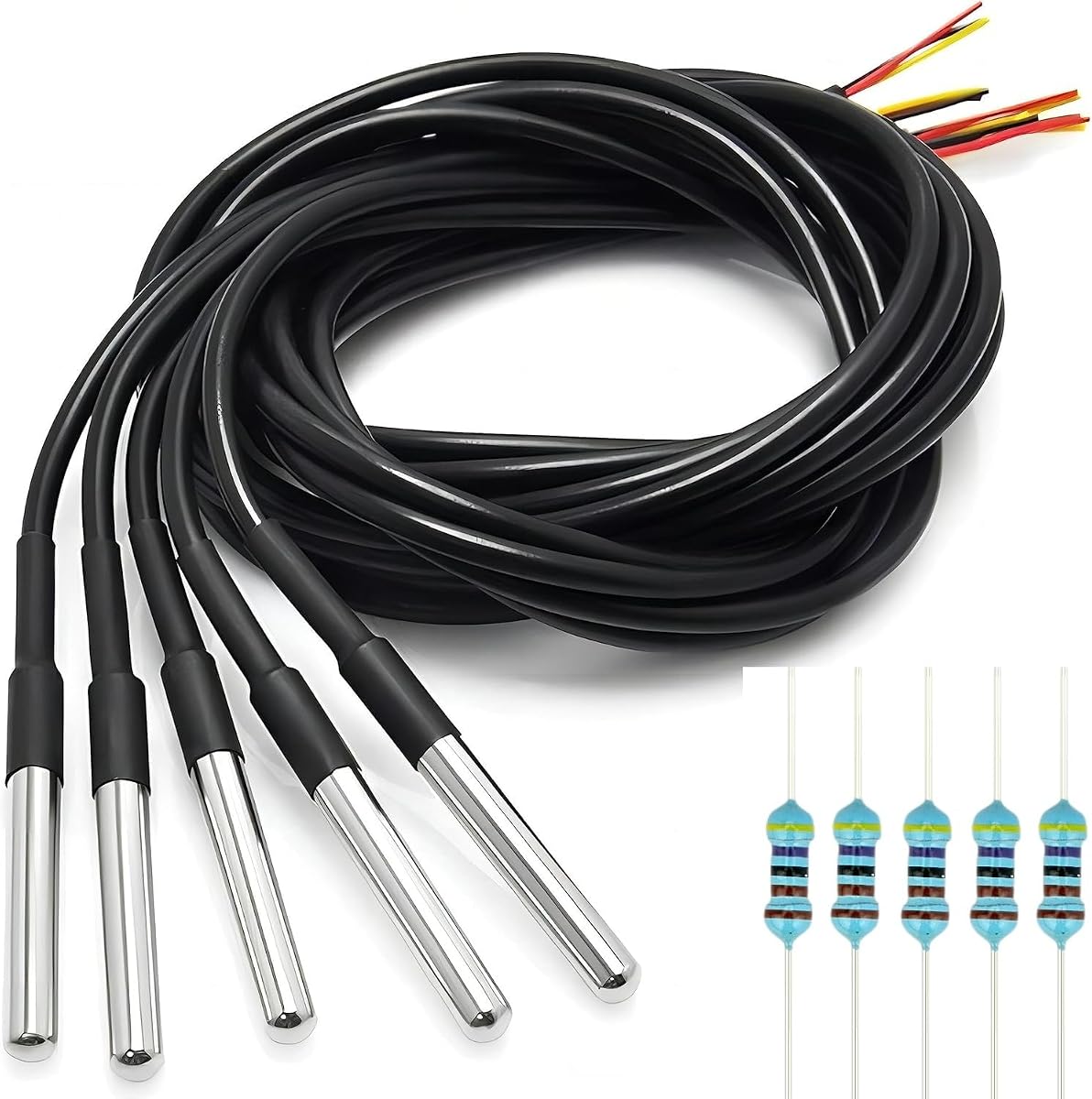


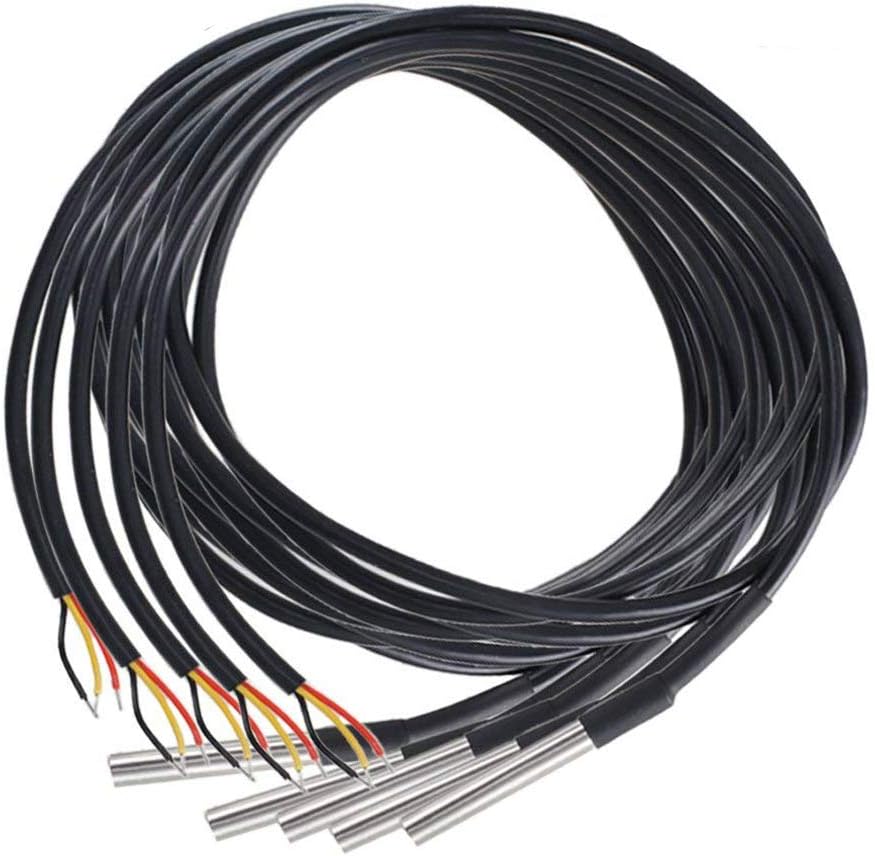
This sensor module uses the DHT11 component to provide digital temperature and humidity readings. It is rated highly by users for its reliability and ease of use in hobby projects. The single wire design makes it very simple to connect to your microcontroller board.
We may earn a commission when you buy through this link, at no additional cost to you.
The DHT11 chip comes pre calibrated so you do not need to calibrate it yourself. It operates on a voltage range that fits most standard Arduino boards without extra regulators. The onboard capacitor and pull up resistor reduce the need for external components.
One trade off is the limited temperature range which caps at 50 degrees Celsius. This might not work for high heat environments but it is fine for indoor climate control. The update rate is slower than some premium sensors so avoid rapid polling.
If you need multiple sensors for different zones this five pack is a great value. It is ideal for beginners or projects that monitor indoor air conditions. This sensor gives you a solid starting point for environmental monitoring.
The single wire scheme and digital output reduce coding effort for quick setup.
Long term stability of less than one percent RH ensures consistent readings over time.
We may earn a commission when you buy through this link, at no additional cost to you.
This module offers high precision digital readings using the AHT30 sensor with I2C output. It has a perfect rating from users who need accuracy in their measurements. The upgraded version supports simultaneous access to multiple I2C devices easily.
We may earn a commission when you buy through this link, at no additional cost to you.
The voltage range allows it to work with both 3.3 and 5 volt systems. It consumes little power which is great for battery projects. The temperature accuracy is tight at plus or minus 0.3 degrees Celsius.
Using I2C means you need SDA and SCL pins instead of a single wire. This can limit pin usage on smaller boards but allows more devices on one bus. If you need precise data this is a strong option.
Buy this if you want accurate readings and fast transmission speeds. It suits indoor weather stations and climate control projects. The two pack ensures you have a spare or can use two locations.
Temperature accuracy of plus or minus 0.3 degrees Celsius ensures reliable data.
Low power consumption and wide voltage range make it versatile for many projects.
We may earn a commission when you buy through this link, at no additional cost to you.
The SHT31-D sensor provides a wide temperature range from negative 40 to 125 degrees. This makes it suitable for both cold and hot environments. It uses I2C output for clean digital communication with your board.
We may earn a commission when you buy through this link, at no additional cost to you.
Operating voltage spans 2.4 to 5.5 volts giving flexibility across projects. The humidity accuracy is rated at plus or minus two percent which is reliable. You get three units which is helpful for multi zone monitoring.
I2C wiring requires two data pins which might be tight on small boards. The price is higher than basic sensors but the range and accuracy justify it. Ensure your code supports I2C library before starting.
This is a great choice for industrial or outdoor projects needing broad range. The three pack gives you options for different rooms or devices. It delivers solid performance for precision tasks.
Temperature range from minus 40 to 125 degrees covers many extreme conditions.
Wide voltage from 2.4 to 5.5 volts ensures compatibility with many boards.
We may earn a commission when you buy through this link, at no additional cost to you.
This waterproof DS18B20 probe works in wet environments like fish tanks. It comes with an adapter module that simplifies connection to your controller. The pluggable design makes it easy to swap or move sensors around.
We may earn a commission when you buy through this link, at no additional cost to you.
The range spans from negative 55 to 125 degrees which is very broad. The adapter has a pull up resistor so you can connect directly without extra parts. A 1M cable gives you good reach to remote areas.
The lead wire can only handle up to 85 degrees so avoid direct heat. This limits use near heaters but is fine for water or soil. The waterproof seal is good but check for cracks over time.
Ideal for monitoring water temperature or outdoor air. The three pack allows multiple locations. The adapter makes wiring simple for beginners.
Probe handles wet conditions well for tanks or outside use.
Adapter includes resistor for direct connection to most microcontrollers.
We may earn a commission when you buy through this link, at no additional cost to you.
This five pack includes probes and resistors for a complete setup. The waterproof probes can be used underwater or in moist areas. It supports wide temperature range from negative 55 to 125 degrees Celsius.
We may earn a commission when you buy through this link, at no additional cost to you.
You get five resistors which simplifies setup for multiple sensors. The color coding helps connect power data and ground correctly. It works with Arduino Pi and other common boards.
Since there is no adapter you need to solder or strip wires. This adds a step but saves cost compared to modules. Beginners might find it tricky but it is standard for this sensor type.
Great for large projects needing multiple points. The value of five units is hard to beat. If you have tools this saves time.
Five probes and resistors make this a full ready to use pack.
Compatible with Arduino Pi and ESP boards for flexible projects.
We may earn a commission when you buy through this link, at no additional cost to you.
This pack offers two units of the DHT11 sensor for basic needs. It provides digital output that is easy to read with code. The module includes a dedicated controller for stable readings.
We may earn a commission when you buy through this link, at no additional cost to you.
The working voltage matches standard boards so no extras needed. It uses a simple single wire design. This reduces clutter on your breadboard for cleaner wiring.
The range is limited to 50 degrees and 95 percent humidity. Accuracy is basic but fine for room monitoring. You might need more precision for weather data.
Choose this for small indoor projects. Two units allow room and outside if protected. It is affordable for testing.
Single wire design reduces wiring steps for quick connections.
Two modules allow monitoring of multiple small zones.
We may earn a commission when you buy through this link, at no additional cost to you.
This kit includes probes adapter boards wires and resistors. The stainless steel probe resists corrosion and rust. It has high accuracy of plus or minus 0.5 degrees for precise data.
We may earn a commission when you buy through this link, at no additional cost to you.
The adapter board has a pull up resistor so you can connect to GPIO directly. The wires have heat shrink for clear colors. This simplifies wiring for beginners who need all parts.
The temperature range is broad from negative 55 to 125 degrees. The voltage range supports 3 to 5.5 volts. It is designed for continuous submersion in wet environments.
Buy this if you want all parts included. It is durable for harsh conditions. The two pack is enough for most home needs.
Includes probes boards wires and resistors for easy start.
Stainless steel with sealant resists rust and corrosion.
We may earn a commission when you buy through this link, at no additional cost to you.
This pack has five waterproof probes with one meter cables. The cable length helps reach far from the controller. Each probe has red yellow and black wires for power and data.
We may earn a commission when you buy through this link, at no additional cost to you.
The power range is 3 to 5.5 volts which works well. The single bus interface is easy to implement. You get five units so you can monitor multiple rooms.
You must buy resistors separately for the data line. Also no adapters so you need to wire directly. This keeps cost low but adds work.
Use this for large areas needing long reach. Five units cover many zones. It is a practical choice for scale.
One meter cables allow remote sensor placement.
Five units provide wide coverage for multiple rooms.
We may earn a commission when you buy through this link, at no additional cost to you.
This module uses the AM2302 chip for better readings than basic DHT11. It supports wider temperature and humidity ranges. It gives single bus signal output like the older version.
We may earn a commission when you buy through this link, at no additional cost to you.
Accuracy is plus or minus 0.5 degrees Celsius for reliable data. The humidity range goes to 100 percent which is full scale. The module has a mounting hole for easy fixing.
It is slower than AHT sensors but still usable. The cost is higher but accuracy is worth it. Use this for weather stations or labs.
Choose this if you need precision in a small module. The two pack lets you have a backup. It replaces older sensors easily.
AM2302 chip gives more accurate data than basic models.
Supports full humidity range from zero to 100 percent RH.
We may earn a commission when you buy through this link, at no additional cost to you.
This pack has five stainless steel probes for tough use. They are waterproof and have one meter cables. The steel package resists damage in harsh conditions.
We may earn a commission when you buy through this link, at no additional cost to you.
Power voltage spans 3 to 5.5 volts for compatibility. The range is broad from negative 55 to 125 degrees. It uses standard red yellow black wiring.
You must add resistors and wires separately. This lowers cost but requires setup. It is good for bulk needs across many projects.
Buy this for multiple stations needing durability. The steel protects well. It is a solid choice for scale.
Stainless steel case resists damage for tough use.
Five units offer great value for multiple sensor needs.
We may earn a commission when you buy through this link, at no additional cost to you.
Selecting the right sensor depends on your project needs and environment.
Check the minimum and maximum temperatures your sensor supports. Some work in negative cold while others handle high heat. Pick one that covers your expected conditions without fail.
Ensure the range matches your project environment.
If you need humidity data choose a combined sensor like DHT or SHT. Pure temp probes only give heat values. This matters for weather or climate control.
Pick combined sensors for full air data.
High precision sensors have small error margins like 0.3 degrees. Others have larger errors which might not suit science projects. Check the accuracy spec before buying.
Choose higher accuracy for critical measurements.
One wire sensors use a single data line but I2C uses two. I2C allows more devices on one bus but needs two pins. Match your board's available pins.
Pick protocol based on pin availability.
For tanks or outside use get a waterproof probe with a metal case. Standard modules are not water resistant. This prevents damage in wet areas.
Select waterproof probes for wet environments.
Ensure the sensor works with your board voltage. Most accept 3.3 or 5 volts but some have narrow ranges. Mismatched voltage can damage the sensor.
Confirm voltage matches your system.
Some packs include resistors and wires while others do not. This saves time but adds cost. Check what is included before ordering.
Look for kits with needed parts.
Buy packs with multiple units if you need many sensors. This saves per unit cost. It also gives spares for backup.
Choose multi packs for multiple zones.
Connect the sensor wires to the matching pins on your board. Ensure power and ground are correct to avoid damage. Use a multimeter if unsure.
Use the appropriate library for your sensor type. Load examples to test readings. Verify values before running your full code.
Keep sensors away from direct heat or water unless rated. Check connections regularly for loose wires. Clean probes with a soft cloth if needed.
Yes most of these sensors work with Raspberry Pi. Check voltage levels and wiring. Libraries are available for Python.
DHT22 has better accuracy and a wider range. It costs more and uses similar wiring. Choose DHT22 for precise needs.
Yes DS18B20 needs a 4.7K pull up resistor on data. Some adapters include it. Check your setup before wiring.
DS18B20 waterproof probes are best for water. They are sealed and work in wet conditions. Avoid non waterproof modules.
Most sensors come pre calibrated. If readings seem off compare with a trusted thermometer. Some libraries allow offset settings.
Yes you can connect many sensors. One wire allows chaining. I2C supports multiple devices on SDA and SCL.
Use libraries like DHT sensor Library for DHT. Use Dallas Temperature for DS18B20. Adafruit offers libraries for I2C sensors.
Poll the sensor every 2 seconds for DHT. DS18B20 needs a few seconds. Too fast polling may cause errors.
The top picks include affordable DHT models for basics and waterproof DS18B20 for wet needs. The AHT30 offers high precision for detailed projects. Choose based on your accuracy and range needs.
Prioritize waterproof probes for tanks or outdoor use. For humidity choose sensors with dual output. Ensure voltage and pin counts match your board.
Prices and availability change often. Check current listings before buying to ensure you get the right parts for your project needs.