
ANYCUBIC Tough Resin 2.0
4.6Editor score
High toughness for parts
Low odor friendly formula
Minimal shrinkage rate
This guide compares the top flexible resin for 3D printing options available in October 2026, evaluating durability, flexibility, and ease of use for makers.
Flexible resin for 3D printing allows creators to produce parts that bend and stretch without breaking. These materials mimic rubber and TPU, making them ideal for functional prototypes that require shock absorption or soft touch.
We compared ten leading flexible resin options based on Shore hardness, print speed, and real-world durability. Our analysis covers compatibility with LCD and DLP printers as well as post-processing requirements for the best results.
Each pick highlights unique strengths like low odor, high elongation, or fast curing times. Prices vary by retailer and quantity, so check current listings before purchasing to ensure you get the best value for your project needs.
4.6Editor score

4.4Editor score
4.2Editor score
The following table provides a side-by-side overview of all ten flexible resin products evaluated in this guide. Compare key specifications such as hardness, weight, and compatibility to find the right material for your specific 3D printing needs and printer model.



Superflex 3D Printer Resin offers a balanced mix of softness and strength for flexible parts. It prints quickly and passes safety tests for skin contact. This makes it a top choice for functional prototypes needing rubber-like behavior.
We may earn a commission when you buy through this link, at no additional cost to you.
With 80A Shore hardness and 100% elongation, it absorbs shock well. The fast printing layer saves time and electricity on large farms. ISO 10993-5 compliance ensures safety for wearable or medical-like projects.
The 500g size may require more buys for big jobs. Clear color limits customization compared to colored options. However, the speed and safety balance outweigh these minor drawbacks for most users.
Buy this if you need reliable flexible parts fast. It suits cushioning, damping, and shock absorption needs best. Always post cure for full safety and performance in final applications.
Printing 50um layers in 1.7 seconds boosts productivity by over 40%.
ISO 10993-5 compliance means cleaned prints are safe for skin contact.
We may earn a commission when you buy through this link, at no additional cost to you.
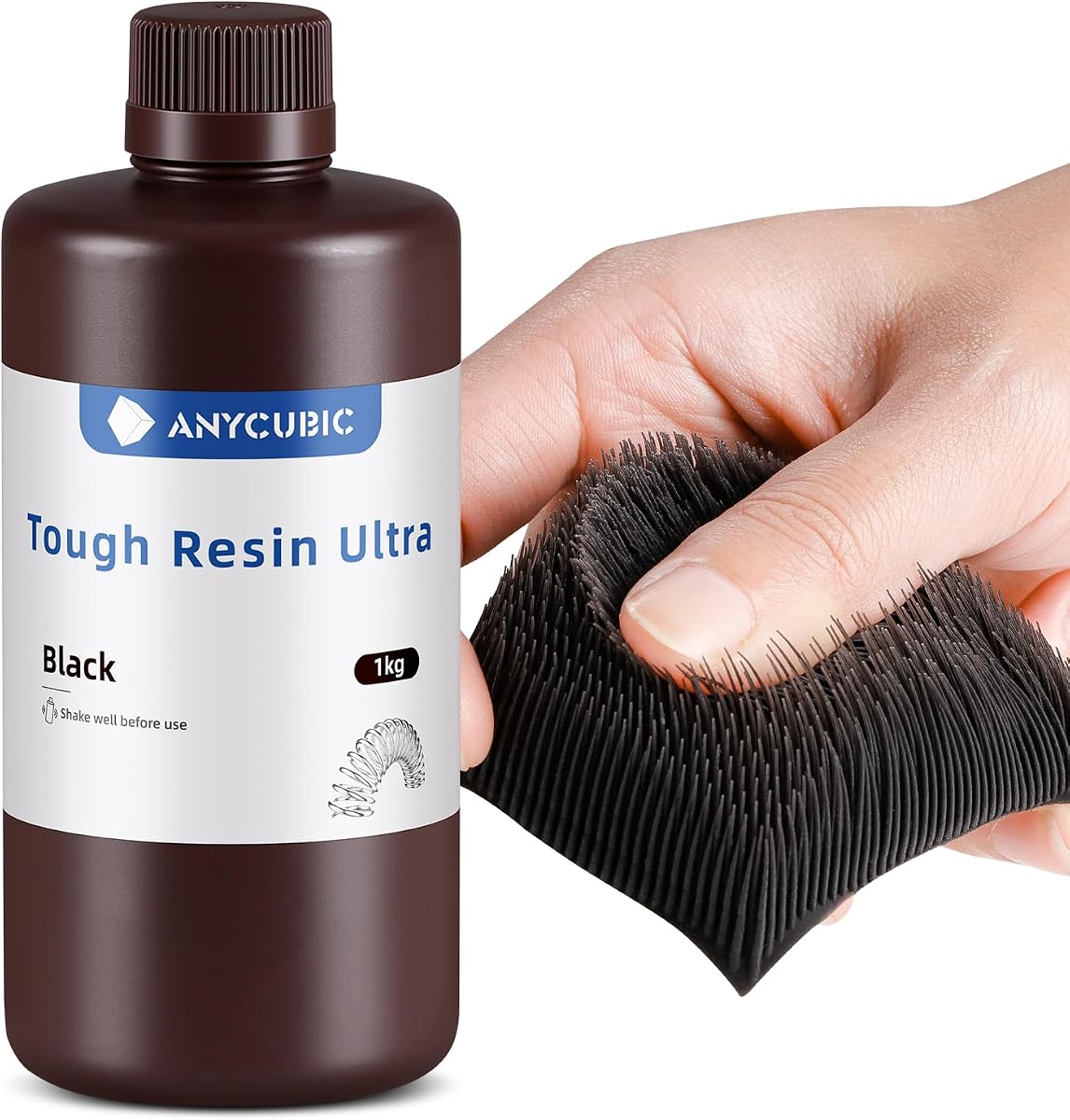
ANYCUBIC Ultra Tough Resin stands out for its exceptional flexibility and resilience. It recovers shape well after deformation, making it great for daily wearables or articulated models. The touch is gentle on skin for comfortable use.
We may earn a commission when you buy through this link, at no additional cost to you.
Its impact resistance helps parts survive drops without breaking. Blending with other resins boosts their toughness. The high precision captures fine details like hair textures in custom figures easily and effectively.
Black limits color choices for aesthetic projects. Mixing can alter final hues if not careful. Still, the performance and versatility make it a top budget pick for functional flexible parts.
Choose this for wearables or tools needing bendability. It works well alone or as an additive. Ensure proper curing for best results in humid or hot environments.
Resists brittleness and corrosion even in high humidity environments.
Blend with other resins to enhance toughness without changing color.
We may earn a commission when you buy through this link, at no additional cost to you.
SUNLU Flexible Resin offers a perfect balance of softness and strength. Its 70A hardness and 135% elongation at break allow models to bend without breaking. The smooth finish feels pleasant after cleaning and post-processing.
We may earn a commission when you buy through this link, at no additional cost to you.
High impact resistance means drops won't shatter parts. Low shrinkage ensures accurate sizes for fits. The leak-proof bottle reduces transport damage, making it reliable for storage and shipping to your workspace.
The lower rating suggests some users face curing issues. Gray limits aesthetic options compared to clear or black. Still, its compatibility and safety make it a solid choice for general flexible needs.
Use for flexible prototypes needing detailed surfaces. Works with 99% of LCD, DLP, and SLA printers. Cure fully for best stability against acids and greases.
Leak-proof patent design reduces bottle damage during transit.
Compatible with 365-405nm printers across most brands and models.
We may earn a commission when you buy through this link, at no additional cost to you.
Siraya Tech Tenacious Flex Black is softer than classic versions with faster rebound. It withstands extreme bending and returns to shape quickly. Ideal for soft grips, gaskets, and shock-absorbing components needing resilience.
We may earn a commission when you buy through this link, at no additional cost to you.
High impact resistance keeps models resilient after drops. Mixing with tough resins boosts their flexibility too. The black color helps hide layer lines in functional prints well and effectively for dark settings.
500g requires more bottles for large runs. Not ideal where original Tenacious stiffness is needed. Still, the elasticity and strength balance are great for pliable prototypes and tools.
Pick this for flexible parts needing quick shape recovery. Blend to improve other resins toughness. Ensure curing for best performance in dynamic or high stress environments.
Significantly softer and more elastic than the original Tenacious resin.
Mix small amounts to boost flexibility in standard tough resins.
We may earn a commission when you buy through this link, at no additional cost to you.
ANYCUBIC Tough Resin 2.0 has upgraded flexural strength for tough parts. Low odor and low shrinkage make it comfortable for long print sessions. High precision keeps details clear in thin models and delicate parts.
We may earn a commission when you buy through this link, at no additional cost to you.
Less prone to breakage even when dropped. Great for industrial spare parts and high-strength models. The formulation reduces VOCs for a safer workshop environment compared to older resins.
It is tougher than soft flexible resins. Grey limits color matching for some projects. However, the durability and low odor make it a top budget pick for strong flexible parts.
Buy for thin parts needing resilience and safety. Optimize for 365-405nm printers. Store in cool places for best shelf life and performance over time.
Significantly reduced volatile organic compounds for better air quality.
Boasts excellent precision while maintaining low shrinkage rates.
We may earn a commission when you buy through this link, at no additional cost to you.
SUNLU High Toughness Resin has elongation 5 times higher than standard resins. Its low viscosity ensures better accuracy and faster formation. Low shrinkage reduces cracking after washing and curing for higher success rates.
We may earn a commission when you buy through this link, at no additional cost to you.
Great for structural parts needing unbreakable durability. Easy to clean with alcohol or ethanol for quick turnaround. The R&D team focuses on stability for predictable prints and results over time.
Grey limits aesthetic choices. Not as soft as 70A options. Still, its bendability and durability make it a solid pick for tough models and tools.
Use for solid models needing flexibility without breaking. Compatible with most LCD/DLP/SLA printers. Cure fully for best strength and stability in use.
Reduced volume shrinkage prevents cracking after wash and cure.
5x elongation improves 3D printing quality and durability.
We may earn a commission when you buy through this link, at no additional cost to you.
ELEGOO Tough Resin has Shore hardness of 84.7D for high strength. It withstands tension and stress well. Good weather resistance means it handles humidity and corrosion for outdoor functional prototypes.
We may earn a commission when you buy through this link, at no additional cost to you.
Can be drilled without cracking for assembly. Excellent performance under extreme temperatures. Low odor and non-irritating formula makes it a great choice for home workshops and studios.
Higher hardness makes it less soft than rubber. Black limits color options for custom projects. Still, its toughness and weather resistance suit engineering and tooling needs perfectly.
Select for end-use products or tools needing strength. Fits LCD/DLP printers well. Store in sealed containers to maintain quality and consistency over long periods.
Finished resin can be drilled without cracking for assembly needs.
Resists brittleness and corrosion even in high humidity.
We may earn a commission when you buy through this link, at no additional cost to you.
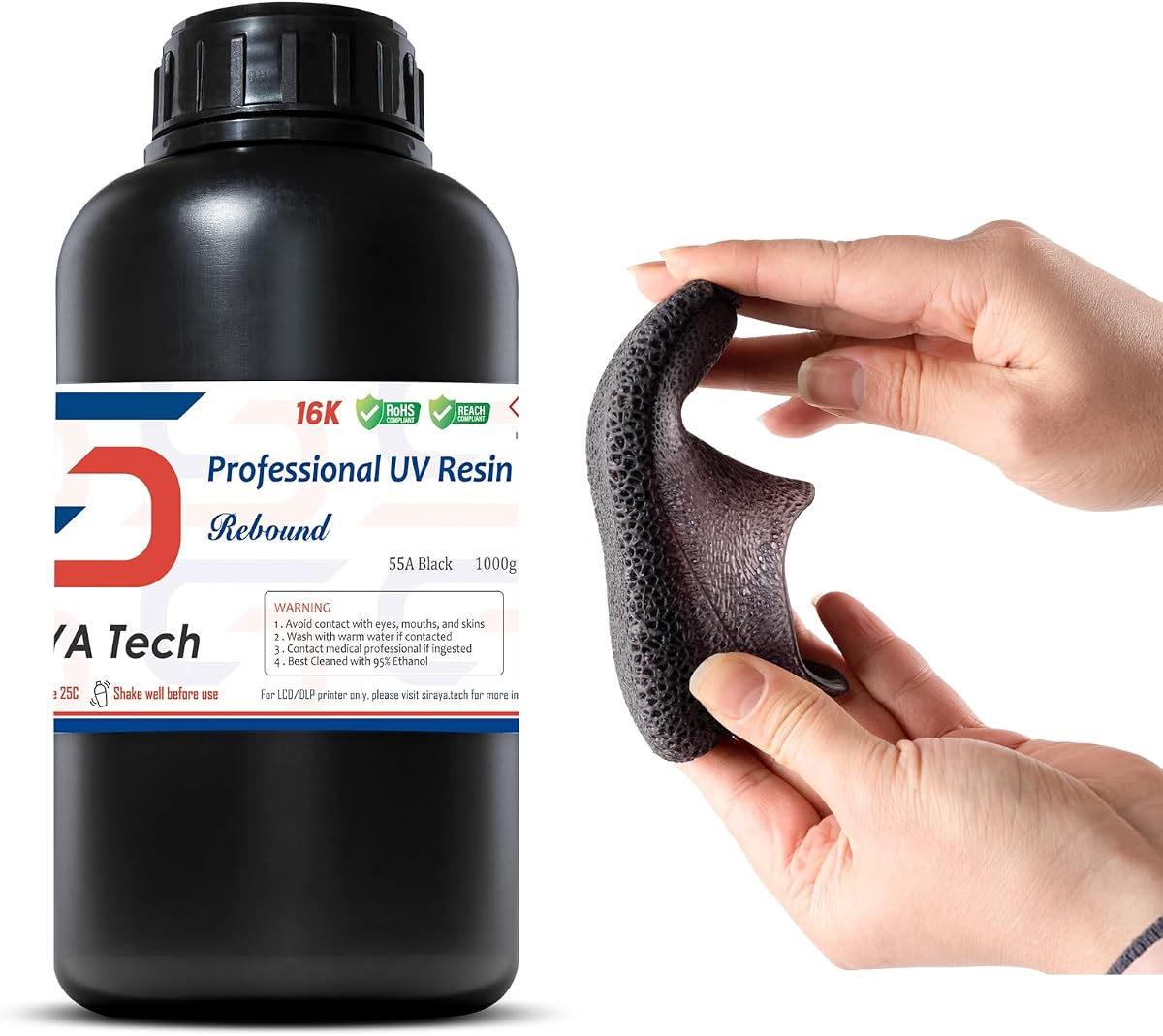
Siraya Tech Rebound 55A offers faster rebound than standard elastic resins. It provides a good mix of flexibility and structural integrity. Ideal for shock-absorbing components or protective equipment prototypes needing bounce.
We may earn a commission when you buy through this link, at no additional cost to you.
Easy to print on standard LCD/DLP printers with 405nm. Clean with standard isopropyl alcohol methods without A/B mixing. This simplifies workflow for quick prototyping and small batch production runs.
Long-term testing is still ongoing for durability. Higher price point may limit budget projects. Still, its ease of use and rebound performance are unmatched for elastic needs.
Use for gaskets, seals, and protective gear. Avoid complex mixing steps. Cure fully for best compression properties and performance in repeated use.
Cleans with standard alcohol methods without complex A/B mixing.
Balanced 55A Shore hardness offers flexibility with structural integrity.
We may earn a commission when you buy through this link, at no additional cost to you.
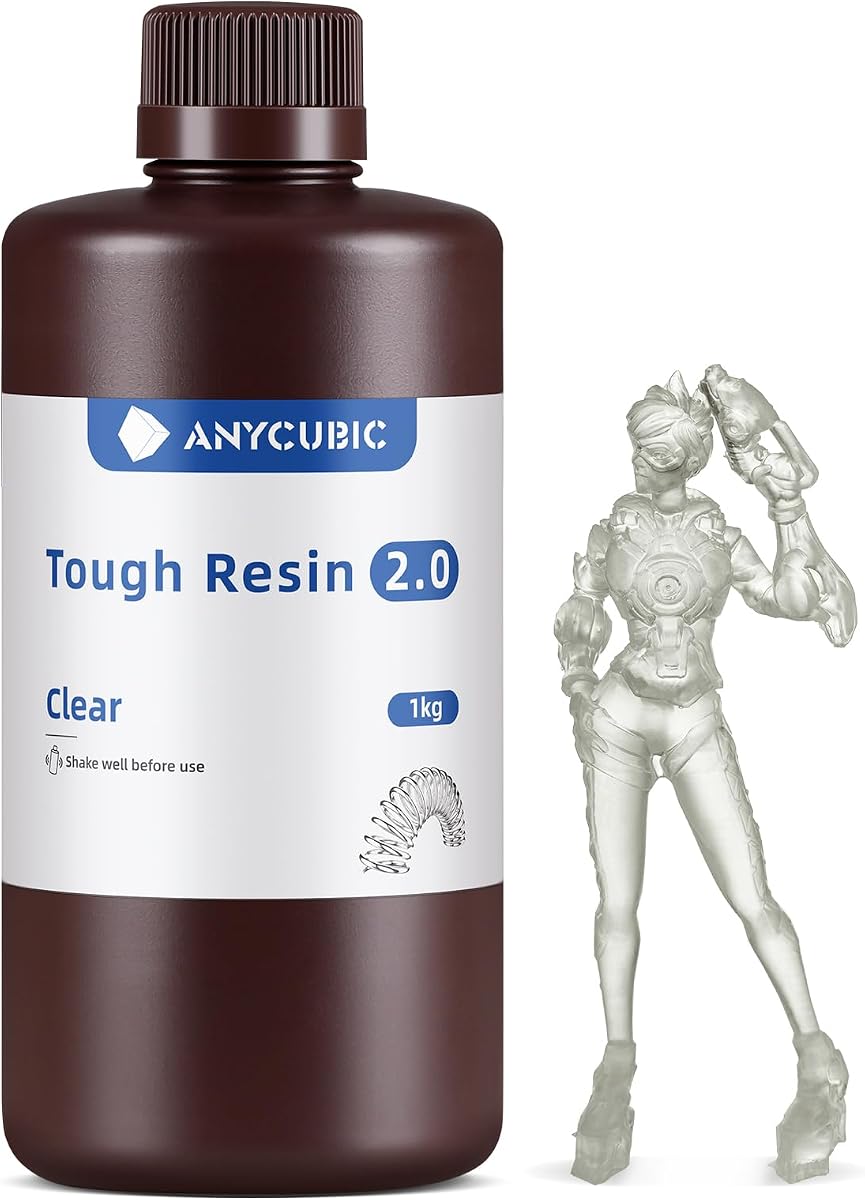
ANYCUBIC Tough Resin 2.0 Clear offers unmatched strength and high precision. Low odor ensures a pleasant environment. Exceptional stretch resists cyclic damage for flexible models that need to survive repeated stress.
We may earn a commission when you buy through this link, at no additional cost to you.
High accuracy and minimal shrinkage keep details sharp. Clear helps view internal structures easily. Versatile for industrial applications needing transparency and toughness in same part.
Clear limits color flexibility. Not as soft as 70A options. Still, its accuracy and toughness make it a top pick for transparent functional prototypes.
Choose for clear parts needing flexibility. Store cool and dark for best shelf life. Always ventilate well during printing for comfort.
Ensures high precision prints with minimal shrinkage for accuracy.
Drastically cuts down volatile organic compounds for safer air.
We may earn a commission when you buy through this link, at no additional cost to you.
Flexible & Upgraded Tough Resin simulates rubber with 90A hardness. It offers softness and strength for repeated folding. High precision keeps detail while remaining tough for real-world parts.
We may earn a commission when you buy through this link, at no additional cost to you.
Great for gaskets, toy tires, and ergonomic grips. Strong tear resistance prevents rip. Low odor helps comfort during printing sessions for makers.
Shore 90A is higher than soft options. Black limits color choices. Still, its durability and precision make it a top pick for wearables and protective cases.
Pick for parts needing repeated stress resistance. Works on most LCD/DLP printers. Ensure ventilation for comfort during long prints and curing.
Delivers high elongation and excellent tear resistance for durability.
Provides crisp, accurate prints without sacrificing flexibility.
We may earn a commission when you buy through this link, at no additional cost to you.
Selecting the right flexible resin involves balancing hardness, print speed, and durability needs. This guide explains key factors to consider before purchasing to ensure your 3D prints perform as expected in real-world applications.
Shore hardness determines how soft or stiff your flexible part will feel. Lower values like 55A or 70A are very soft and rubber-like, while higher values like 80A or 90A are tougher and more rigid. Choose based on whether you need cushioning or structural support.
For soft grips or seals, pick 55A or 70A. For tougher parts needing some flex, 80A or 90A works best.
Elongation at break measures how much the material stretches before snapping. Higher percentages mean better flexibility and resilience for parts that undergo bending. Look for values above 100% if repeated stress is expected.
Check elongation data in specs. Higher values reduce risk of cracking under tension in flexible models.
Ensure the resin matches your printer's wavelength, usually 405nm or 365nm. Most LCD and DLP printers support these ranges. Using mismatched wavelengths can lead to under-cured or failed prints.
Always verify your printer's UV light range before buying. Most resins list this clearly on packaging.
Fast-curing resins save time by reducing layer exposure times. Low viscosity helps resin flow smoothly and reduces failed prints. Faster layers are crucial for large farms or high-volume production runs.
Prioritize low viscosity and fast cure if time is critical for your workflow.
Low shrinkage ensures printed parts keep their designed dimensions. High shrinkage can cause warping or inaccurate fits. Look for resins claiming low shrinkage if tight tolerances are needed.
Check for shrinkage claims in product specs to avoid sizing issues in final parts.
Flexible resins often have stronger odors. Look for low-odor formulas to improve comfort. Safety certifications like ISO 10993-5 ensure prints are safe for skin contact and long-term use.
Ventilate well and check for low-odor labels to protect your workshop air.
Some flexible resins require special cleaning or mixing. Most work with standard isopropyl alcohol and UV curing. Avoid complex mixing steps unless you need custom properties.
Choose resins that clean with standard alcohol methods for easier workflow.
High impact resistance means parts survive drops and stress without breaking. This is crucial for functional prototypes or tools. Look for materials claiming toughness and resilience for long-term use.
Check for impact resistance claims to ensure parts will last in daily use.
Always wear gloves and a mask when handling uncured flexible resin to avoid skin irritation. Store bottles in cool, dark places away from direct sunlight to prevent premature curing or viscosity changes over time.
After printing, wash models thoroughly with isopropyl alcohol using a soft brush. Ensure all residue is removed before UV curing to avoid sticky surfaces or weak spots in the final print.
Cure prints under UV light for the recommended time based on manufacturer instructions. Post-curing increases strength and stability. Always check part dimensions after curing if shrinkage is a concern.
For soft, rubber-like parts, choose 55A or 70A resins. For tougher, shock-absorbing components, 80A or 90A works better. It depends on how much flexibility versus strength you need in your final project.
Yes, most flexible resins are designed for standard LCD, DLP, or SLA printers with 405nm UV lights. Always confirm your printer's wavelength to ensure proper curing and print quality.
Ensure full post-curing to reach maximum strength. Choose resins with high elongation at break and impact resistance. Also, design parts with adequate wall thickness to reduce stress points during bending.
Most flexible resins use standard IPA cleaning and UV curing like other resins. No special mixing or equipment is needed unless stated. Just ensure good ventilation and safety gear for handling.
Premium resins often offer better elasticity, faster curing, or safety certifications. Specialized properties like rebound or low shrinkage can raise costs. Cheaper options may trade off quality for price.
Unopened bottles last over a year in cool storage. Once opened, use within six months to avoid viscosity changes. Seal tightly after use and store away from light and heat for best results.
The top picks like Superflex and ANYCUBIC Tough Resin offer strong balance between flexibility and durability. Whether you need soft rubber feel or tough shock absorption, the right resin makes all the difference in your prints.
Prioritize Shore hardness and elongation when choosing flexible resin for your needs. Compatibility with your printer and low odor are also key factors for smooth workflow and safety in your workspace.
Prices change often so check current listings before buying to ensure best value. Always read the latest reviews and specs to confirm performance fits your specific project requirements and goals.