
Bambu Lab A1
4.7Editor score
High-speed precision printing
Full-auto calibration
Multi-color with AMS
Quiet motor operation
Creating custom DnD miniatures requires a reliable 3D printer capable of high detail and consistent quality. Whether you choose resin or FDM technology, the right machine brings your tabletop adventures to life with sharp features.
We evaluated ten leading printers based on resolution, speed, ease of use, and community support. This list covers both budget-friendly options and premium machines designed for hobbyists and professional miniature makers alike.
Each pick highlights specific strengths like multi-color capabilities or automated calibration. Prices and availability change frequently, so verify current offers before purchasing to ensure you get the best value for your setup.
4.7Editor score

4.4Editor score

4.5Editor score
As an Amazon Associate we earn from qualifying purchases.
This side-by-side comparison highlights key specifications and features across all ten selected printers to help you find the ideal match for your miniature printing needs.






The Phrozen Sonic Mini 8K S stands out as a top choice for those focused on high detail miniature printing. With an XY resolution of 22 microns and an 8K mono LCD, it captures fine textures and sharp edges that define quality tabletop figures.
We may earn a commission when you buy through this link, at no additional cost to you.
Its compact design fits easily on a desk while providing a generous build volume for multiple miniatures per print. The printer supports popular slicers like Lychee and Chitubox, giving users freedom to customize settings without vendor lock-in.
While resin printing involves curing and washing steps, the precision offered here makes it worthwhile for hobbyists seeking professional results. The straightforward calibration ensures consistent prints once the initial setup is complete.
If you want the best balance of price and precision for Dungeons and Dragons miniatures, this model delivers exceptional value. It is highly recommended for anyone ready to explore resin technology.
The 22 micron XY resolution allows you to print intricate armor plating and facial features that rival store-bought figures.
Open source compatibility means you can use your preferred slicer to fine tune exposure times and supports for perfect results.
We may earn a commission when you buy through this link, at no additional cost to you.
The Bambu Lab A1 is an excellent entry-level FDM printer that balances speed and ease of use. Its full-auto calibration system removes the guesswork from leveling, ensuring a perfect first layer every time.
We may earn a commission when you buy through this link, at no additional cost to you.
With acceleration up to 10,000 mm/s2, it prints miniatures significantly faster than traditional printers while maintaining accuracy. The active flow rate compensation ensures smooth surfaces even at high speeds.
Although the base model focuses on single color, adding the AMS lite opens up vibrant multi-color possibilities. This flexibility is ideal for painting detailed minis without extra effort.
For beginners or parents looking to introduce kids to 3D printing, the A1 offers a reliable and safe experience. It is a top pick for those wanting quick results without technical headaches.
Say goodbye to manual bed leveling as the A1 handles all calibration tasks automatically for consistent performance.
Active motor noise canceling keeps the printer quiet, making it suitable for shared spaces like living rooms or offices.
We may earn a commission when you buy through this link, at no additional cost to you.
The Snapmaker U1 redefines multi-color printing with its four independent toolheads and rapid 5-second tool changer. This system eliminates the need for manual filament swaps, saving time and reducing waste.
We may earn a commission when you buy through this link, at no additional cost to you.
You can print with rigid and flexible materials in the same build, allowing for articulated figures or water-soluble supports. The robust locking mechanism ensures precision even after millions of swaps.
While it comes at a premium price, the productivity gains and creative freedom justify the investment for serious hobbyists. Smart calibration features ensure every print starts with accurate alignment.
If you want to create highly detailed or complex miniatures with mixed materials, this printer delivers unmatched capabilities. It is ideal for professionals or dedicated enthusiasts seeking top-tier performance.
Toolhead swapping instead of purging reduces material waste by up to five times while speeding up multi-color workflows significantly.
Compatible with PLA, TPU, PVA, and more, allowing you to combine flexible joints with rigid body parts easily.
We may earn a commission when you buy through this link, at no additional cost to you.
The Bambu Lab P2S Combo offers a complete solution for advanced multi-color printing out of the box. With the AMS 2 Pro included, you can manage multiple filaments seamlessly for vibrant miniature details.
We may earn a commission when you buy through this link, at no additional cost to you.
Its high-speed precision and servo extruder ensure sharp corners and consistent layering. The built-in drying keeps filament ready for use, preventing moisture issues that ruin prints.
The adaptive airflow system adjusts cooling automatically, maintaining quality across different materials. This level of automation makes it a reliable choice for producing batches of miniatures.
For those prioritizing speed and color variety, the P2S provides an efficient workflow. It is well-suited for users who need consistent output with minimal manual intervention.
Built-in drying at up to 65°C ensures every spool remains dry and ready for flawless prints.
The AMS 2 Pro enables seamless multi-color printing without manual filament changes during a print job.
We may earn a commission when you buy through this link, at no additional cost to you.
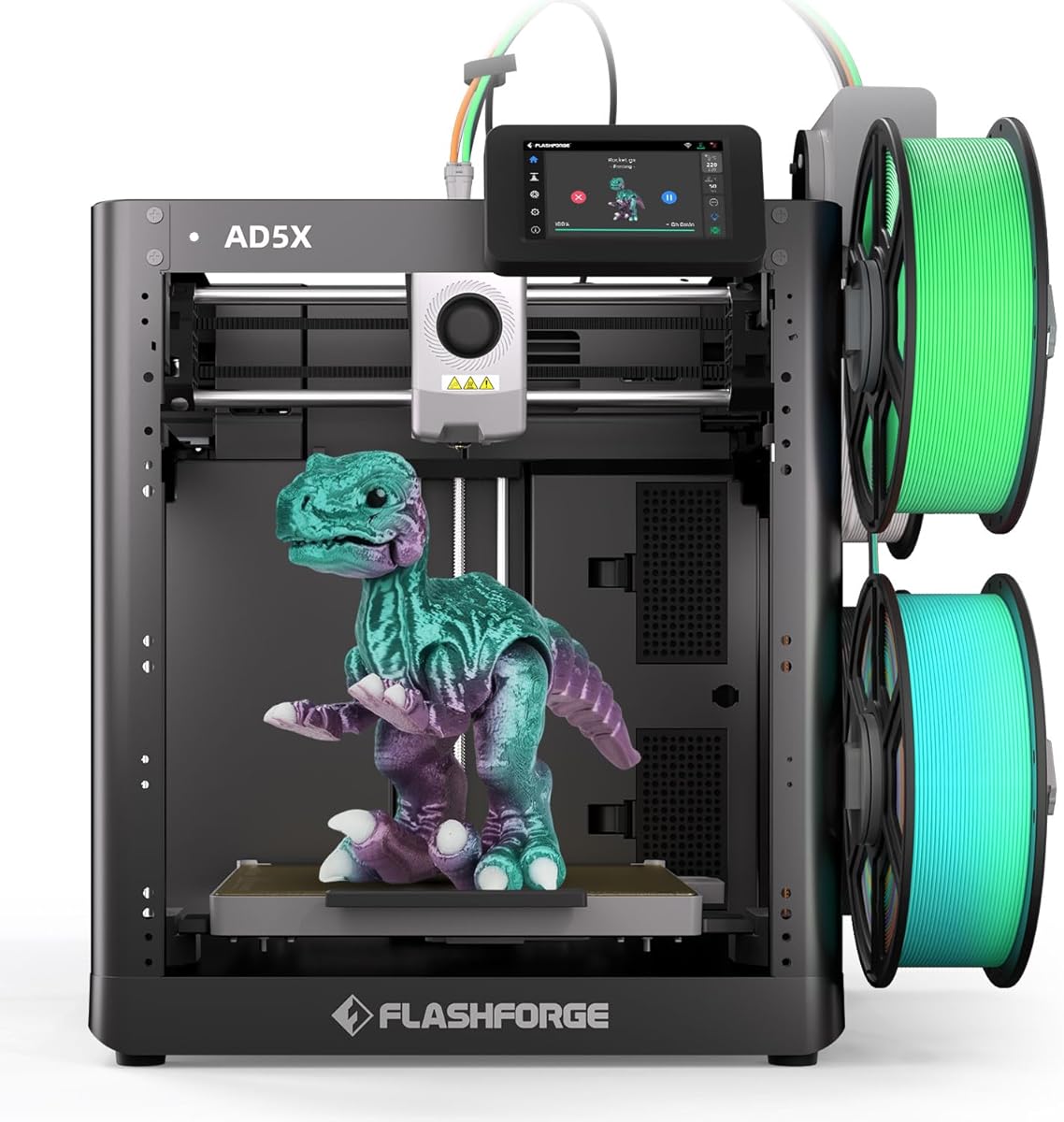
The FLASHFORGE AD5X brings multi-color capability to the mid-range market with its intelligent filament system. It supports four colors simultaneously, allowing for detailed prints without expensive add-ons.
We may earn a commission when you buy through this link, at no additional cost to you.
With a max speed of 600mm/s and all-metal CoreXY structure, it delivers stability and quick project turnaround. The large build volume accommodates larger props or multiple miniatures at once.
Filament detection and auto leveling reduce interruptions, keeping your workflow smooth. While it requires some tuning, the versatility in materials and colors makes it a strong contender.
This printer suits creators who need a balance between performance and cost. It is ideal for workshops wanting vibrant results without premium pricing.
The IFS automatically detects and refills filament, minimizing downtime so you can focus on creative projects.
Acceleration up to 20,000mm/s ensures rapid printing while maintaining sharp details and accuracy on complex models.
We may earn a commission when you buy through this link, at no additional cost to you.
The Bambu Lab P1S features a fully enclosed body that improves performance for advanced filaments like ABS and ASA. This enclosure maintains a stable chamber temperature for consistent results.
We may earn a commission when you buy through this link, at no additional cost to you.
It reaches speeds of 500mm/s and supports multi-color printing with an optional AMS connection. Auto bed leveling ensures high-quality prints with minimal user intervention.
Its setup takes only 15 minutes, getting you started quickly. The range of supported filaments makes it versatile for functional parts and durable miniatures.
If you need reliability and speed with support for stronger materials, the P1S is a solid choice. It is great for users upgrading from basic printers.
The fully enclosed design improves print performance for advanced filaments by maintaining thermal stability.
With speeds up to 500mm/s and 20000 mm/s2 acceleration, you spend less time waiting and more time creating.
We may earn a commission when you buy through this link, at no additional cost to you.
The FLASHFORGE Adventurer 5M Pro simplifies maintenance with a 3-second quick-swap nozzle. Tool-free replacements let you change sizes instantly, ideal for detailed miniature work.
We may earn a commission when you buy through this link, at no additional cost to you.
Its dual filtration system and quiet enclosure make it suitable for home or office use. Smart features like filament detection and power loss recovery protect against failed prints.
With a 280°C extruder, it handles engineering materials well. The built-in camera allows real-time monitoring via mobile devices for convenience.
For users valuing ease of use and maintenance, this printer excels. It is a practical choice for busy hobbyists needing reliability.
Features a tool-free quick-release nozzle mechanism for effortless replacements across multiple sizes.
A built-in camera and mobile control let you monitor progress and receive status alerts remotely.
We may earn a commission when you buy through this link, at no additional cost to you.
The FLASHFORGE AD5X Multi offers a modular approach to multi-color printing with full-auto calibration. It uses four spools arranged side by side for space efficiency.
We may earn a commission when you buy through this link, at no additional cost to you.
With vibration suppression algorithms and a CoreXY structure, it minimizes layer shifts for better quality. The intelligent filament system allows multiple materials to print simultaneously.
While it involves some DIY elements, the productivity boost is significant for creators needing colorful outputs. It supports various materials from PLA to PETG-CF.
This printer is a great value for those willing to set up a versatile multi-color system. It suits makers looking for flexibility in a compact package.
An all-metal CoreXY structure reduces vibration risks while algorithms minimize layer alignment shifts.
The lightweight design with side-by-side spools saves desk space and allows flexible placement.
We may earn a commission when you buy through this link, at no additional cost to you.
The Bambu Lab A1 Mini Combo is a compact solution designed for multi-color printing without taking up much space. It includes AMS lite for vibrant prints right out of the box.
We may earn a commission when you buy through this link, at no additional cost to you.
Setup takes just 20 minutes thanks to the pre-assembled design. Active flow rate compensation ensures smooth prints even with complex geometries.
Its noise cancellation keeps operations quiet, ideal for shared spaces. The precise calibration maintains accuracy despite its small size.
If you need multi-color capability on a budget with a small footprint, this is perfect. It is best for small detailed miniatures and prototypes.
Setup for your first print takes just 20 minutes thanks to its pre-assembled design.
Active motor noise cancellation ensures noise levels stay under 48 dB for a quiet environment.
We may earn a commission when you buy through this link, at no additional cost to you.
The Anycubic Kobra X brings native 4-color printing to the table for easier multi-color miniatures. Its built-in palette eliminates the need for external multi-spool setups.
We may earn a commission when you buy through this link, at no additional cost to you.
The LeviQ 3.0 auto bed leveling system ensures a perfect first layer every time. Smart AI detection helps prevent issues like spaghetti or foreign objects.
With speeds up to 600mm/s, it delivers fast results. The top-mount spool holder saves space on your desk.
For users wanting simple native multi-color without complex add-ons, this printer stands out. It is an excellent choice for easy, colorful production.
Born with 4 colors built-in, making it easy to turn creative ideas into reality without extra hardware.
Uses a 49-point calibration and advanced algorithm to ensure 100% bed flatness for flawless starts.
We may earn a commission when you buy through this link, at no additional cost to you.
Choosing the right printer depends on your needs, budget, and tolerance for post-processing. Consider these factors before buying.
For miniatures, resolution is critical. Resin printers offer the highest detail with XY resolutions like 22 microns, while FDM printers rely on layer height and nozzle size.
Look for systems that minimize layer lines to avoid extensive sanding.
Speed impacts how quickly you can produce figures. Fast FDM printers can print in minutes while resin takes hours per batch but requires curing time.
Higher acceleration helps with detail without compromising speed on FDM models.
Beginners should prioritize auto calibration and one-click leveling to reduce failed prints. Users with experience may tolerate manual adjustments for better control.
Check if the printer comes fully assembled to save time.
If you want colored miniatures directly from the printer, multi-color FDM systems like AMS are essential. Some printers include this natively while others need add-ons.
This saves time compared to traditional hand painting.
Ensure the build volume suits your projects. Small printers may fit single minis while larger ones allow batch printing to save time.
Check dimensions to confirm your props will fit comfortably.
Standard PLA works for most models but flexible or durable materials may require specific extruders or heated beds.
Engineering filaments like ABS need enclosed chambers for stable temperature.
Quiet printers allow printing in shared spaces without noise disruption. Motors with active noise cancellation make a big difference.
Check decibel ratings if you plan to print in living areas.
Popular brands have active communities with free models and troubleshooting guides. This makes fixing issues easier than with niche manufacturers.
A large model library can save time and inspire designs.
Keep your printer in a clean and dust-free environment to avoid clogs. Use recommended filaments or resins and store them in dry conditions to maintain quality.
Regularly clean the build plate and nozzle to ensure consistent adhesion. Check belts and screws periodically for tightness to prevent print errors.
Update firmware and slicer software to benefit from improvements. Clear support structures gently and follow curing guidelines for resin prints to avoid damage.
Resin printers generally offer higher detail and smoother surfaces ideal for small miniatures. FDM printers are easier to maintain and safer for beginners. Your choice depends on your need for detail versus ease of use.
Resin prints often need sanding and priming. Multi-color FDM can reduce painting time but may still require touch-ups. Always plan for post-processing in your workflow.
Yes, multi-color FDM systems allow different filaments in one print. This requires specialized setups but produces vibrant figures without post-painting.
FDM prints can finish in 30 minutes to two hours depending on size. Resin prints take hours for batches and need post-curing. Speed varies by model and settings.
Resin requires gloves and ventilation as uncured resin can irritate skin. Follow safety instructions carefully and wash prints thoroughly before curing.
Most printers do not include models or filament in the package. You will need to purchase these separately or download free files online.
This guide highlighted ten reliable options for creating custom miniatures. Top picks like the Phrozen Sonic Mini 8K S, Bambu Lab A1, and Snapmaker U1 offer distinct strengths for different needs.
Prioritize resolution and ease of use if you are new to printing. Experienced users may benefit from advanced features like multi-color capability or high speed.
Prices and availability change frequently so verify current offers before purchasing. Ensure you select a model that fits your workspace and project goals for the best results.