
ESP32-S3-Nano Microcontroller Board
5.0Editor score
Integrated 8MB PSRAM
Arduino and MicroPython Support
Affordable High Performance
This guide compares the top Arduino Nano ESP32 boards for wireless connectivity, speed, and IoT capabilities to help you choose the right microcontroller.
The Arduino Nano ESP32 represents a significant leap in embedded development, combining compact form factors with powerful wireless capabilities. These boards are essential for modern Internet of Things projects requiring reliable Wi-Fi and Bluetooth integration without bulky hardware constraints.
We evaluated ten leading options based on processing power, connectivity standards, memory capacity, and ecosystem compatibility. Each product offers unique advantages for makers, engineers, and hobbyists seeking efficient prototyping solutions for smart devices and automation systems.
Each pick highlights specific strengths like power efficiency, advanced interfaces, or developer-friendly tools. Remember that pricing and availability fluctuate, so verify current details before purchasing to ensure you get the best value for your project needs.
5.0Editor score

4.6Editor score

4.8Editor score
The following table provides a side-by-side comparison of all ten microcontrollers, highlighting key specifications like processor type, memory, connectivity, and special features to help you quickly identify the best fit for your technical requirements.


The Arduino Nano ESP32 stands out as the top choice for modern embedded projects, combining high-performance computing with versatile connectivity options that simplify development workflows significantly.
We may earn a commission when you buy through this link, at no additional cost to you.
Its dual-core ESP32-S3 processor running at 240 MHz delivers robust performance for real-time data processing, voice recognition, and machine learning tasks at the edge of your network.
While it costs more than generic boards, the reliability, official Arduino support, and advanced features like HID profiles justify the investment for professional and educational applications alike.
Engineers, students, and advanced hobbyists seeking a reliable, future-proof microcontroller for IoT and automation should choose this board for its balance of power and usability.
The board supports Wi-Fi and Bluetooth 5.0, enabling stable connections to cloud platforms and mobile devices for smart home systems or remote sensor networks.
USB-C provides faster programming and better power delivery, ensuring a stable connection during flashing or debugging sessions without the fragility of micro-USB ports.
We may earn a commission when you buy through this link, at no additional cost to you.
This budget-friendly board offers exceptional performance per dollar, making it ideal for developers who need extensive memory and modern connectivity without breaking the bank.
We may earn a commission when you buy through this link, at no additional cost to you.
With 8MB PSRAM and 16MB Flash, it handles large datasets and complex applications effortlessly, while supporting both Arduino and MicroPython for maximum flexibility.
The main trade-off is less official documentation compared to branded boards, but the hardware quality is solid, and community support is generally strong for standard ESP32-S3 usage.
Students, hobbyists, and startups building cost-sensitive IoT prototypes will find this board delivers high-end features at a price point that makes sense.
Integrated 8MB PSRAM allows you to store large buffers for camera streams or audio processing without worrying about memory exhaustion during runtime.
Integrated Wi-Fi and Bluetooth LE ensure your devices can communicate reliably over networks or connect directly to phones and tablets for control.
We may earn a commission when you buy through this link, at no additional cost to you.
For projects demanding high-speed image processing and advanced interfaces, this board offers unmatched performance with its RISC-V processor and MIPI capabilities designed for visual applications.
We may earn a commission when you buy through this link, at no additional cost to you.
It includes hardware codecs for JPEG and H264, along with massive PSRAM and Flash memory, enabling complex tasks like machine vision without relying on external processors.
The premium price and complex interface requirements mean it is best suited for specialized industrial or research projects where standard microcontrollers fall short.
Professional developers and engineers working on robotics, industrial automation, or advanced AI edge computing should consider this board for its technical capabilities.
Built-in hardware accelerators handle image and voice processing tasks efficiently, reducing the load on the main CPU during complex multimedia operations.
Secure boot and flash encryption ensure your firmware remains protected from unauthorized access, which is critical for deploying sensitive industrial applications securely.
We may earn a commission when you buy through this link, at no additional cost to you.
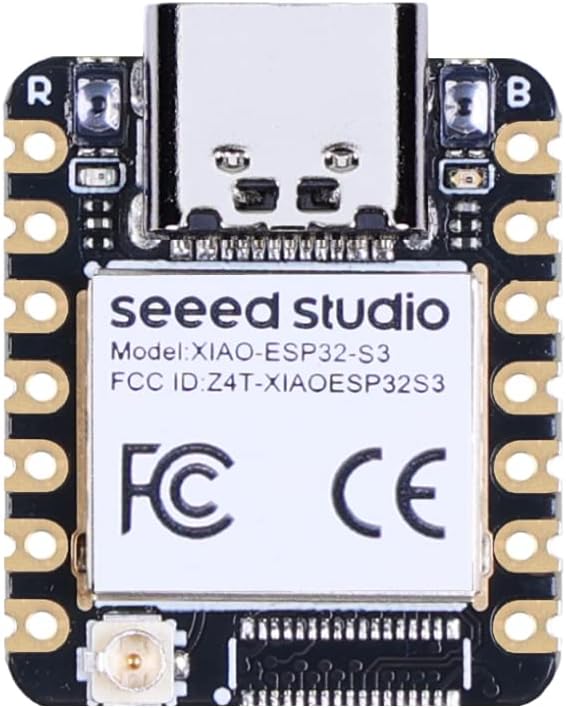
This thumb-sized board is engineered for space-constrained applications like wearables, offering impressive power efficiency and integrated battery management in a compact package.
We may earn a commission when you buy through this link, at no additional cost to you.
It features a powerful ESP32-S3 processor with deep sleep modes consuming as low as 14 microamps, ensuring long battery life for portable or remote sensors.
While the small size limits GPIO availability and lacks an onboard antenna, these trade-offs are acceptable for projects where space and weight are primary concerns.
Wearable tech developers, robotics hobbyists, and those building portable environmental sensors will appreciate this board's efficiency and form factor.
Integrated lithium battery charge management and multiple power models ensure your device stays operational for extended periods without frequent recharging.
The 21 by 17.5 millimeter footprint allows installation in tight spaces where larger boards simply cannot fit, enabling truly portable electronic projects.
We may earn a commission when you buy through this link, at no additional cost to you.
This three-pack offering is perfect for projects requiring multiple nodes, providing a cost-effective way to deploy a network of connected devices without excessive costs.
We may earn a commission when you buy through this link, at no additional cost to you.
The castellated module design allows direct soldering to carrier boards, making it ideal for custom PCB integration in industrial or commercial applications.
While it lacks a USB connector for direct programming and requires soldering, the savings in bulk deployment make it a smart choice for large-scale sensor networks.
Makers building sensor arrays, multi-node IoT systems, or custom carrier boards will find this pack provides excellent value and integration flexibility.
The castellated edges allow you to solder the board directly onto a custom PCB, streamlining production and reducing the need for headers or sockets.
Flexible clock and independent power supply settings let you optimize energy consumption for specific operational scenarios, extending battery life effectively.
We may earn a commission when you buy through this link, at no additional cost to you.
This comprehensive starter kit includes everything needed to begin learning embedded development, making it the ideal entry point for beginners and students alike.
We may earn a commission when you buy through this link, at no additional cost to you.
With over 35 modules and detailed tutorials, you can build practical projects like weather stations or smart controllers without hunting for individual components.
The included Bluetooth is version 4.2 rather than 5.0, but for learning and basic connectivity, the kit provides everything needed to master the fundamentals effectively.
Students, educators, and anyone new to electronics or IoT should start with this kit to gain hands-on experience with minimal setup frustration.
Detailed tutorials with code examples guide you from simple circuits to complex IoT applications, building confidence and practical skills quickly.
Includes sensors, motors, displays, and input devices, allowing you to experiment with diverse project ideas right out of the box without extra purchases.
We may earn a commission when you buy through this link, at no additional cost to you.
This compact board is designed for secure IoT deployments, featuring hardware-level encryption that ensures safe cloud communication for sensitive data applications.
We may earn a commission when you buy through this link, at no additional cost to you.
Powered by an ARM Cortex-M0+ processor, it balances performance with power efficiency while offering built-in sensors that simplify early prototyping steps.
While the processor speed is lower than the ESP32-S3, the emphasis on security and official Arduino reliability makes it a strong candidate for commercial IoT.
Developers prioritizing data security and reliable cloud integration in smart home or industrial monitoring projects will find this board a safe choice.
The inclusion of a Secure Element provides hardware-level encryption, ensuring that your data remains private and secure during transmission to the cloud.
Pre-soldered headers allow you to connect to breadboards instantly, while Arduino IDE compatibility ensures you can start coding immediately after unboxing.
We may earn a commission when you buy through this link, at no additional cost to you.
The classic ESP-WROOM-32 remains a reliable choice for general IoT projects, offering a proven combination of dual-mode connectivity and low-power operation.
We may earn a commission when you buy through this link, at no additional cost to you.
Its ultra-low power consumption and support for Freertos make it suitable for continuous monitoring tasks where efficiency is more important than raw speed.
While it uses older Bluetooth and lacks USB-C, the board's stability, low cost, and broad community support ensure it remains relevant for standard sensor applications.
Hobbyists building weather stations, simple automation controllers, or basic home sensors will find this board offers robust performance without unnecessary complexity.
Integrated 2.4GHz Wi-Fi and Bluetooth dual-mode ensure your device can connect to both local networks and mobile phones for remote control capabilities.
The reliable and scalable architecture allows you to expand projects easily, adding sensors or actuators as your requirements grow over time.
We may earn a commission when you buy through this link, at no additional cost to you.
This dev board combines the classic ESP32 with a modern USB-C port, making programming and power delivery more convenient than older micro-USB models.
We may earn a commission when you buy through this link, at no additional cost to you.
It supports Over-the-Air updates, allowing you to deploy firmware changes remotely without physical access, which is crucial for deployed sensor networks.
While the Bluetooth version is 4.2, the USB-C convenience and OTA support make this a practical choice for modern development workflows on a budget.
Developers needing remote update capabilities and modern connections for multiple devices will appreciate this board's mix of legacy power and new features.
The USB-C port enables faster charging and data transfer, while the CP2102 chip ensures reliable serial communication for debugging and monitoring tasks.
Over-the-Air update support allows you to fix bugs or add features wirelessly, saving time and effort when maintaining devices in the field.
We may earn a commission when you buy through this link, at no additional cost to you.
The UNO R4 WiFi blends the traditional Arduino experience with advanced features like CAN bus and a built-in LED matrix, creating a versatile platform for complex applications.
We may earn a commission when you buy through this link, at no additional cost to you.
It combines a Renesas processor with the ESP32-S3, offering distinct cores for general logic and wireless connectivity, enhancing performance for mixed-use tasks.
Its larger size and advanced features mean it is not the smallest option, but it provides unmatched versatility for industrial control and interactive interface projects.
Advanced users, industrial engineers, and educators teaching complex systems will benefit from the board's rich interface options and dual-core architecture.
CAN bus support ensures reliable communication in noisy environments, making it suitable for automotive or industrial automation projects.
The integrated 12×8 LED matrix provides immediate visual feedback for status updates or user interaction without needing external displays.
We may earn a commission when you buy through this link, at no additional cost to you.
Selecting the right microcontroller depends on your project requirements, including processing power, connectivity needs, and physical constraints. This section breaks down the key factors to consider before purchasing a board.
Processors range from standard ESP32 to high-performance ESP32-S3 and RISC-V options. Higher clock speeds and dual-core architectures are essential for complex calculations, real-time data processing, and running machine learning models at the edge.
Choose a processor that matches your computational needs; for basic sensors, a standard ESP32 suffices, but for image or voice processing, look for advanced chips with dedicated hardware accelerators.
Wi-Fi and Bluetooth versions vary significantly across models. Look for Wi-Fi 6 and Bluetooth 5.0 support for faster speeds, better range, and improved power efficiency in battery-powered devices.
If your project requires seamless mobile communication or high-bandwidth cloud streaming, ensure the board supports the latest wireless standards to avoid bottlenecks.
Flash memory stores your code, while SRAM or PSRAM handles runtime data. Projects involving images, audio, or large datasets require boards with at least 8MB of PSRAM to operate smoothly.
Verify that the board has enough memory for your specific use case; insufficient RAM can lead to crashes when processing large payloads or running multiple tasks simultaneously.
Some projects need compact boards that fit in wearable or space-constrained devices. Consider the dimensions and whether the board supports direct soldering or requires headers for integration.
For portable devices, prioritize miniaturized options with low power consumption to ensure the device remains lightweight and operational for extended periods.
Battery-powered projects demand boards with low sleep currents and efficient power regulators. Look for features like deep sleep modes and dedicated battery charging circuits for standalone operation.
Evaluate the power consumption data carefully; even a few microamps matter when designing sensors that must run for months or years on a single charge.
Beyond basic GPIO, some boards offer advanced interfaces like USB-C, CAN, MIPI, or Qwiic connectors. These simplify connections to specific peripherals and industrial sensors without complex wiring.
Select a board with the interface types your project needs to reduce development time and avoid adding external adapters that increase cost and bulk.
Branded boards often come with extensive documentation, community support, and official IDE compatibility. Generic options may save money but require more research to configure correctly.
Consider your skill level; beginners benefit from robust documentation and community examples, while experienced engineers can handle generic boards with minimal support.
Secure boot, hardware encryption, and secure elements protect your firmware and data. For commercial or privacy-sensitive applications, these features are non-negotiable.
Prioritize boards with built-in security hardware to prevent unauthorized access and ensure data integrity across your network infrastructure.
Always use the correct voltage and power supply for your board to prevent damage. Most ESP32 boards operate on 3.3V logic; connecting 5V inputs directly to GPIO pins can cause permanent failure. Use a USB-C cable for programming and power delivery, ensuring it supports data transfer if needed.
For wireless projects, position the board away from metal obstructions or sources of interference to maximize signal strength. If the board lacks an onboard antenna, consider adding a module antenna for better range in remote locations. Ensure adequate ventilation if the board is enclosed to prevent overheating.
Store unused boards in anti-static bags to protect sensitive electronic components from electrostatic discharge. Handle the pins with care to avoid bending or breaking, especially on compact boards with fine-pitch connectors. Regularly back up your firmware and sketches to avoid losing code during updates or hardware failures.
Yes, the Arduino Nano ESP32 is fully compatible with the Arduino IDE. You can easily install support boards via the Boards Manager to access libraries and tools designed for the platform. This ensures a smooth workflow for developers familiar with the Arduino ecosystem.
Many of the reviewed boards support MicroPython, allowing you to program in Python instead of C++. This simplifies rapid prototyping and is ideal for educational projects. Check the specific product description for MicroPython firmware compatibility before purchasing.
The typical Wi-Fi range for these ESP32 boards is between 100 and 300 feet in open areas. Factors like walls, interference, and antenna quality significantly impact actual range. Using external antennas or optimizing placement can extend reach for outdoor projects.
Yes, many boards feature deep sleep modes and efficient power management for battery operation. Some models like the XIAO ESP32S3 are specifically designed for wearable and remote sensors. Look for low-power variants to maximize battery life in standalone deployments.
Some boards come with pre-soldered headers, while others are bare modules requiring soldering. Boards with headers allow instant connection to breadboards. If you prefer minimal assembly, choose a model with headers pre-installed.
Yes, all the listed boards have Wi-Fi connectivity and support standard protocols like MQTT and HTTP for cloud integration. You can easily connect to AWS IoT, Google Cloud, or Azure for remote monitoring. Use libraries available in the Arduino IDE to simplify setup.
The ESP32-S3 offers a faster dual-core processor, more PSRAM, and native USB support compared to the classic ESP32. It also improves AI performance with vector instructions. Upgrading to an ESP32-S3 is recommended for complex applications requiring speed and connectivity.
The Arduino Nano ESP32 ecosystem offers versatile options for every type of project, from simple sensors to complex industrial automation. Whether you need raw processing power, compact form factors, or budget-friendly bulk boards, the top picks highlighted here cover the most essential needs.
Prioritize features that align with your specific goals, such as memory size for data-heavy tasks or security hardware for commercial deployments. The best board is the one that balances performance, cost, and ease of use for your unique requirements.
Prices and availability for these microcontrollers fluctuate frequently, so check current listings before finalizing your purchase. Investing in the right hardware now ensures your project runs reliably and scales efficiently as your needs evolve.