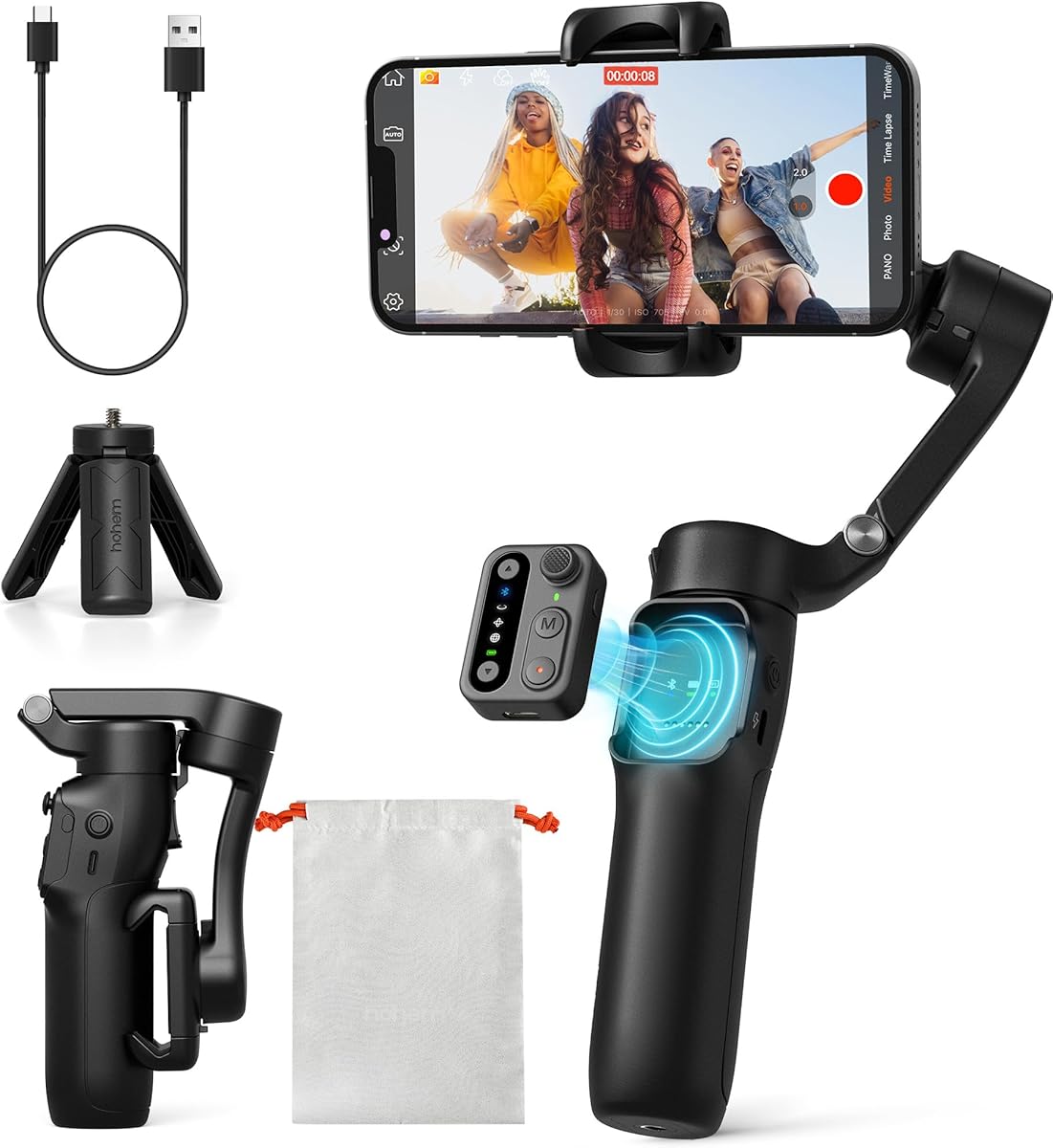
hohem iSteady X3 SE
4.2Editor score
Detachable remote controller
11 hour battery life
Foldable pocket sized
Capturing smooth footage while climbing requires a reliable gimbal for mountaineering that handles motion and weight well. Whether you are summiting peaks or hiking trails stability ensures your videos look professional. Choosing the right device means balancing portability with performance in rough conditions.
We evaluated ten top models based on stabilization quality battery life and compatibility with cameras used by outdoor enthusiasts. Our comparison looks at how each gimbal for mountaineering performs under stress during active shoots. The list covers smartphones action cameras and mirrorless setups to suit different filming needs.
Each pick highlights key strengths and ideal use cases for adventurers seeking steady shots in the wild. You will see ratings specs and detailed reviews to guide your decision. Please note that product availability and pricing may vary over time so check current listings before buying.
4.2Editor score

4.3Editor score

4.9Editor score
As an Amazon Associate we earn from qualifying purchases.
The following table provides a side by side look at the top ten models reviewed in this guide. Each entry highlights key specifications and links to the product page so you can compare features directly before making a choice.


The DJI Osmo Mobile 8 is a top tier gimbal for mountaineering focused on phone users seeking stability. It achieves a 4.4 rating for its robust 3 axis stabilization that keeps footage smooth even on uneven paths. Native tracking and audio reception make it stand out for creators needing clear sound and visuals while moving.
We may earn a commission when you buy through this link, at no additional cost to you.
Key strengths include the seamless 360 pan rotation that allows immersive shots without stopping. The built-in tripod and selfie stick add versatility for hands-free recording. With a 10-hour battery life and phone charging support it handles long days on the trail without needing a backup power source.
Trade-offs involve the removal of the DJI Mimo app from Google Play which requires downloading from the official website. Also it is designed primarily for phones so it will not mount dedicated action cameras or mirrorless gear directly. Despite these limits its ease of use justifies the choice for many hikers.
This gimbal for mountaineering is ideal for solo adventurers who use smartphones for filming. If you want reliable stabilization without heavy gear and need audio support this model is a strong recommendation. It balances portability with professional features well for outdoor video creation.
The integrated audio reception lets you capture clear sound during active movement without external mics.
Built-in hardware adds flexibility for static shots or wider angles without extra accessories.
We may earn a commission when you buy through this link, at no additional cost to you.
The DJI Osmo Mobile 7 earns its spot as a budget friendly gimbal for mountaineering that does not sacrifice performance. Weighing just 300 grams it offers an ergonomic design that reduces wrist strain during long hikes. The robust 3-axis stabilization ensures lossless stability for creative bursts and cinematic shots.
We may earn a commission when you buy through this link, at no additional cost to you.
Its foldable design makes storage hassle-free and solo creation effortless with a built-in tripod. ActiveTrack 7.0 lets you follow subjects freely in diverse scenarios while ShotGuides and One-Tap Edit help you edit like a pro. Dual-lens enhanced tracking keeps fast action in sharp focus during movement.
While the lightweight build feels less heavy the anti-slip handle ensures control. The main drawback is the DJI Mimo app availability issue which requires manual download from the website. For creators prioritizing portability and ease of use this gimbal provides excellent value for the features offered.
Adventurers looking for a light gimbal for mountaineering should consider this model for daily vlogs. It simplifies the workflow with intelligent features while staying portable enough for any backpack. This makes it a smart choice for beginners or seasoned hikers alike.
The anti-slip handle provides secure control even when wearing gloves or in wet conditions.
Compact folding allows it to fit easily into small pockets or tight pack compartments.
We may earn a commission when you buy through this link, at no additional cost to you.
The Hohem iSteady Pro 4 is a specialized gimbal for mountaineering designed for action camera users who face weather challenges. Its IPX4 splash proof rating ensures resistance to water splashes from any direction so you can shoot on rainy or snowy days. The powerful brushless motor and iSteady 5.0 algorithm offer flawless stabilization.
We may earn a commission when you buy through this link, at no additional cost to you.
With a 14-hour runtime it can serve as a power bank to charge your action camera while shooting. Wireless Bluetooth connection reduces energy consumption compared to WiFi which extends battery life significantly. The simple button design and clear indicator make it easy to switch modes during active use.
This gimbal supports GoPro Hero 13 and earlier models as well as DJI OSMO Action and Insta360 ONE R. However it does not work with GoPro Hero 7 White or Silver models which is a limitation for some users. Also camera control is limited to certain models only.
If you use an action camera for rugged outdoor shoots this gimbal for mountaineering is built to last. The long battery life and splash proof design address common outdoor filming issues. It is a practical choice for climbers and hikers needing steady footage in wet conditions.
Water resistance allows shooting in rain without fearing damage to the gimbal electronics.
Recharges action cameras on the fly so you keep capturing footage all day.
We may earn a commission when you buy through this link, at no additional cost to you.
The second listing for the Hohem iSteady Pro 4 emphasizes its quick release clip and Inception mode for creative transitions. This gimbal for mountaineering keeps the same splashproof and 14-hour battery specs while adding a spring-loaded clip for mounting cameras in 3 seconds. It supports a wide range of GoPro and action cameras.
We may earn a commission when you buy through this link, at no additional cost to you.
The 600 degree Inception mode allows mind-bending transitions that add flair to adventure videos. Bluetooth and cable control options give flexibility depending on your camera model. The iSteady 5.0 anti-shaking algorithm ensures super-smooth video during running or intense motion which is vital for hikers.
While it offers similar performance to the previous listing the quick release feature improves workflow efficiency. Users should note that it cannot control DJI OSMO Action or Insta360 ONE R to snap pictures or start filming which may limit some workflows. Still the stabilization quality is high.
This model suits adventurers who need fast setup times and creative modes. For those using GoPro cameras regularly the 3-second mounting is a significant benefit. It remains a reliable gimbal for mountaineering focused on action footage and ease of use.
Spring-loaded mounting allows rapid changes between hand-held and tripod setups.
Creative rotation transitions add cinematic effects without complex editing software.
We may earn a commission when you buy through this link, at no additional cost to you.
The hohem iSteady X3 SE is a budget-focused gimbal for mountaineering designed for smartphone users on a tight budget. Weighing only 0.79 lbs it folds into a pocket-sized tool that travels easily. The detachable magnetic remote lets you control selfies and videos from up to 32 feet away.
We may earn a commission when you buy through this link, at no additional cost to you.
It features iSteady 8.0 technology for ultra-smooth footage even during jogging. The app integrates AI tracking gesture control and creative templates to elevate production. With 11 hours of continuous operation it handles day-long shoots without frequent recharging. The design is beginner-friendly with easy vertical and horizontal switching.
This gimbal suits travelers and vloggers looking for an affordable entry point. The payload capacity of 0.66 lbs supports most large-screen smartphones securely. While it lacks the ruggedness of heavier models it offers significant value for casual outdoor video needs.
For first-time users seeking a portable gimbal for mountaineering this model is highly recommended. Its ease of use and remote control simplify capturing family gatherings or solo travel moments. It proves that budget options can still deliver professional-grade content.
Control shots from distance without holding the gimbal directly.
Automatically follows subjects so you can walk or hike freely.
We may earn a commission when you buy through this link, at no additional cost to you.
The DJI Osmo Mobile 7P stands out as a premium gimbal for mountaineering with native tracking and a multifunctional module. It achieves a 4.5 rating for its robust 3-axis stabilization and lossless stability. The module packs intelligent tracking and lighting features into one compact unit that simplifies gear.
We may earn a commission when you buy through this link, at no additional cost to you.
It offers a max operating time of 10 hours and delivers extra power to your phone when the module acts as a mic receiver. The dual-lens enhanced tracking allows subjects to move freely while keeping fast action in sharp focus. Magnetic design and automatic app pop-up enable instant filming.
This model is ideal for creators who need audio support and steady vlogs on the go. The built-in extension rod and tripod provide creative freedom without extra gear. However the app availability issue requires manual downloads which can be a slight inconvenience.
For those seeking a high-end gimbal for mountaineering this option balances power and portability. Its ability to support live streaming and remote filming makes it versatile for adventurers. It is a top choice for mobile creators needing advanced features.
Combines tracking lighting and mic reception in one compact add-on.
Fast setup with automatic app launch for instant recording.
We may earn a commission when you buy through this link, at no additional cost to you.
The DJI RS 3 Mini is a leading gimbal for mountaineering designed for mirrorless and DSLR cameras. Weighing only 795 grams it is ultra-compact for travel and easy to hold for extended shooting. It supports up to 2 kg load capacity enabling a wide range of camera and lens combinations.
We may earn a commission when you buy through this link, at no additional cost to you.
Key features include Bluetooth shutter control that reconnects automatically and a 1.4 inch full-color touchscreen. The 3rd-Gen RS Stabilization Algorithm provides pro-level image stabilization for low-angle shots. Native vertical shooting simplifies social media content creation without rebalancing.
While it is heavier than phone gimbals its payload capacity allows professional gear support. Users must download the DJI Ronin app for activation and firmware updates which requires visiting the official website. Still its performance justifies the choice for serious videographers.
This gimbal for mountaineering is perfect for filmmakers needing stability with interchangeable lenses. It offers a balance of lightweight design and professional features. If you use a mirrorless camera for hiking this model delivers reliable results.
Quickly switch to portrait mode for social media content without rebalancing.
Intuitive interface gives you quick access to frequently used settings.
We may earn a commission when you buy through this link, at no additional cost to you.
The DJI Osmo Pocket 3 is a powerful gimbal for mountaineering that combines a camera with a 3-axis mechanical stabilization system. It features a 1-inch CMOS sensor and records in 4K resolution at 120fps. The 2-inch touch screen rotates for both horizontal and vertical shooting for flexible framing.
We may earn a commission when you buy through this link, at no additional cost to you.
ActiveTrack 6.0 lets you stay in focus while recording on the go. The compact design ensures portability big and small from traveling abroad to family gatherings. Immersive audio and D-Log M color grading offer high visual quality for post-production work.
It connects directly to DJI Mic 2/Mic Mini transmitters for high-quality audio. The wrist strap and protective cover add convenience for travel. While it is a dedicated camera unit it simplifies your workflow by combining camera and gimbal.
This gimbal for mountaineering suits creators who want simplicity without sacrificing quality. Its ease of use and stabilization make it ideal for hiking vlogs. It is a top choice for those seeking an all-in-one vlogging solution.
Capture slow motion and high detail even in fast-paced outdoor scenes.
Switch between portrait and landscape framing with a simple rotation.
We may earn a commission when you buy through this link, at no additional cost to you.
The FeiyuTech SCORP Mini-3-Pro is a highly rated gimbal for mountaineering that supports mirrorless compact and action cameras. It boasts a 2kg payload and expanded quick-release plate for various lens combinations. AI Tracking 4.0 follows subjects without an app or external sensor with 0.003s response.
We may earn a commission when you buy through this link, at no additional cost to you.
A detachable handle works as a wireless remote for low-angle shots and tracking. Stabilisation 10.0 reduces camera shake during walking or running. The built-in phone cooling fan manages heat during extended livestreaming which is a rare feature. It offers 14 hours of battery life with fast charging.
Users must note the price point and complex setup compared to simpler models. However the gesture control and AI tracking save time for solo creators. The vertical shooting mode supports TikTok and Instagram Reels effectively.
This gimbal for mountaineering is ideal for creators needing advanced AI features. It handles various devices with one setup so you can switch between cameras easily. Its stability and tracking make it a strong premium choice.
Built-in tracking follows subjects freely without needing a phone app.
Prevents overheating during long recording sessions or livestreams.
We may earn a commission when you buy through this link, at no additional cost to you.
The hohem iSteady MT3 Pro offers a detachable touchscreen remote and a robust 2.5kg payload for professional shooters. It tracks subjects using a built-in 2MP AI camera with touch or gesture control. The 1.4 inch display on the remote allows framing from up to 33 feet away.
We may earn a commission when you buy through this link, at no additional cost to you.
It supports mirrorless compact action cameras and smartphones making it a versatile 4-in-1 tool. The iSteady 10.0 algorithm delivers rock-solid stability even at full load. With 20 hours of battery life and fast charging it handles long shoots without interruption.
The 2nd-Gen Fast Vertical Switch allows seamless format transitions for social media. However the unit is heavier than phone gimbals which may be a consideration for ultralight hikers. The RGB fill light adds value for low-light shots.
This gimbal for mountaineering is perfect for creators who need a detachable remote for solo setups. Its high payload and battery life support demanding workflows. If you require a flexible remote and strong stability this model is excellent.
Preview footage and control shots from a distance with ease.
Adds color light for creative effects in dim environments.
We may earn a commission when you buy through this link, at no additional cost to you.
Selecting the right gimbal for mountaineering depends on understanding how stability and portability affect your adventure videos. This guide covers the key factors to consider before purchasing.
When hiking or climbing every gram counts. Look for a gimbal for mountaineering that is light enough to carry all day without fatigue. Models under 1 pound are easier to manage on long trails. Heavier gimbals may offer more stability but can slow you down.
Prioritize models with foldable designs that pack small in your backpack.
Remote locations mean limited access to power. A good gimbal for mountaineering should last at least 10 hours on a single charge. Some models even act as power banks to recharge your phone or camera. This ensures you do not miss shots due to a dead battery.
Longer battery life is crucial for all-day adventures in the wild.
Decide whether you need to mount a smartphone action camera or mirrorless camera. Most gimbals for mountaineering specialize in one type. Phone gimbals are lighter while camera gimbals support heavier lenses. Check the payload capacity to ensure your gear fits securely.
Matching the gimbal to your camera type ensures stable results without overloading the motors.
Advanced algorithms and 3-axis stabilization are essential for smooth footage. Look for features like ActiveTrack or AI tracking that follow subjects automatically. These tools reduce the need for constant manual control. Better stabilization translates to professional-looking videos even during fast movement.
Invest in models with proven tracking and anti-shake algorithms.
Outdoor environments expose gear to rain dust and impacts. A gimbal for mountaineering should have splashproof or water-resistant properties. Look for sturdy clamps and reliable motors that withstand bumps. Good build quality ensures longevity in rough conditions.
Durability is key to protecting your investment during harsh expeditions.
Complex setups can delay capturing moments. Choose a gimbal with intuitive buttons and quick-release plates. Touchscreens or detachable remotes can simplify operations. User-friendly interfaces allow you to focus on the shot rather than fighting the device.
Simplicity saves time and stress while on the move.
Modern gimbals rely on apps for full functionality and tracking. Verify that the manufacturer's app is supported on your device. Features like one-tap editing or shot guides add value. Check for recent updates to ensure compatibility with your operating system.
Reliable software ensures you get the most out of the hardware.
Prices vary widely across models. Set a budget but prioritize features you will actually use. Sometimes paying more for better battery or build saves money long-term. Compare the specs against your needs to avoid overspending on unnecessary features.
Choose the best balance of price and performance for your specific goals.
Before heading out balance your camera on the gimbal according to the manual. This ensures the motors work efficiently and do not strain. Test tracking modes and buttons in a safe area before the hike. Proper setup prevents frustration while filming in the field.
During use keep the grip firm but relaxed to avoid shaking the handle. Use quick-release plates if your model supports them for fast mounting. If you encounter rain or dust use the splashproof features or cover the device. Clean the motors and arms with a soft cloth after each trip to remove debris.
Store the gimbal folded in a padded case to protect it from bumps. Charge the battery regularly to maintain its lifespan and avoid sudden shutdowns. Check firmware updates periodically to keep features running smoothly. Proper care extends the life of your gear for years of adventures.
Some models offer IPX4 splashproof ratings that resist water splashes from any direction. However fully waterproof protection is rare. Use rain covers or avoid heavy downpours to protect electronics. Check the specific model's specs before relying on it in wet conditions.
Most top gimbals for mountaineering offer 10 to 20 hours of runtime. This range covers full day shoots without recharging. Look for models with power bank features to extend device life further. Longer battery life is essential when power sources are scarce.
Phone gimbals are lighter and easier to carry but lack payload for heavy cameras. For casual vlogs they are sufficient. Serious climbers may prefer camera gimbals that support mirrorless lenses. Choose based on whether you need lightweight convenience or professional camera support.
Many models include built-in tripods and selfie sticks for flexible angles. Detachable remotes allow you to frame yourself while moving. Features like ActiveTrack keep you centered in the shot. This makes them ideal for solo hiking creators.
Check for updates every few months to ensure compatibility and new features. Manufacturers often release patches that improve tracking or stability. Use the official app or website to download the latest version. Keeping firmware current avoids glitches during important shoots.
For smartphones 0.5 to 0.7 pounds is standard. Mirrorless cameras require 2 pounds or more. Ensure the gimbal for mountaineering exceeds your camera weight by a margin. Overloading the motor leads to poor stabilization and shorter battery life.
We reviewed ten top gimbals ranging from lightweight phone stabilizers to robust camera mounts. The DJI RS 3 Mini and Hohem models stood out for their versatility and endurance. Whether you use a phone or mirrorless camera there is a match for your needs.
Prioritize battery life and portability when selecting a model for long hikes. Ensure the payload matches your gear to avoid motor strain. Check tracking features and build quality to ensure reliable performance in tough terrain.
Prices and stock change frequently so verify current listings before purchasing. Investing in the right tool ensures your mountain memories are captured smoothly. Happy filming and safe trails.